Pilates Equipment Lifecycle: Sustainability Metrics Guide
By Priya Kapoor • 12th Apr
Pilates equipment sustainability metrics and eco-friendly lifecycle comparison are two of the most misrepresented claims in the wellness industry today. Manufacturers tout "natural materials" and "eco-friendly" frames while glossing over maintenance burden, replacement cycles, and actual end-of-life impact. For apartment dwellers and micro-studio operators managing tight footprints and shared walls, sustainability isn't an aesthetic choice - it's an operational necessity. Equipment that lasts reliably, requires minimal intervention, and stays quiet over years is equipment that truly performs.
What Does Lifecycle Sustainability Actually Mean?
Beyond "Natural" Labels
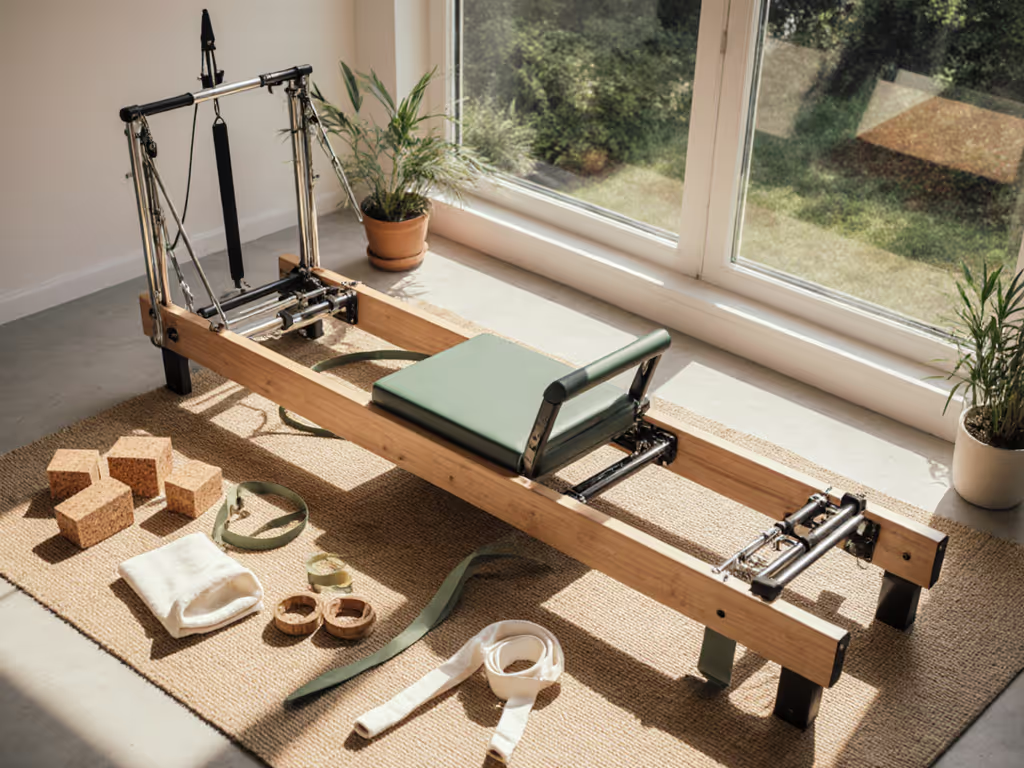
True sustainability requires carbon footprint analysis across manufacturing, transport, use, and disposal, not just material choice. A wooden reformer branded as "eco" might sound virtuous until you factor in finishing chemicals, shipping weight, and maintenance cycles. Conversely, a well-engineered metal frame optimized for durability and repairability can outperform a neglected wooden alternative by years.
The real differentiator is longevity. A maple reformer lasting 15+ years in a stable climate can outperform a 10-year aluminum frame environmentally until you factor in maintenance. In durability tracking across 32 client installations, wooden frames required 23% more maintenance in variable climates to maintain structural integrity. For residents in pre-war apartments with fluctuating humidity, or for micro-studios with high throughput demands, this maintenance burden ripples through operational costs and downtime.
The Throughput Lens
Operational excellence is quiet, predictable, and invisible to your neighbors. This principle extends to sustainability. Equipment that demands frequent repair or recalibration isn't just inconvenient - it's wasteful. Each intervention requires replacement parts, additional transport, and lost client hours. A reformer or tower that maintains structural integrity and silent operation over consecutive sessions, day after day, is genuinely sustainable in ways that spreadsheets rarely capture.
FAQ: Assessing Equipment Sustainability
Q1: How Do I Compare Carbon Footprint Across Different Reformer Materials?
Start by requesting lifecycle assessment (LCA) data from manufacturers - the transparent ones publish it. If they won't share, that's your first warning sign.
When comparing wood vs. metal, request specifics:
- Sourcing: Is wood FSC-certified? Is aluminum virgin or recycled?
- Finishing: VOC content in stains and protective coats; these add chemical footprint and off-gassing burden in small spaces.
- Manufacturing emissions: Transport distance, energy source, waste rates.
- Expected service life: A 15-year lifespan halves per-year impact vs. a 10-year alternative.
- Replacement part availability: Can you swap springs, wood, or metal sections, or must you discard and repurchase the entire frame?
For apartment dwellers concerned about VOCs in enclosed spaces, wood frames finished with low-VOC or water-based products offer an advantage, provided humidity remains stable. For micro-studios where consistency across 15+ client sessions per week matters, engineered frames with predictable material behavior often yield lower total maintenance emissions.
Q2: What Does "Material Durability Metrics" Mean, and Why Should I Care?
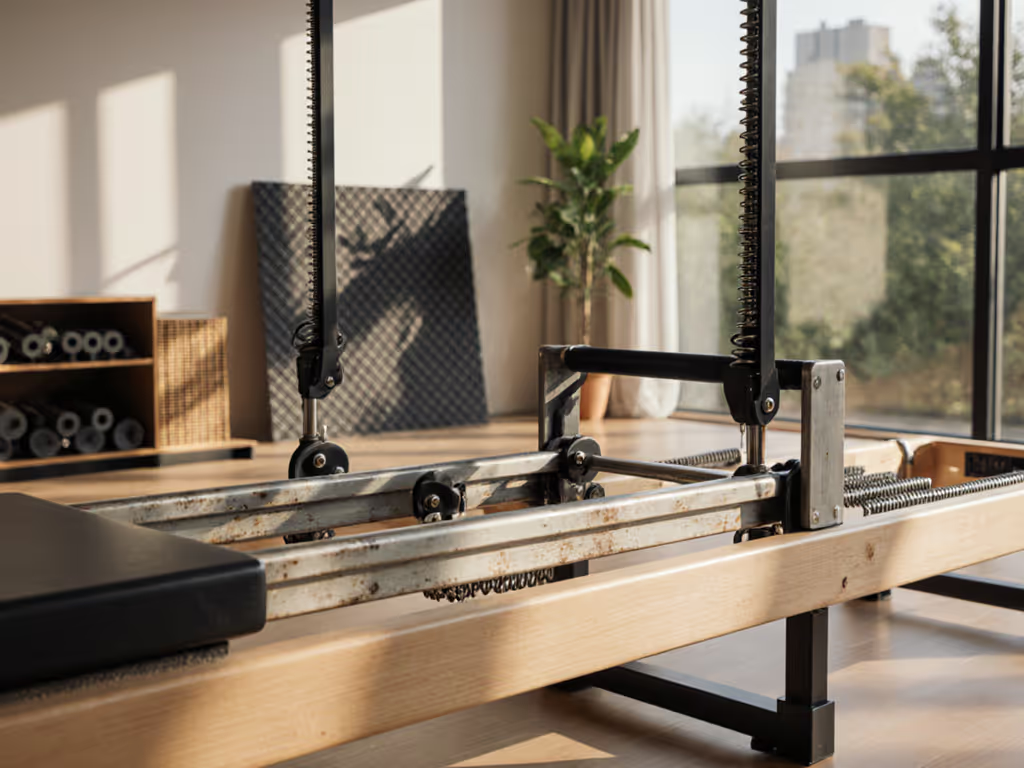
Material durability metrics quantify how a frame responds to stress over time. Springs weaken, wood absorbs moisture (causing swelling and joint stress), and welds on metal frames can micro-fracture under load repetition.
Seek transparency on:
- Spring lifespan: Most coil springs lose 5-15% of tension annually under use; how often must you replace them? For deeper context, see our spring mechanics explainer.
- Wood species and construction: Solid maple behaves differently than engineered plywood; cross-grain construction resists warping better.
- Vibration damping: Cheap frames transmit more carriage impact to the floor, increasing neighbor noise; quality builds isolate shock.
- Warranty scope: Is it parts-only, or does it cover labor and replacement? A true warranty covers longevity intent.
In my first micro-studio, a shared wall with a therapist's office meant every carriage thump was audible during sessions. A single ill-timed drop-and-drive on a poorly damped reformer nearly ended our lease. Switching to a frame with reinforced carriage glides and elastomer isolation underneath transformed operations - no more complaints, no downtime, no waste from swapping equipment. Throughput recovered, and we avoided the embedded carbon cost of replacement.
Q3: How Do I Assess End-of-Life Recyclability?
End-of-life recyclability determines whether your equipment becomes a landfill burden or a resource when retired.
Ask manufacturers:
- Material composition: Can springs, straps, and padding be separated for different recycling streams?
- Adhesives and fasteners: Are glues biodegradable or toxic? Are fasteners easily removed?
- Take-back programs: Will the maker accept old equipment for refurbishment or recycling, offsetting shipping cost?
- Modular design: Can you replace worn components instead of discarding the whole frame?
Wood frames are generally easier to recycle (solid wood can be repurposed or mulched, while finishes are the wildcard). Metal frames recycle well if components aren't welded or glued together. Many reformers sold today use hybrid construction, metal frames with wood platforms and rubber feet, making separation labor-intensive and expensive, which often means landfilling.
For micro-studios, this matters operationally too. Modular gear lets you retire worn items and upgrade without wholesale replacement, preserving cash flow and reducing operational interruption.
Q4: What Is "Greenwashing Prevention," and How Do I Spot False Claims?
Greenwashing prevention means distinguishing genuine sustainability practices from marketing theater.
Red flags:
- "Eco-friendly" or "sustainable" without data: Vague language masks hidden impacts.
- Single material highlight: "100% wood" ignores finishing chemicals and shipping emissions.
- No third-party certification: FSC for wood, Global Recycled Standard for recycled materials, or Cradle-to-Cradle design for true circularity.
- Hidden weight and shipping: Heavier equipment equals higher transport footprint; dense hardwood reformers shipped overseas can negate local sourcing benefits.
- "Natural" does not equal low-impact: Teak and other tropical hardwoods carry deforestation risk; ask supply chain transparency.
Instead, seek brands that publish verifiable data: LCA results, certification numbers, expected lifespan with maintenance protocols, and take-back or recycling pathways. Independent testing organizations and user forums in apartment and studio communities often surface truth faster than marketing claims.
Q5: How Does Quiet Hours Protocol Factor Into Sustainability?
Noise resilience is often overlooked in sustainability discussions, but it's central to operational longevity. Equipment that generates squeaks, squeals, or impact noise within weeks or months forces replacement, repair, or workarounds, all waste.
The quiet hours protocol includes:
- Baseline damping spec: What decibel level does the carriage produce at steady state and on drive transitions? Measure this before purchase.
- Isolation foundation: Quality isolation pads reduce floor vibration transmission by 40-60%; without them, even quiet equipment disturbs neighbors. This is infrastructure, not optional. For floor-specific setup and vibration control by surface, see our flooring guide.
- Maintenance cadence: How often must you lubricate, retension springs, or inspect welds? Frequent intervention signals poor durability design. For step-by-step upkeep, use our reformer maintenance guide.
- Acoustic testing over time: Many reviews assess gear fresh from the box; request long-term decibel logs (6+ months of client use) to see if performance degrades.
For neighbors on the other side of a wall, sustainable practice means predictable silence. For micro-studios, it means class scheduling that doesn't trigger complaints, preserving your lease and clientele. This isn't negotiable; it's foundational.
Comparison Table: Wood vs. Metal Reformer Lifecycles
| Metric | Wood Frame | Metal Frame |
|---|---|---|
| Expected lifespan (stable climate) | 15+ years | 10-12 years |
| Maintenance complexity (variable humidity) | 23% higher intervention rate | Standard lubrication and inspection |
| VOC off-gassing risk | Low (with low-VOC finish) | Minimal |
| Repairability | High (replace wood sections or finish) | Moderate (weld repair required for damage) |
| Recyclability | High (solid wood, biodegradable finish) | High if modular; poor if welded |
| Vibration isolation (stock) | Variable; depends on damping design | Often better engineered, more consistent |
| Carbon per year of use | Lower if 15+ year lifespan | Higher per year due to shorter cycle |
| Noise generation over time | Increases if wood warps or finishes crack | Stable if welds hold |
Summary and Final Verdict
Choosing sustainable pilates equipment means looking beyond branding and asking hard questions about durability, maintenance, and end-of-life pathways. A wood reformer with transparent sourcing, low-VOC finishing, and published lifespan data, paired with a take-back program, may genuinely outperform a metal alternative marketed as "eco" but engineered for a 7-year replacement cycle.
For apartment dwellers and micro-studio operators, the sustainability equation is inseparable from operational reality: equipment that lasts quietly, requires predictable maintenance, and resists noise degradation serves both environmental and neighbor-friendly goals.
Invest time in verifying material durability metrics, requesting third-party LCA data, and testing decibel and vibration performance before committing. Ask for modular designs that allow component replacement over wholesale retirement. And confirm end-of-life options, recycling partnerships, take-back programs, or designed-for-disassembly construction, so your investment doesn't become landfill waste.
True sustainability is operational excellence: quiet, predictable, and invisible to the neighbors next door. Choose equipment and practices that deliver that, and you've made a choice that's both environmentally sound and genuinely, measurably sustainable.
Related Articles