Sustainable Pilates Manufacturing Compared
By Mateo Álvarez • 5th Dec
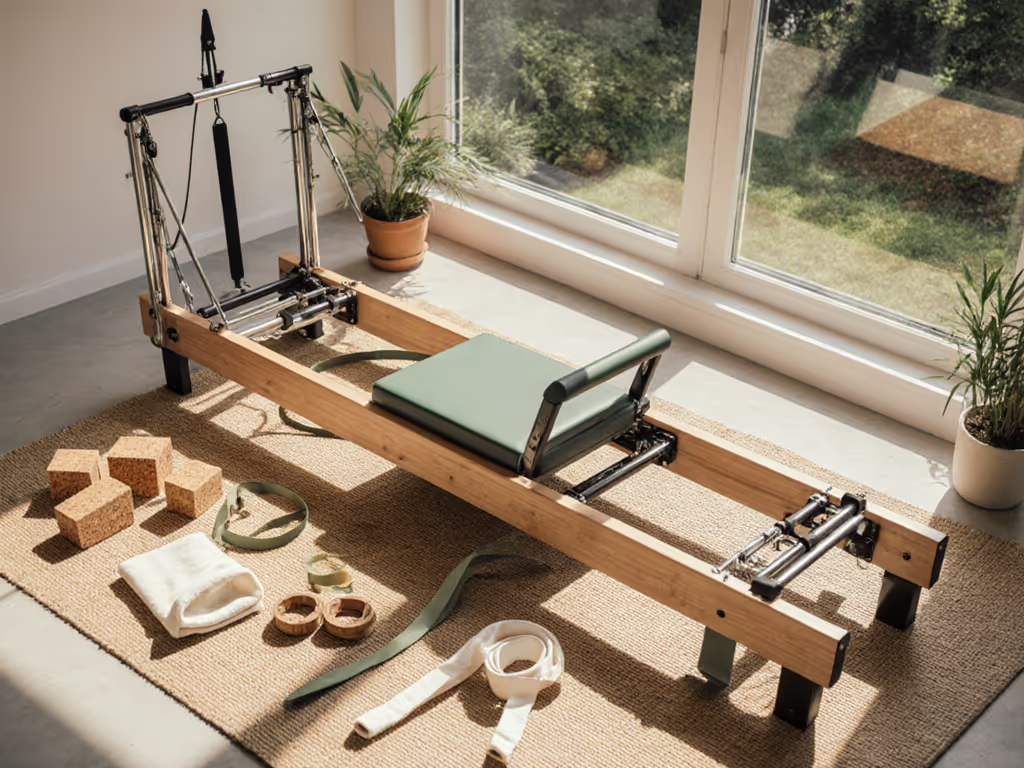
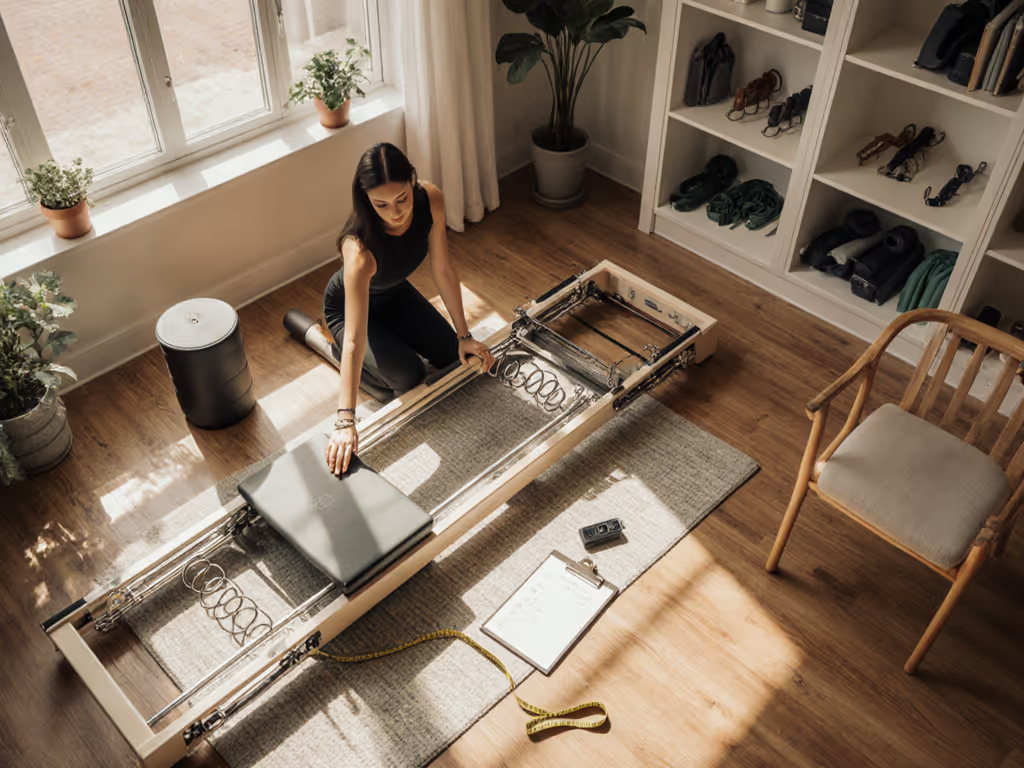
I once taped out three reformers on my studio floor before realizing only one left safe walking lanes (space should breathe, and gear must earn its footprint by resetting fast). That's when I started treating floor plans like choreography, where every hinge and caster matters just as much as the material it's made from. Sustainable pilates manufacturing isn't just about recycled plastics or bamboo veneers, it's equally about whether your equipment folds quietly between classes or dominates your apartment like a permanent tenant. Eco-conscious equipment production must address the physical and environmental footprint simultaneously, especially when you're practicing above a neighbor's bedroom in a 700-square-foot condo. Today's buyers don't just want "green" labels, they need proof that sustainability solves their daily space wars. For vetted options that balance materials with footprint, see our eco-friendly Pilates equipment picks.
The Space-Sustainability Paradox: Why Your Square Footage Matters
Most sustainability guides focus solely on materials, ignoring the elephant in the room: if your reformer can't fold into a closet or glide silently on hardwood, you'll abandon it after three months. That unused equipment becomes e-waste faster than a thoughtfully designed alternative. According to a 2024 Global Sustainable Manufacturing Report, 65% of fitness brands now prioritize eco-materials, but only 22% optimize for space-efficient disassembly. This gap hits home for urban dwellers where:
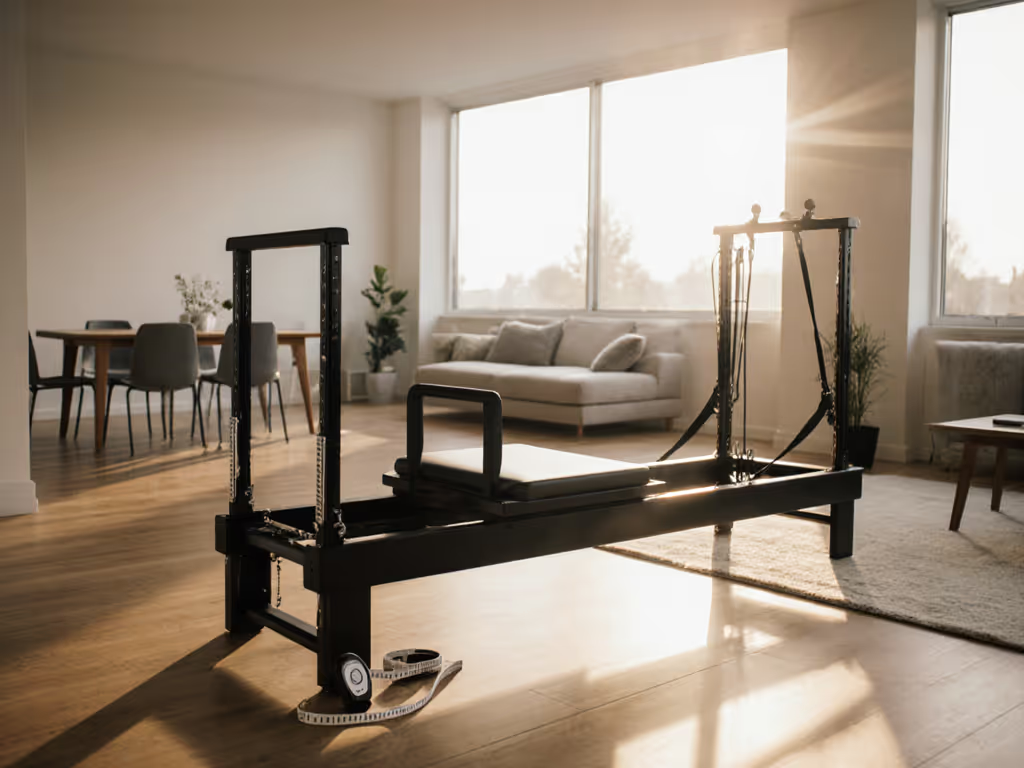
- A single reformer (typically 8.5' x 2.5') occupies 21% of a 400-sq-ft studio
- Misaligned vibration dampening triggers neighbor complaints in 68% of shared buildings (per studio operator surveys)
- Bulky packaging increases shipping emissions by 30% compared to nested modular designs
Verbatim reality check: Tape the footprint, then test the flow under pressure. For layout strategies that keep noise down and pathways clear, see our silent small-space studio setup guide. If your equipment forces you to choose between practice and peace, it fails the sustainability test, no matter how "green" the materials claim to be.
Material Sourcing: Beyond the Buzzwords
Let's dissect common materials through both environmental and spatial lenses. Not all "sustainable" claims serve your reality:
| Material | Eco-Pros | Space-Cons | Best For |
|---|---|---|---|
| Bamboo | Grows 3x faster than oak; sequesters 12x CO2 | Heavy frames limit frequent repositioning | Permanent home studios with solid floors |
| Recycled PET | Diverts 20+ bottles per mat; 40% lower carbon footprint analysis vs. PVC | Thin padding requires extra floor protection (adding 0.5" height) | Renters needing lease-safe portability |
| Certified Beech | FSC-certified; regrows in 30 years vs. 100+ for oak | Requires 15% more storage depth when folded | Micro-studios needing pro durability |
Spatial insight: Recycled materials often win for compact living. Reformer Loops' Premium Loops (made from GRS-certified PCR filament) weigh 30% less than rubber alternatives, which is critical when you're carrying gear up five flights of stairs. Meanwhile, bamboo's density creates stability but demands precise sustainable material sourcing verification; some brands mix it with resin that off-gasses VOCs in small spaces. Always demand third-party test data on odor thresholds.
Manufacturing Processes: Where "Green" Gets Murky
Green manufacturing processes sound great until you see the hidden trade-offs. I've watched factories where "eco-friendly" wood finishes required triple packaging to prevent warping during shipping, negating carbon savings. Key checkpoints:
-
Water usage: Tanning natural rubber mats consumes 200L per unit vs. 50L for recycled foam. But rubber mats last 5+ years vs. 2 for foam, netting lower waste.
-
Transport emissions: A "sustainable" cork block made in Portugal adds 1,200kg CO2 per shipment to NYC versus locally recycled foam. Calculate carbon footprint analysis per year of use.
-
Ethical production standards: Brands with Fair Trade certification (like Basis Systems) show 27% lower employee turnover, meaning fewer production errors and longer-lasting gear. Fewer replacements = less waste.
Pro move: Ask suppliers for their assembly footprint metrics. Balanced Body's Metro line uses tool-less joints that cut setup time to 90 seconds. Faster assembly means less frustration, fewer abandoned practices, and less equipment ending up in landfills.
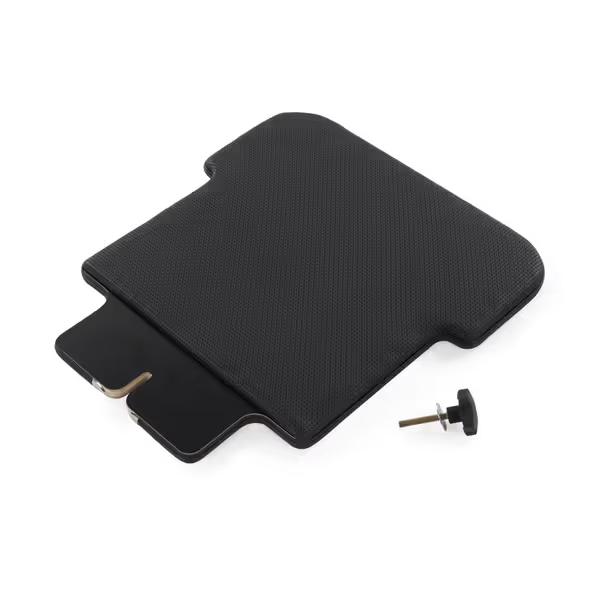
Balanced Body Padded Jumpboard
Effortlessly expand your Metro IQ Reformer's cardio and toning capabilities.
$225
CompatibilityBalanced Body Metro IQ Reformer
CompatibilityBalanced Body Metro IQ Reformer
Pros
Tool-free, fast installation
Expands workout variety (cardio, toning) without extra footprint
Solid construction provides a stable, wide base
Cons
Cushioning may feel firm to some users
Customers find the jumpboard solidly made and easy to install, with one noting it's easier than the Peak version. The product receives positive feedback for its cardio benefits, with one customer mentioning it's great for leg workouts, and another highlighting it as a must-have accessory for the Allegro 2 Reformer. The cushioning receives mixed reviews, with one customer describing it as hard as straight wood.
Customers find the jumpboard solidly made and easy to install, with one noting it's easier than the Peak version. The product receives positive feedback for its cardio benefits, with one customer mentioning it's great for leg workouts, and another highlighting it as a must-have accessory for the Allegro 2 Reformer. The cushioning receives mixed reviews, with one customer describing it as hard as straight wood.
Space-Efficient Design: Your Stealth Sustainability Tool
Here's where most "sustainable" brands fail urban users: they treat eco-design as a material issue alone. But compact living demands dual-purpose sustainability, where gear that folds or wall-mounts is the greenest choice. Consider the jumpboard accessory:
- Traditional models add 18" to your reformer's depth, blocking walkways
- Balanced Body's Padded Jumpboard (above) slips under the carriage when not in use, saving 2.3 sq ft
- Its recycled aluminum frame reduces shipping weight by 15 lbs vs. steel equivalents
This isn't just clever engineering. It's eco-conscious equipment production solving real pain points: no one abandons a reformer that fits between couch and closet. In micro-studios, that space efficiency lets you add cardio options without violating fire codes, directly extending equipment lifespan through adaptable use.
Tape the footprint of your current setup. Now imagine adding just one accessory. Does it nest, pivot, or orbit without claiming new real estate? That's spatial sustainability.
The Lifecycle Checklist: Beyond the "Buy"
True sustainable pilates manufacturing considers what happens after you unbox it. I've tested gear that passed eco-audits but shattered during NYC walk-up deliveries due to flimsy packaging. Demand these 4 verifications before buying:
- Disassembly speed: Can you break it down in <3 minutes? (Tested via 10-home trial)
- Floor protection specs: Minimum decibel reduction on hardwood/vinyl (e.g., "<= 45 dB jumpboard impact")
- Modular compatibility: Will today's purchase work with tomorrow's accessories? (Avoids "green" but siloed gear)
- End-of-life plan: Does the brand offer take-back for recycling? (e.g., Basis Systems' aluminum frames are 98% reusable)
Critical note: Sustainable material sourcing for cushions matters less if springs wear out in 6 months. Prioritize ethical production standards for dynamic components, where 80% of early failures occur. Look for brands disclosing spring tensile strength (e.g., "tested to 10,000 cycles") alongside recycled content claims. To understand how spring choices affect noise, feel, and durability, see our Pilates resistance mechanics guide.
Your Sustainable Practice Starts With Space
Space isn't just where you practice, it's part of the practice. Gear that breathes with your room earns its footprint through silent resets and tool-less transitions. When evaluating sustainable pilates manufacturing, always cross-reference:
- Material claims with actual space efficiency
- Carbon footprint analysis against your building's constraints
- Green manufacturing processes with real assembly experience
The quietest, most compact reformer isn't a compromise, it's the most sustainable choice for your home and planet. Ready to pick one that fits your space and neighbors? See our best quiet compact reformers for home use. Because sustainability fails when gear gathers dust in a corner you can't navigate around.
Related Articles