Cerebral Palsy Pilates: Quiet Equipment Adaptations
By Nora Bergström • 2nd May
Introduction
For many people with cerebral palsy and their caregivers, movement therapy becomes a cornerstone of daily practice, yet equipment choice often creates an invisible burden: noise. When you live in a shared building, perform therapy in a home office, or simply need to practice during nap windows, the wrong setup transforms a healing routine into a source of stress. Cerebral palsy pilates equipment and CP movement adaptations exist specifically to bridge this gap, offering low-impact strengthening that respects both your mobility needs and your living environment.
Pilates was developed nearly 100 years ago by Joseph Pilates and has evolved into a precision-based system focusing on muscle strength, flexibility, and endurance[1]. For individuals with cerebral palsy, pilates offers documented benefits: improved balance, greater control over movement, enhanced core stability, and better postural alignment, all without the joint stress of high-impact exercise[1]. But the real promise lies in tailored equipment that stays quiet while delivering results.
This guide explores the intersection of spasticity management tools, neurological development equipment, and adaptive equipment protocols through a data-informed lens, answering the questions that surface when you're building a home or clinic-based pilates practice with cerebral palsy in mind.
FAQ: Building Your Adaptive Pilates Space
Q1: What makes pilates particularly suited for cerebral palsy movement adaptation?
Pilates serves people with cerebral palsy because it addresses their core challenge: controlled movement against manageable resistance. Research confirms that targeted trunk-strengthening significantly improves mobility, balance, and independent sitting and standing in children with cerebral palsy[1]. Pilates directly trains these areas through precise, repeatable motions.
Unlike high-impact aerobic exercise, pilates relies on low-impact movements that can be performed lying down, seated, or kneeling, positions of comfort for those managing spasticity or limited mobility[1]. The system emphasizes spinal alignment and muscle balance, which helps correct postural imbalances common in cerebral palsy. And critically, pilates is infinitely adjustable: the same movement can challenge an advanced athlete or provide gentle support for a beginner[1].
The evidence is practical, not just theoretical. Studies using specialized trunk-targeting equipment showed that after several weeks of consistent training, children with cerebral palsy demonstrated significantly better movement control, sitting ability, and independent balance[1]. That outcome depends on consistency, and consistency depends on a setup that doesn't generate fear, guilt, or friction with your living situation.
Q2: Why does quiet equipment matter for CP practice adherence?
This question contains a lived insight often hidden in product specifications. Many people don't realize they're holding their breath during workouts (not from exertion, but from anxiety). A noise-sensitive client practicing in a condo once confessed she braced herself during footwork, limiting her breathing and her range of motion. We rebuilt her setup with quieter springs and floor isolation pads, added a soft timer with gentle exhale cues, and her practice returned. So did her sleep. Quiet isn't an accessory feature; it's permission to focus without fear of disturbing neighbors or triggering yourself.
In shared buildings, noise anxiety ranks among the top reasons people abandon home fitness routines. For CP practitioners, the stakes are higher, you need consistency to maintain gains in strength, balance, and spasticity management. Equipment noise introduces a psychological barrier that undermines compliance.
Comfort is quiet, and quiet is compliance with your goals.
When your setup runs smoothly without carriage clatter, spring chatter, or floor thump, you remove the secondary stress layer. Practice becomes neutral, safe, focused.
Q3: What specific equipment adaptations reduce noise without compromising function?
CP exercise modifications often start with equipment choice, not technique. Key adaptations include:
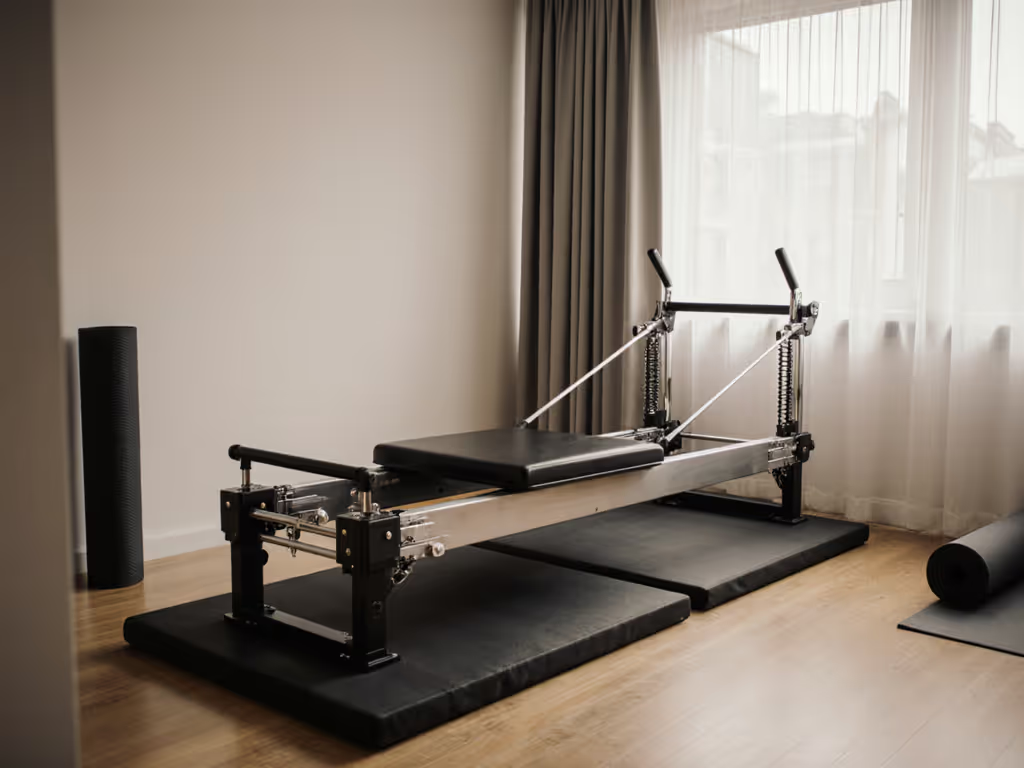
- Reformer carriage damping: Equipment with rubber or felt contact points minimizes metallic impact compared to metal-on-metal contact. Damping quality directly affects how much vibration transmits through the machine to your floor.
- Spring selection: Softer springs (lighter resistance) require less force and generate fewer vibrations. Many CP practitioners work effectively with 2-3 springs rather than maximum spring stacks. This also improves proprioceptive feedback and control.
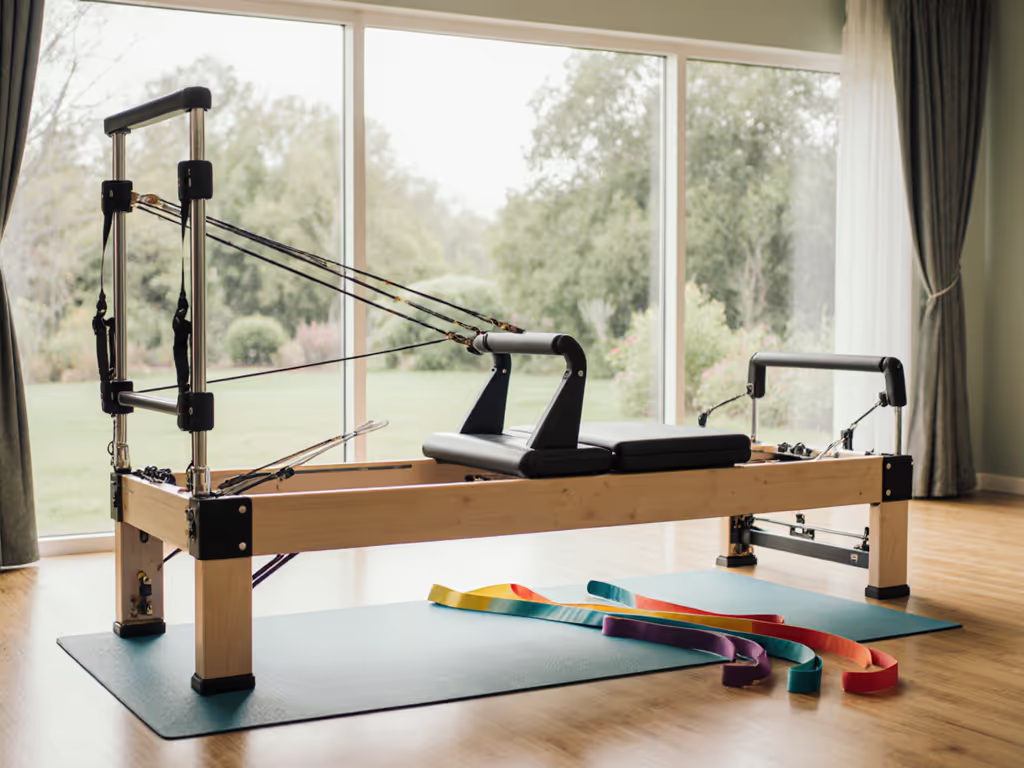
- Floor isolation: Anti-vibration pads under reformer feet prevent sound transmission to downstairs neighbors and reduce overall resonance. Proper placement (at all four corners or feet) is essential.
- Mat quality: For mat-based work (which many CP adaptations emphasize), mats with dense closed-cell foam provide better sound absorption and proprioceptive feedback compared to thin yoga mats. They also reduce impact noise.
- Positioning: Lying-down exercises (supine or side-lying) naturally reduce noise compared to standing or kneeling work. Pilates' emphasis on these positions is ideal for quiet, neurologically-accessible practice[1].
Adaptive equipment protocols also include thoughtful scheduling: practicing during daylight hours when ambient noise is higher, or coordinating with neighbors on practice windows. Transparency builds community trust.
Q4: How do I measure whether equipment is actually quiet for my home?
Specifications matter, and you should demand them. Request or seek out:
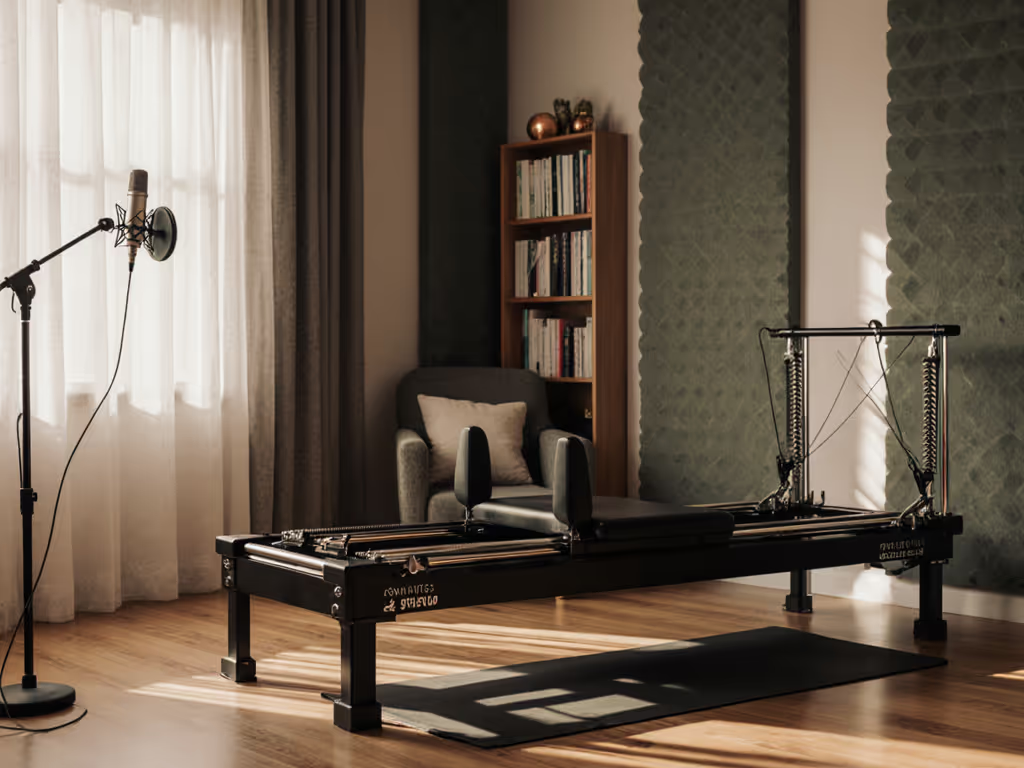
- Dynamic noise testing: Ask manufacturers or reviewers for sound recordings during actual exercise, including carriage movement, spring transitions, and full cadence. A machine silent at rest but loud in motion will disrupt your neighbors and your own focus.
- Independent testing and reviews: Look for third-party assessments that include audio samples or comparative noise data. Marketing claims are not measurement.
- Vibration isolation documentation: Quality equipment suppliers should specify whether their equipment meets residential sound standards for your jurisdiction and floor type.
- Floor and building specifications: Understand your actual context, pre-war wood floors vibrate differently than concrete slabs. For floor-specific isolation tips, see our Pilates flooring setup guide. Ask the supplier for site-specific guidance or visit a demo space with similar flooring.
- Trial periods: Some studios or suppliers offer short-term trials so you can test in your actual space before committing money and floor space.
Many acoustic concerns arise not from the equipment alone but from the interaction between equipment and floor. A quality machine on a thin, bouncy floor can sound worse than a standard machine on an isolated platform.
Q5: How do I prioritize between equipment options on a budget?
Start with neurological development equipment that serves multiple purposes and scales:
- Mat work first: A high-quality pilates mat with closed-cell foam supports most foundational CP movement adaptations. Cost is low; returns are high. Pair it with simple resistance loops or light hand weights for variable resistance.
- Reformer or tower if space permits: A compact reformer offers greater exercise range than mat work alone. Towers (vertical spring systems) occupy less footprint than full reformers but deliver focused trunk-strengthening. For a small-space comparison, see our tower vs reformer guide. Choose based on your actual space and movement priorities.
- Accessories second: Straps, springs, foot bars, and boxes multiply function. Add them only after establishing a baseline practice rhythm.
Micro-studio owners often prioritize differently: a single full reformer with 2-3 clients and scheduled rest periods can generate income efficiently in limited footage. But home practitioners benefit from starting small, quiet, and consistent, then expanding only when that baseline is solid.
Q6: What does a beginner CP pilates session look like in a quiet setup?
A typical quiet practice session is 20-30 minutes and might include:
- Centering (3-5 minutes): Lying supine, focusing on breathing and spinal neutral position. No equipment noise. Low sensory load.
- Trunk activation (8-10 minutes): Supine or side-lying core work using light springs or no springs, slow, controlled movements that quiet the nervous system while building stability.
- Seated or side-lying strengthening (8-10 minutes): Targeting hip, trunk, and postural muscles. Carriage movements are slow and deliberate, minimizing impact and sound. To further reduce noise, consider quiet reformer accessories like low-resonance straps and damped boxes.
- Gentle stretch and breathwork (3-5 minutes): Lying-down or seated stretches, with no dynamic noise.
The entire session operates at a low sensory load: gentle imperatives, pauses for proprioceptive feedback, no rush. Your practice becomes meditative, not punitive.
Q7: How do I know if my setup is causing neighbor issues?
Transparency is trust. Simple steps:
- Communicate proactively: Let neighbors know your practice schedule and what to expect. Many complaints arise from surprise, not decibels alone.
- Do a test run: Record yourself during a typical session from outside your door or room. Listen objectively. If you hear carriage clacks, spring twangs, or floor thumps clearly, neighbors likely do too.
- Adjust quietly: If feedback emerges, isolate the noise source (floor, springs, positioning) and address it. Often a simple pad, spring change, or repositioning resolves it.
- Offer visibility: Invite a neighbor to observe once; seeing quiet, controlled movement often eases anxiety about what's happening.
Q8: What role does instructor guidance play in adaptive pilates for CP?
Essential. Pilates movements are precise, and form correction is critical, especially when managing atypical muscle tone or movement patterns[1]. A trained instructor familiar with cerebral palsy:
- Modifies ranges of motion to match your current capacity and safety window
- Adjusts resistance (spring selection, lever position) in real-time based on feedback
- Ensures you're building stability rather than compensating with other muscle groups
- Provides tactile cues to help your nervous system calibrate movement
- Progresses thoughtfully, respecting neuroplasticity timelines
For home practitioners, this often means periodic check-ins (virtual or in-person) with a qualified teacher, not total independence. Regular guidance also ensures your quiet setup stays optimized for your evolving needs.
Gentle Takeaways
Cerebral palsy pilates equipment works best when it aligns with your actual life: your space, your schedule, your noise constraints, and your sensory preferences. Equipment choice is protocol choice. Select adaptive equipment protocols that prioritize:
- Low-sensory design: quiet mechanics, minimal vibration, predictable feel
- Adjustability: easy spring changes, variable ranges, modifiable positions
- Transparency: honest specifications on noise, footprint, setup simplicity, and maintenance burden
- Consistency support: a setup so friction-free that you practice regularly, building the strength and control cerebral palsy demands
Research confirms that trunk-targeted, guided pilates training meaningfully improves mobility, balance, and movement control in cerebral palsy[1]. That benefit compounds only with consistency. Quiet equipment removes the invisible barriers (breath-holding, neighbor anxiety, guilt) that interrupt practice.
Your next step is intentional exploration: reach out to adaptive pilates specialists familiar with small-space and acoustic concerns, request sound samples or trial periods, test in your actual space, and start conservatively with mat work or a compact reformer. Build from a quiet baseline, expand slowly, and notice how consistent practice feels when you have permission to focus without external pressure or noise-related friction.
Comfort is quiet, and quiet is compliance with your goals.
Related Articles