Pilates Equipment for Cerebral Palsy: Adaptations Guide
By Nora Bergström • 8th Apr
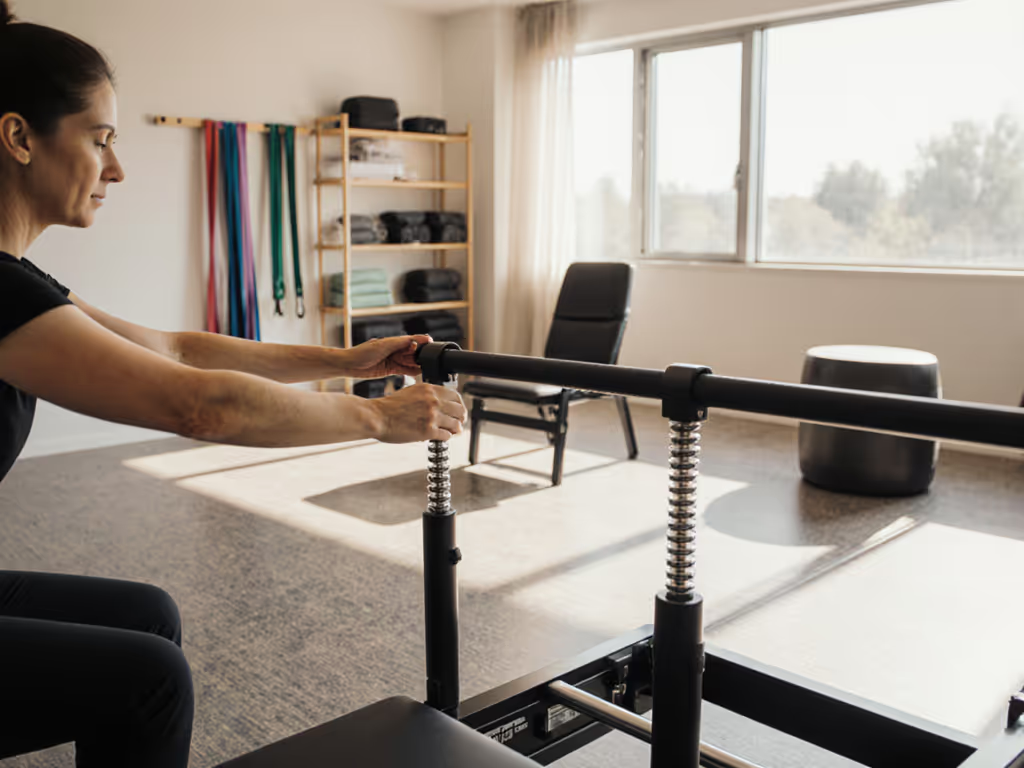
When you have cerebral palsy and want to build strength, balance, and coordination through movement, cerebral palsy pilates equipment choices can feel overwhelming. Which apparatus actually serves your body? What does "adaptation" really mean? And how do you start when space is tight and overwhelm is real?
This guide answers the most pressing questions about CP exercise adaptations and the tools that make them possible, grounded in what research shows and what practitioners see work. For a deeper look at space-smart adaptive gear, see our compact rehab equipment guide.
What Makes Pilates Particularly Suitable for CP?
Pilates addresses a core challenge in cerebral palsy: muscles may be tight, weak, or uncoordinatedly strong in one direction while struggling in another.[2] Standard strength training often reinforces these imbalances. Pilates differs fundamentally.
The method emphasizes controlled, multi-directional movement with elastic resistance (not heavy weights).[1] A recent study of children with diplegic cerebral palsy found that Pilates combined with conventional therapy significantly outperformed conventional therapy alone in improving balance and gross motor function.[2] The improvement wasn't marginal: after 10 weeks of three sessions weekly, children showed measurable gains in coordination, walking efficiency, and sitting control.[2]
What matters for you: Pilates meets you where you are. Whether you're lying down, sitting, kneeling, or standing, the equipment can be adjusted to assist a movement you're struggling to initiate or resist a movement you're over-recruiting.[1] This matched resistance is what research calls essential for motor re-patterning.[1]
Comfort is quiet, and quiet is compliance with your goals.
For those practicing in shared living spaces (apartments, condos, or small studios), this controlled, lower-impact approach matters twice over: your body benefits from precision, and your neighbors benefit from a practice that doesn't shake floors or announce itself through walls.
Which Pilates Equipment Is Right for CP?
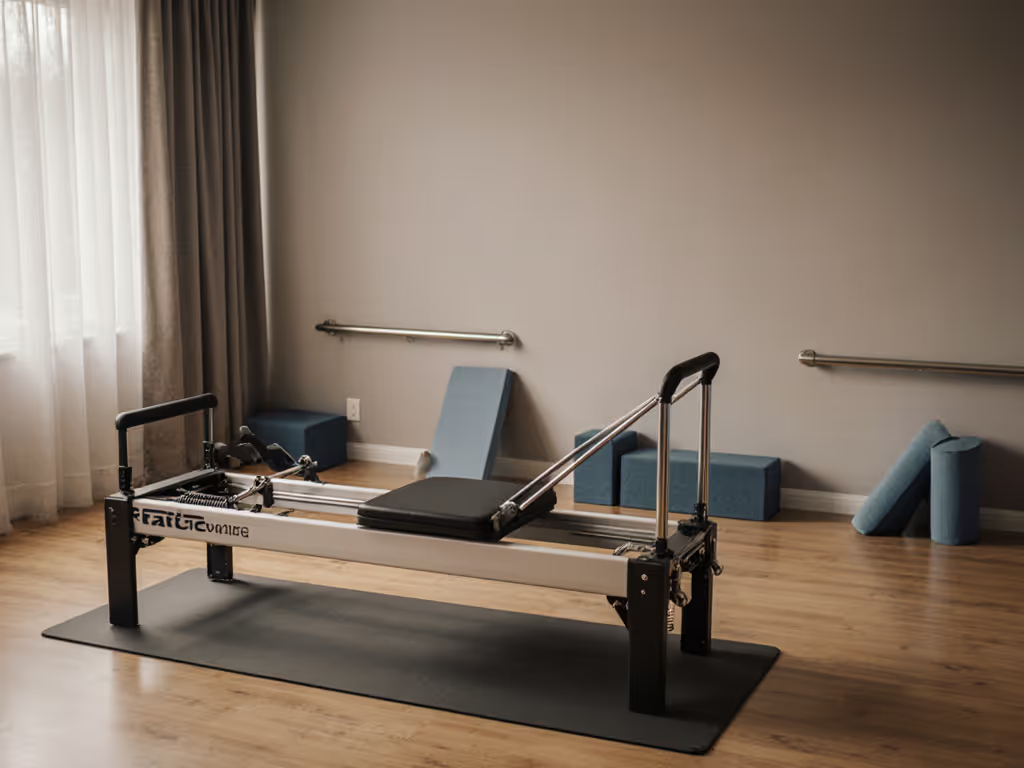
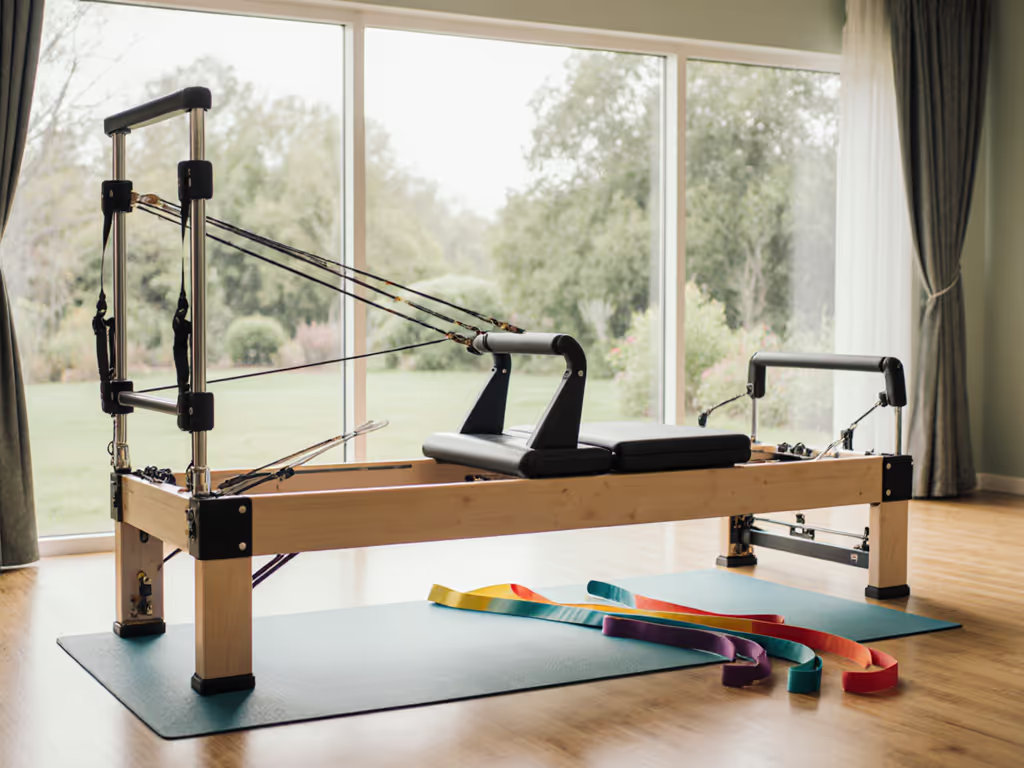
The Reformer: Lying Down and Supported Work
The Reformer remains the most accessible starting point for most people with CP.[4] Here's why it works:
You work lying down or sitting, which removes the balance demand while you focus on isolated, coordinated movement.[4] The sliding carriage provides immediate tactile feedback: your muscles feel exactly when they're engaging and when they're relaxing.[1] Springs can either assist a lift (if your muscles are weak) or resist a push (if you're retraining recruitment patterns).[1]
For spasticity management tools, the Reformer's elastic resistance is gentler on tight muscles than static weights.[5] One study of children with CP showed that after weeks of Reformer work targeting trunk and hip muscles, all participants improved their ability to sit and balance independently, a striking outcome.[4]
Best suited for: Anyone beginning Pilates, those with moderate to significant CP affecting balance or standing tolerance, and people who need to practice in apartment settings where a quiet, smooth glide feels better than floor impact. If you're shopping, compare options in our quiet compact home reformers review.
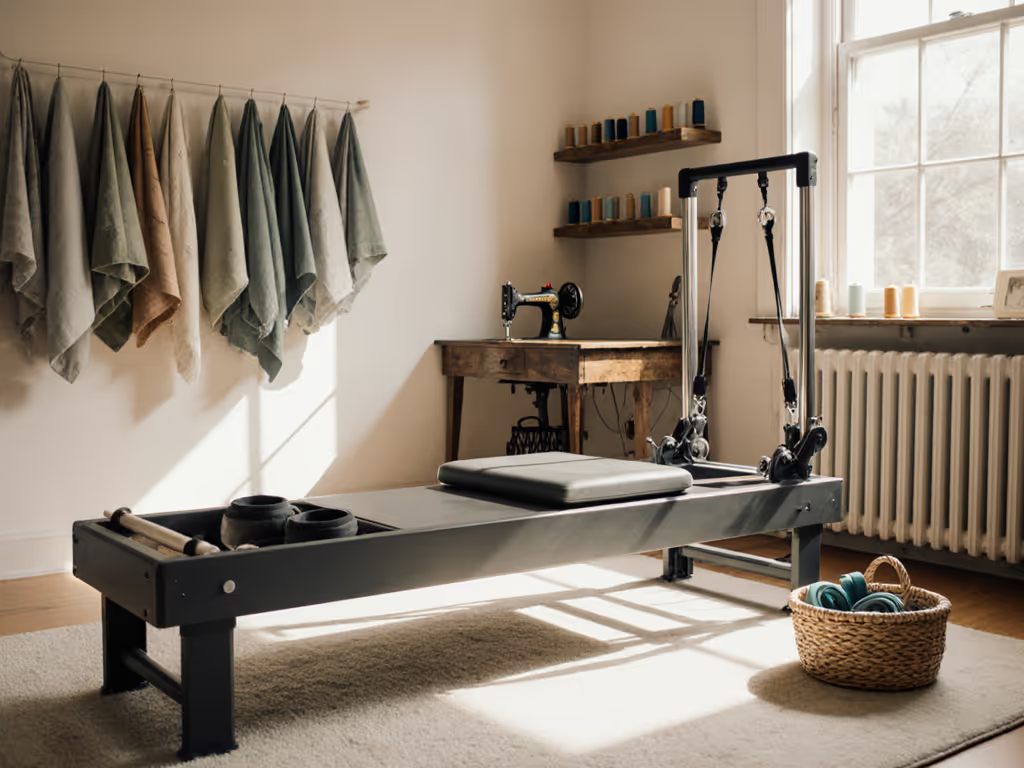
The Tower (Cadillac): Standing and Vertical Loading
A Tower provides uprights, bars, and springs that allow standing work with built-in support.[1] If you can bear weight through your legs but tire quickly or lose balance easily, the Tower becomes a bridge: you practice standing coordination with immediate handholds.[1]
The appeal for small-space dwellers: a Tower takes up roughly 2×4 feet of floor space, far less than a full Reformer setup.[1] Standing exercises against resistance (pushing springs away or pulling them toward you) train the muscles that walking and standing require.
Best suited for: Those with moderate CP who can stand with support, or as a progression once Reformer work has built confidence. Learn more about therapeutic applications in our Cadillac (Tower) rehab benefits guide.
The CoreAlign: Reciprocal Movement and Gait Patterning
The CoreAlign has separate, smooth-gliding carts that move reciprocally, where one side moves while the other stabilizes, mimicking the alternating leg motion of walking.[1] If gait fluency is a goal, this equipment teaches rhythm and coordination in the lower body with remarkable specificity.[1]
The equipment is quieter than you'd expect because the glide system uses controlled, elastic tension rather than carriage thumps.[1] For apartment practice, this matters: you're training motor patterns with precision, and the sound profile stays low.
Best suited for: Those working toward improved walking or who need to practice gait-specific coordination in a space-efficient, quiet footprint.
The Mat: Foundation and Everywhere
Mat Pilates (exercises performed on the floor or a padded surface) forms the quietest foundation.[2] Research on children with diplegic CP showed significant gains in balance and motor control using mat work plus medical balls and standing positions.[2]
You need minimal space, zero equipment noise, and a low financial barrier to start. Exercises targeting the trunk, the body's core stabilizer, are particularly effective for CP because the trunk drives balance, posture, and limb coordination.[4]
Best suited for: Everyone. Mat work builds baseline strength and body awareness. For small-space dwellers, it's often the wisest first step and remains valuable throughout practice. To choose a supportive surface, see our Pilates mat comparison.
What Does "CP Exercise Adaptations" Actually Mean?
Adaptive equipment protocols in Pilates for CP center on three principles:
-
Resistance matching your capacity. Tight muscles may need lighter tension to move smoothly; weak muscles may need springs set to assist the movement rather than resist it.[1] As strength builds, resistance increases.
-
Position options that remove barriers. If standing balance is fragile, you work lying or sitting so you can focus on the movement itself (not on not falling).[4] As confidence grows, you progress to standing variations.[1]
-
Rhythm and repetition for motor learning. Smooth, controlled movements repeated many times, often 8-12 reps with rest between sets, train the nervous system to coordinate muscles differently than it has before.[2] One study documented that high-repetition training is "essential for motor re-patterning" in gait.[1]
How Do I Know If I'm Ready for Equipment?
A comfort-first setup asks these questions:
- Can you move your limbs with intention? You don't need full control, you need the ability to initiate a movement, even if it's small.
- Can you communicate if something doesn't feel right? This is safety. Working with an instructor (at least initially) who understands CP is crucial.
- Do you have a quiet, supportive space to practice? A calm environment reduces the sensory load and helps focus attention on the work itself.
If you answer yes to these, you're ready to begin, almost certainly with mat work, often progressing to a Reformer or Tower within weeks.
Quiet, Smooth Practice: What This Really Means
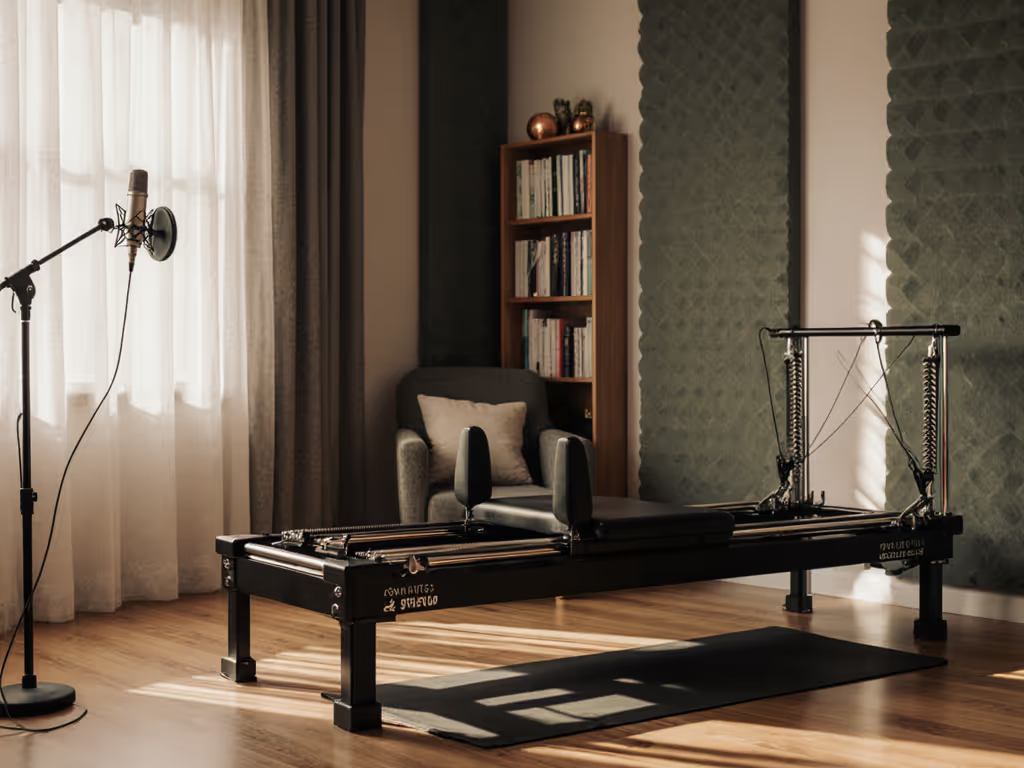
One of the underestimated gifts of Pilates for CP in small spaces: the equipment sounds quiet. The glide systems use smooth, elastic tension rather than clanging or thudding.[1] Springs have a soft, almost musical tone if tuned well. Carriages glide rather than crash.
Why does this matter for adherence? Because quiet removes a layer of anxiety. If you've ever held your breath during footwork because you're worried about disturbing downstairs neighbors, you know the cost: tension builds, focus fragments, and the practice becomes another source of stress. When the equipment is genuinely quiet, you exhale. You settle. You can practice at any hour. Permission to move becomes permission to focus, and focus becomes the ground of real change.
Moving Forward
Begin with an assessment by a physical therapist or Pilates instructor trained in neurological conditions. If you or your client uses a wheelchair, review our wheelchair Pilates modifications guide for transfer strategies and safety. They'll help you identify which equipment matches your current capacity and what progression looks like over weeks and months.
If you're in a small space or shared building, communicate with your instructor about your setup constraints. Good teachers know how to configure equipment for quiet, focused work (often starting with mat and standing work before adding springs and sliding carriages).
Research confirms that Pilates, adapted to your body and practiced consistently, improves balance, strength, coordination, and walking efficiency in CP.[2][4] The quiet, precise nature of the method makes it sustainable in apartments, studios, and small rooms where noise and space are real concerns.
Your next step: explore options with a qualified instructor, describe your living situation and practice goals, and begin with the simplest, quietest foundation (often the mat). From there, progression becomes clear, manageable, and grounded in what your body actually needs rather than what feels impressive.
That's where real, durable change begins.
Related Articles