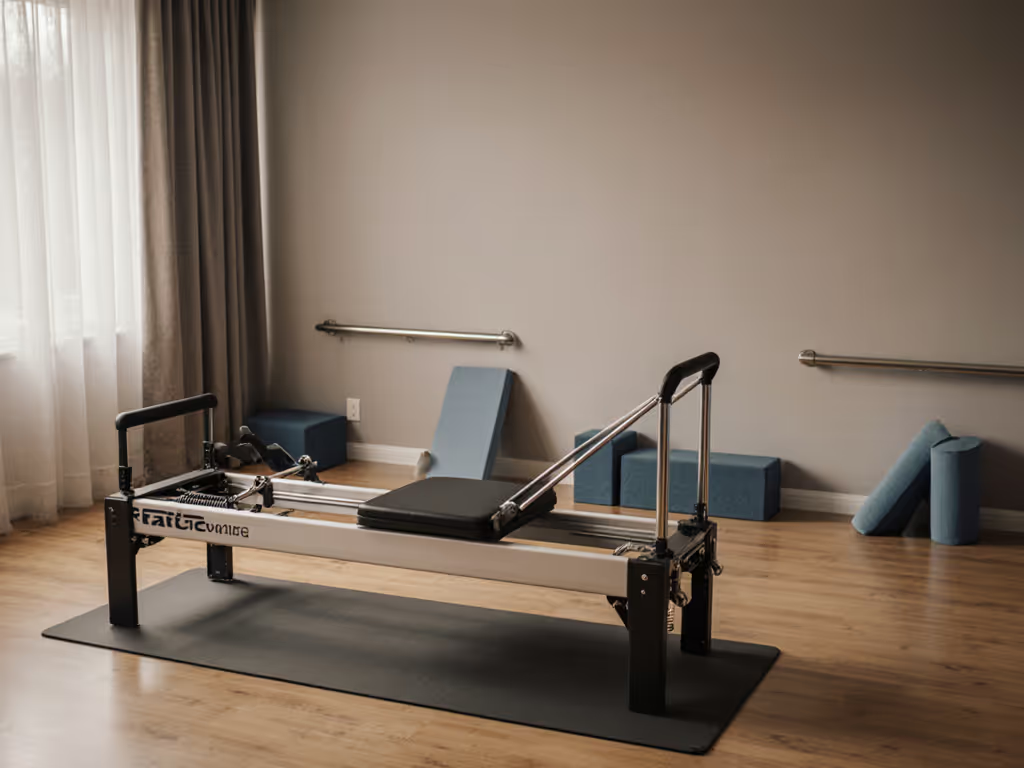
Cerebral Palsy Pilates Equipment for CP Movement Adaptations
By Priya Kapoor • 29th May
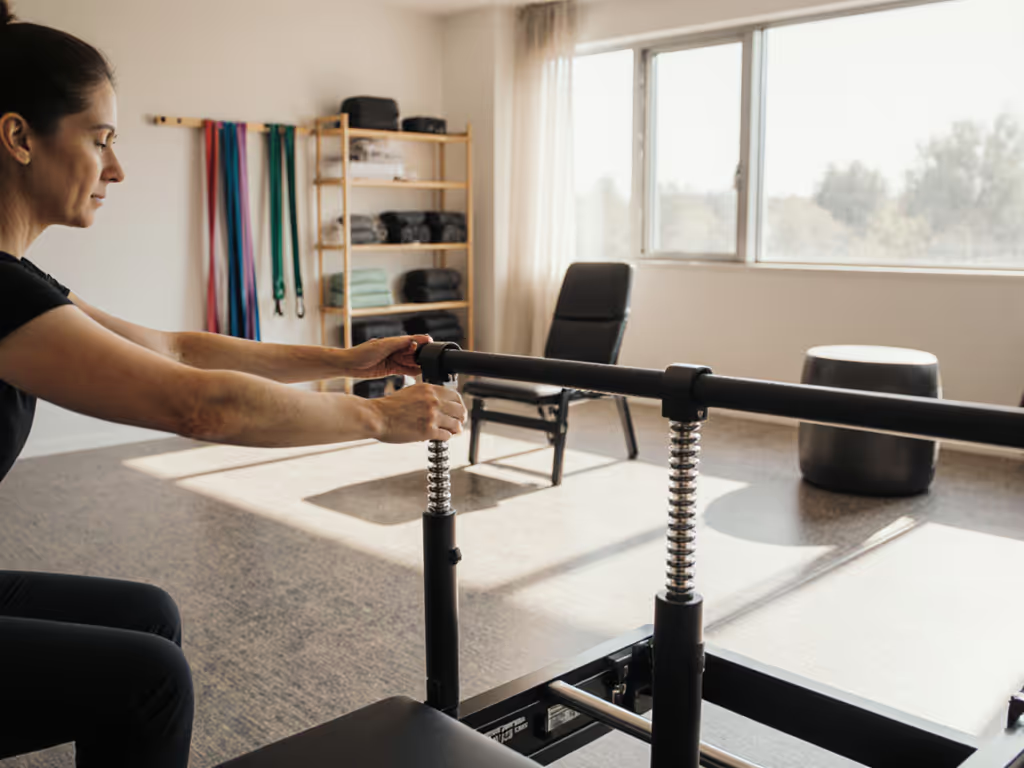
Cerebral palsy Pilates equipment, used with thoughtful CP movement adaptations, can turn a tight apartment corner or micro-studio bay into a quiet, powerful space for neuromuscular training (not just exercise). When we plan gear, spacing, and noise together, we get smoother sessions and calmer neighbors.
I design for two outcomes at once: a body that moves with more options, and a building that stays peaceful. Flow that respects tenants next door is real operational excellence.
Why is Pilates often recommended for people with cerebral palsy?
Pilates is low-impact, joint-friendly, and built around controlled, precise movement (qualities that match many needs in cerebral palsy (CP)).[1][2] The method focuses on posture, spinal alignment, muscle balance, and core strength rather than high-impact loading.[2] For CP-specific setup and spasticity-safe progressions, see our Cerebral palsy equipment adaptations.
According to CP-focused guidance, guided Pilates can help improve:
- Balance and gross motor function in children with CP when applied appropriately.[1][2]
- Flexibility, range of motion, and muscle strength, especially in muscles that are weak or hard to control.[1][2]
- Postural control and stability, which can support more independent sitting and standing.[1][2]
Importantly, Pilates can be adapted to many ability levels, including people with significant physical limitations.[2] That adaptability is exactly where equipment and movement modifications matter.
For CP, the question is rarely "Can we do Pilates?" but "How do we configure the environment so it's safe, effective, and quiet enough to keep the lease?"
Always coordinate with a medical team (physiatrist, neurologist, or physical therapist) before starting or advancing any program. Here, I'm focusing on environment, equipment, and flow (not on diagnosing or prescribing treatment).
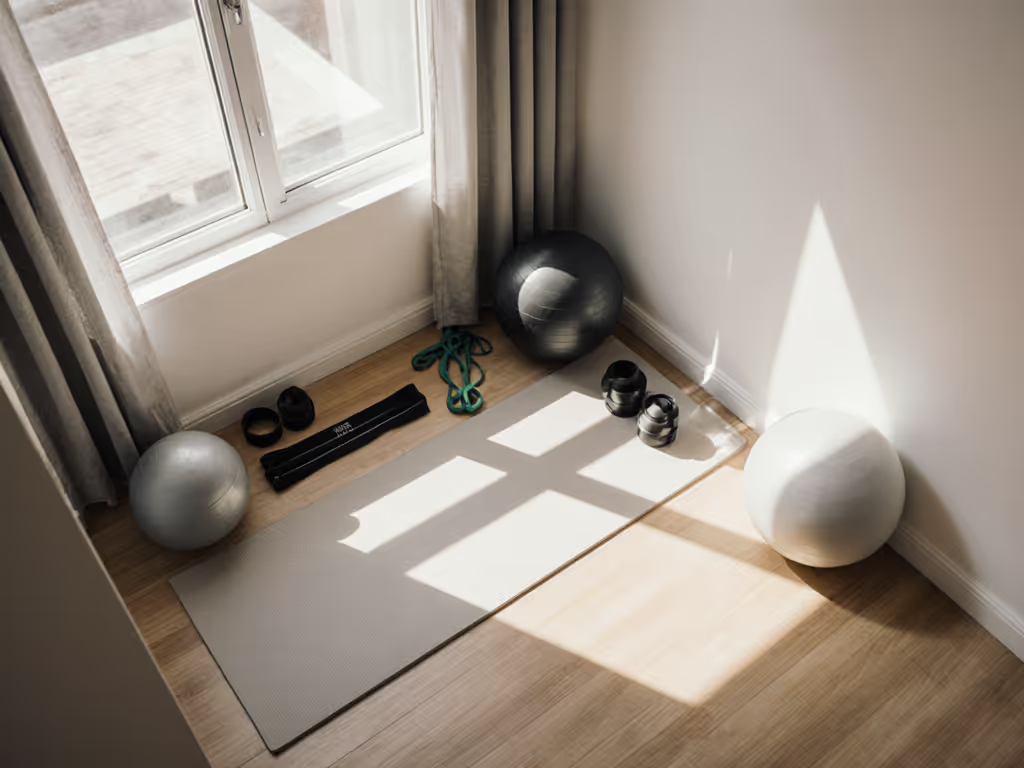
What are the core goals when choosing Pilates equipment for CP?
When I'm asked to design a CP-friendly Pilates nook in a small, shared building, I work from five operational goals:
-
Positioning and support Equipment must allow custom alignment: wedges, bolsters, straps, and adjustable supports that help the person find positions where they can participate without fighting gravity.
-
Graded resistance for spasticity and weakness Springs, bands, and bodyweight variations should scale from very light to moderate loads, so we can work into control, not trigger more spasticity.
-
Sensory and neurological input For some, stable contact points and deep pressure (through straps, pads, or props) can increase body awareness; for others, too much sensory load is overwhelming. Gear needs options.
-
Safety and transfer ease Clear walkways, stable bases, and equipment that doesn't slide on smooth floors are non-negotiable in CP, particularly when walkers, canes, or wheelchairs are involved.[3] If transfers are part of your sessions, review our wheelchair Pilates adaptations for setup options and safety tips.
-
Quiet operation in shared buildings Minimal squeaks, no harsh carriage impact, controlled spring chatter, and solid floor protection to limit vibration.
If a tool doesn't help you meet at least two of those five, it probably doesn't earn the footprint.
Which types of Pilates equipment work best for CP in small apartments or micro-studios?
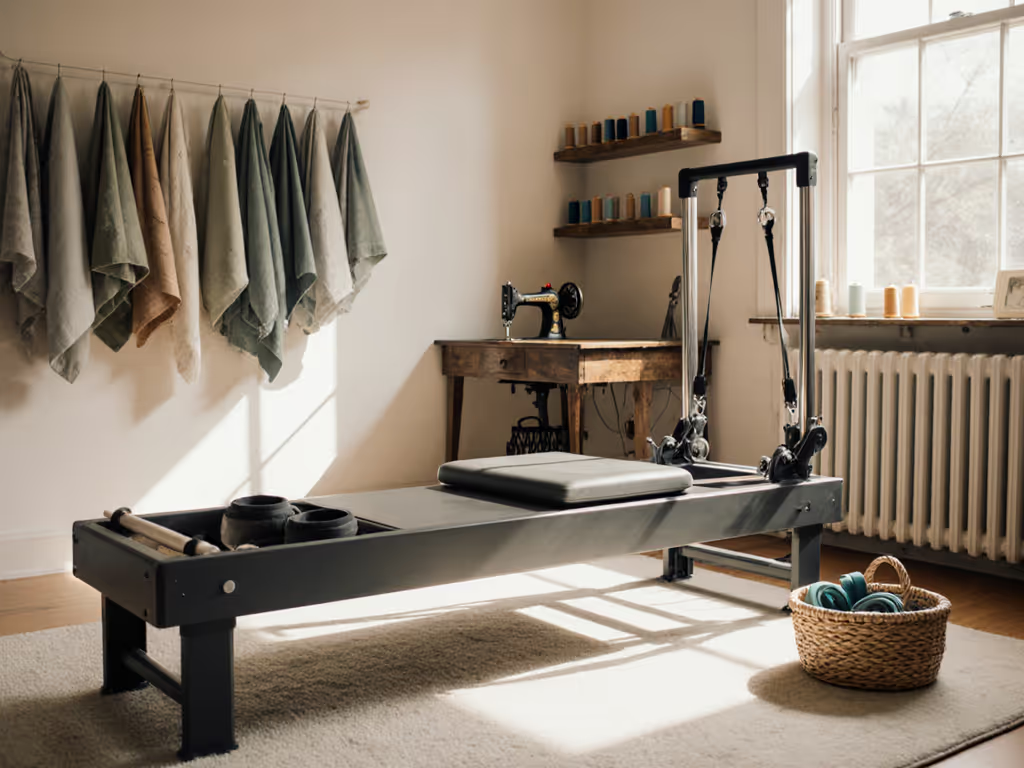
You don't need a full reformer wall to support neurological development. I usually build from smallest footprint outward.
1. Mat + positioning props (the true foundation)
- Thick Pilates mat for joint comfort and fall protection.
- Wedges, bolsters, and pillows to adjust hip and trunk angles, support side-lying, or reduce extension tone.
- Non-slip pads under the mat to stop drift on wood or tile.
These are quiet, easy to store, and form the base of most CP exercise modifications, and you can layer resistance or support onto them. If you're comparing options, our Pilates mat thickness and grip guide will help you choose the right base layer.
2. Straps, loops, and cuffs
Drawing on general assistive-device principles (like adapted grips, non-slip materials, and positioning aids for everyday tasks[3]) I look for:
- Soft, wide straps that distribute pressure and are tolerable on sensitive skin.
- Closed loops and cuffs that can be used even when hand grasp is limited.
- Color-coding for springs or bands to make intensity changes quick, especially in multi-client micro-studios.
These function as spasticity management tools by allowing controlled, low-friction movement arcs instead of "all-or-nothing" muscle firing.
3. Resistance bands and small props
- Bands and tubes: quiet, flexible resistance that can be anchored around doors, heavy furniture, or stable rails.
- Small balls and cushions: promote midline control, adductor work, or gentle trunk rotation.
- Magic circle-style rings: can assist or resist, but for CP I prioritize versions with softer tension and padded handles.
Together, these create a compact set of neurological development equipment (not because they change the nervous system by themselves, but because they enable repeated, graded practice of targeted movement patterns).
4. Compact reformer or sliding carriage (if space and budget allow)
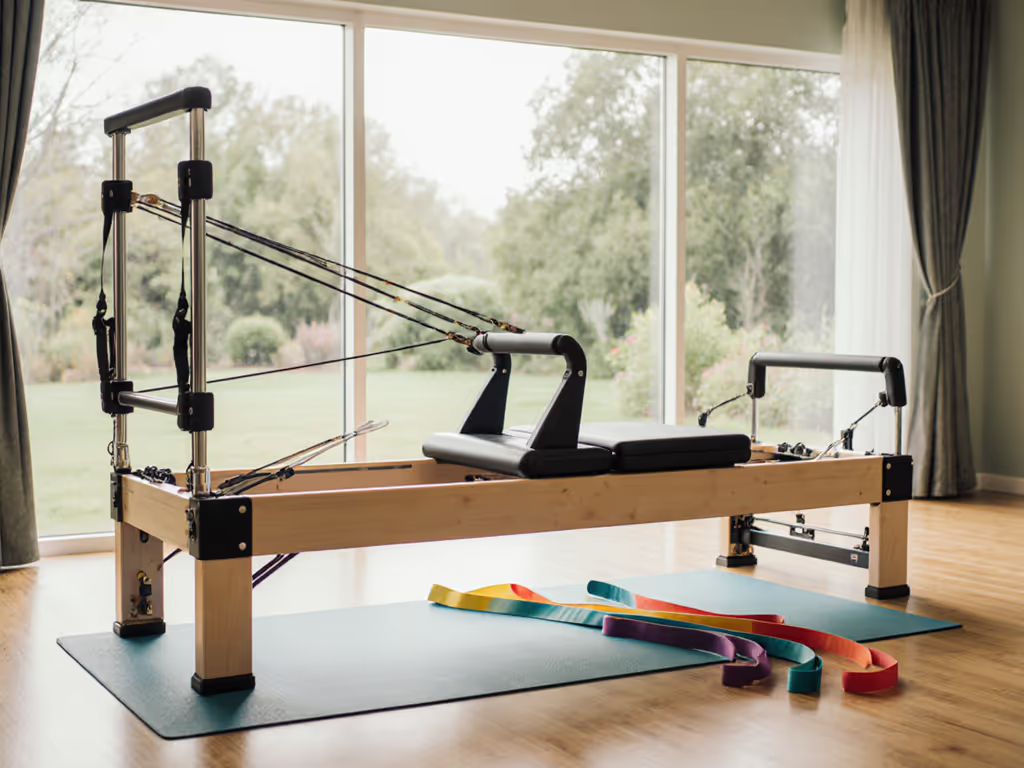
Reformer work has been shown to help children with CP gain better control over their movements when guided appropriately.[1][2] Key apartment-building considerations: For room-by-room solutions, see our flooring setup guide to match isolation to hardwood, tile, or carpet.
- Low-noise carriage with damped end-stops to avoid thumps on each rep.
- Adjustable, light springs to allow very small resistance changes.
- Side stabilizers or grab bars to support balance during transfers.
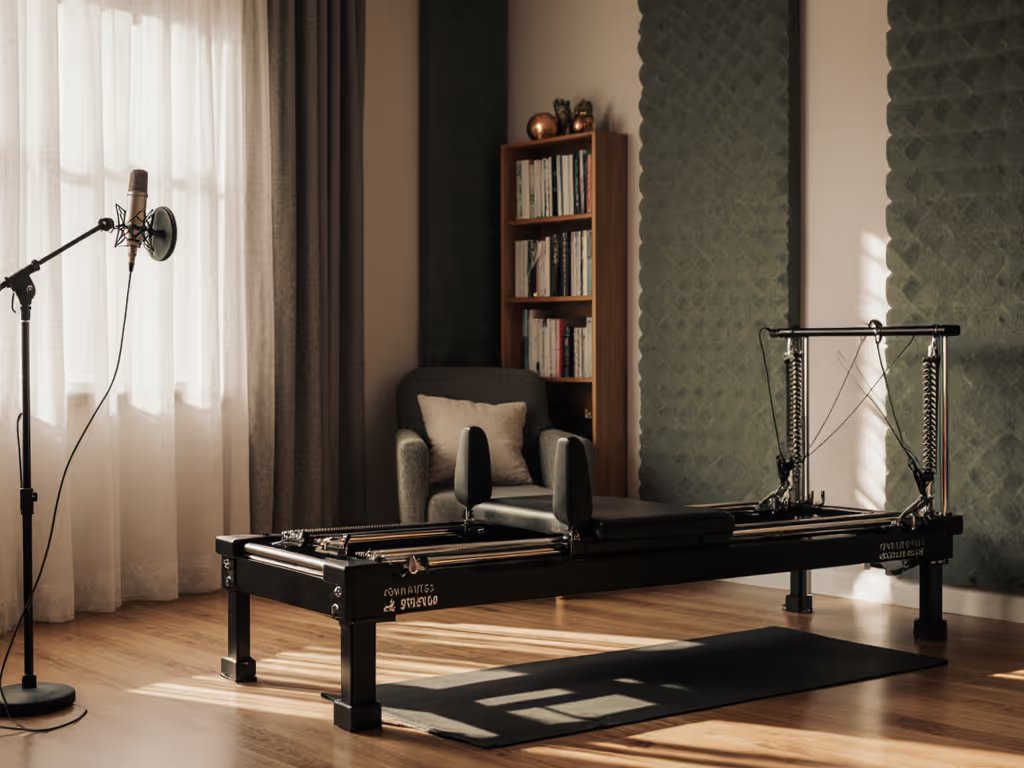
- Floor isolation: thick rubber or composite platforms under the frame to reduce vibration transfer to neighbors below.
For micro-studios (1-4 reformers), I map reformer placement to keep carriages from striking end stops toward shared walls.
How do CP movement adaptations change how we use standard Pilates gear?
CP is a spectrum, but some common movement themes guide adaptive equipment protocols:
- Spasticity: muscles may jump into sudden contraction, especially with fast movement, stretch, or effort.
- Weakness and selective motor control limits: difficulty activating specific muscles without others joining in.
- Asymmetry: one side stronger, more flexible, or more controllable than the other.
- Balance and coordination challenges: sitting, kneeling, or standing positions may need added support.
Here's how that translates into practice:
- Tempo and range:
- Slower, more predictable movements.
- Shorter ranges at first, expanding only when the person can control both direction changes.
- More contact points:
- Using headrests, shoulder blocks, lateral bolsters, and loops to give the body more feedback and security.
- Assisted grips and foot placements:
- Hand or foot cuffs when grasp is limited.
- Wider footbar or parallel bars for standing support.
- Segmented tasks:
- Breaking a complex exercise (e.g., a reformer lunge) into parts: weight shift → supported step → partial lunge → full pattern.
- Quiet reset script for each exercise:
- A pre-planned sequence for changing springs, repositioning props, and transitioning the client that is both predictable for the nervous system and quiet for the building.
How can Pilates equipment support safe spasticity management?
Spasticity is complex and must be addressed under medical supervision, but from an equipment and operations standpoint, I look for:
- Adjustable resistance that starts very light to avoid triggering sudden contractions.
- Stable anchoring so the body doesn't feel like it's slipping or tipping, which can increase tone.
- Surfaces that are firm but cushioned, giving clear feedback without pressure points.
Clinical and guidance reports note that Pilates-based programs can improve strength, flexibility, and posture in people with CP, which may indirectly support more comfortable movement patterns.[1][2] Those gains depend on consistency and appropriate progression (not on any single piece of equipment).
In apartments, spasticity often shows up as unexpected tapping or banging on the floor or frame. Strong floor pads under bed-level or mat setups can reduce both noise and fear of "bothering the downstairs neighbor," which itself can increase tension.
What special noise and neighbor factors matter for CP Pilates in shared buildings?
In CP, movement can include unplanned impacts (heel drops, elbow taps, or sudden shifts). Good news: most of this can be engineered down.
Key noise controls I use in tight buildings:
-
Layered floor protection
-
Base: dense rubber or cork underlayment.
-
Top: thick mat that extends beyond the equipment footprint.
-
Damped contact points
-
Felt or rubber at equipment feet.
-
Soft bumpers where carriages or moving parts meet hard stops.
-
No metal-on-metal surprises
-
Regular checks for loose bolts or misaligned springs (early squeaks only get louder).
-
Light, CP-friendly lubrication schedule that avoids strong smells.
-
Schedule engineering
-
Higher-risk, more dynamic work during hours when neighbors are less sensitive.
-
Quieter, mat-based sessions during typical "nap" or therapy hours.
In one of my earliest micro-studios, a single mid-day thump through a shared wall with a therapist's office forced us to redesign everything: class timing, equipment layout, and isolation pads. Once we corrected the noise paths, throughput recovered and complaints stopped. That's the level of integration I aim for in every CP-adapted setup.
Operational excellence here is quiet, predictable, and almost invisible to your neighbors.
How can micro-studios run CP-inclusive sessions without losing throughput?
For small studios in mixed-use buildings, the fear is: "If I slow down for adaptations, I'll lose capacity." I've found the opposite when the flow is designed upfront.
Strategies that work:
-
Standardized station kits Each station gets the same CP-friendly prop set: mat, wedge, strap set, small ball, and band. No cross-room prop hunts.
-
Pre-written reset scripts per station Clear, 30-60 second scripts between clients: sanitize, re-set springs, return props to default positions (all silent and repeatable).
-
Zoned layouts
-
"Quiet zone" for mat and bodyweight work against shared walls.
-
"Variable noise zone" for reformer or tower work near interior walls.
-
Buffer time for transfers Build 3-5 minutes into the schedule for CP clients to transfer, adjust braces or devices, and settle, so you're not rushing and increasing risk.
Throughput is not just how many people you can book; it's how many safe, repeatable, respectful sessions you can run in a given building without conflict.
FAQ quick hits
Do I need a reformer to help someone with CP?
No. Many benefits associated with Pilates for CP (improved posture, flexibility, and core strength) can be pursued with mat and small props when guided appropriately.[1][2] A reformer adds options but also adds noise, cost, and footprint.
How do I coordinate Pilates with a physical therapist or medical team?
Share:
- A list of planned exercises and positions.
- Photo or video of the home or studio setup.
- Any equipment specs that could affect safety (height, stability, resistance ranges).
Ask them to flag contraindicated positions or movements and to suggest priorities (e.g., trunk rotation vs. standing balance).
What about kids vs. adults with CP?
The principles are similar (positioning, graded resistance, safety), but kids often require:
- More playful props and shorter blocks of focused work.
- Extra emphasis on family training so caregivers can manage equipment and set up safely.
In all cases, evidence and guidelines emphasize working with professionals experienced in disability adaptations.[2]
How do I manage equipment maintenance without adding squeaks?
- Follow manufacturer maintenance schedules, but choose low-odor cleaners and lubricants suitable for small, enclosed spaces.
- Log every noise change (rattle, squeak, or clack) and fix it within a week. Small sounds grow into big neighbor complaints. For step-by-step care and quiet-operation tips, see our reformer maintenance guide.
Next Steps: Building a CP-Friendly, Neighbor-Safe Pilates Corner
To move from theory to practice:
- Align with the medical team
- Confirm that Pilates-based work is appropriate.
- Ask for movement priorities and any red-flag positions.
- Measure your space and noise pathway
- Map floor type, shared walls, and neighbors' most sensitive hours.
- Decide where your "quiet zone" will be.
- Start with a mat and two props
- One positioning tool (wedge/bolster).
- One resistance tool (band/soft ring). Build consistency before expanding your equipment ecosystem.
- Build your floor isolation stack
- Combine dense underlayment with a high-quality mat.
- Test with a friend downstairs if possible.
- Write a simple reset script
- 60-second sequence after each session: sanitize, return props, check for noise, and restore default spring/band settings.
- Track response over 4-6 weeks
- Movement notes: which positions feel safer, more controlled.
- Environment notes: any noise concerns, any neighbor feedback.
From there, you can decide whether to add more advanced cerebral palsy Pilates equipment or simply deepen your existing CP movement adaptations. Quiet consistency beats complicated hardware every time.
Related Articles