Pilates Patent History: The Design Evolution Timeline
By Keiko Tanaka • 23rd Feb

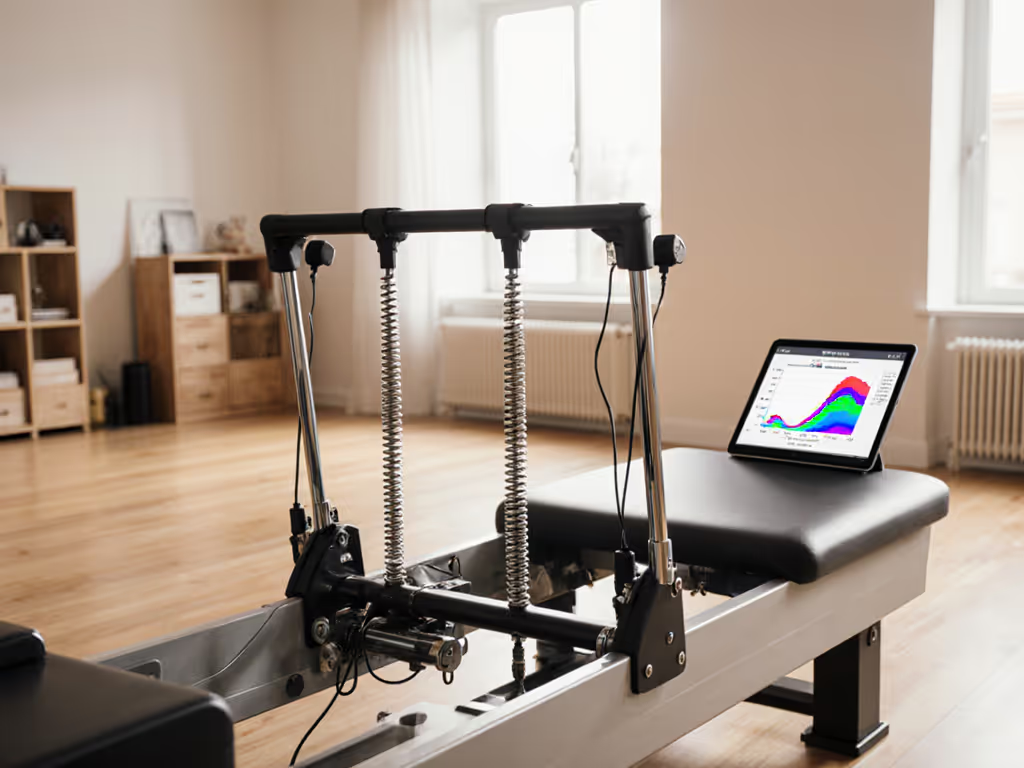
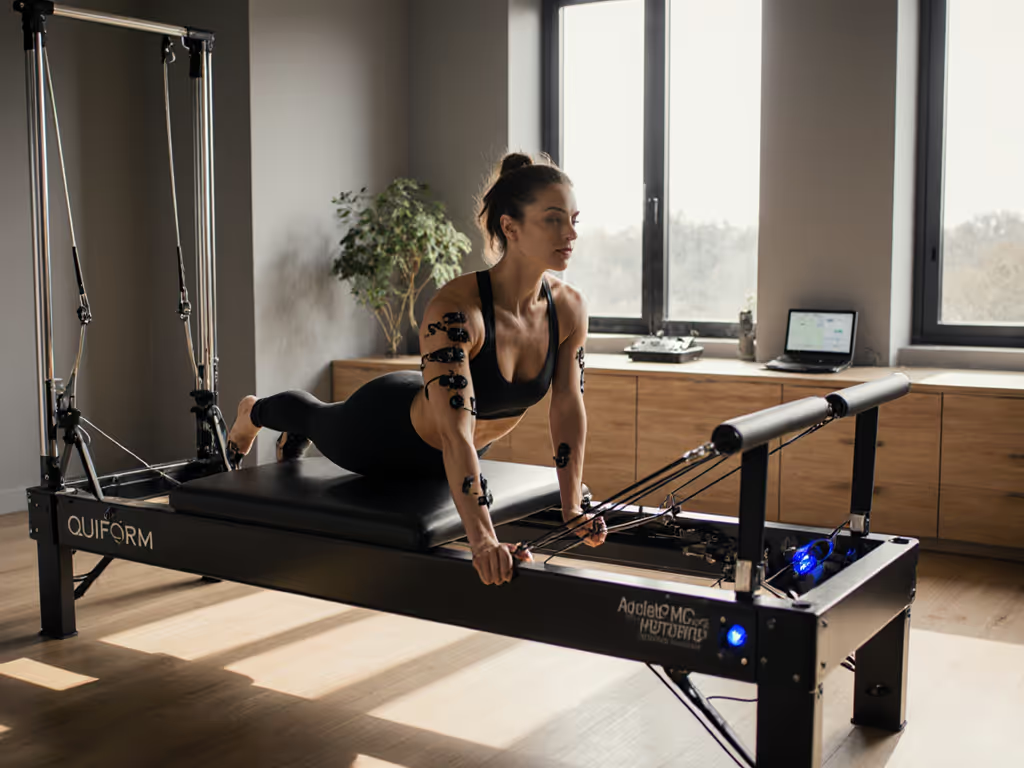
When I first mapped sound signatures in a tiny studio above that jazz bar, I wasn't thinking about Joseph Pilates' 1920s blueprint books. But I was doing what he did: measuring constraints and adjusting design to live within them. Pilates patent history isn't abstract mechanical nostalgia, it is a record of a man solving real spatial and functional problems in real rooms, then iterating when life demanded more. Understanding the equipment innovation timeline, from spring counts to frame materials, tells us something crucial about what works in tight spaces and what breaks down under daily use. For a broader historical arc, see our apparatus evolution guide focused on space-smart, silent solutions. This FAQ digs into those patents, what they reveal about design intent, and why your apartment matters.
What Were Joseph Pilates' First Patents, and What Did They Solve For?
Joseph Pilates didn't start with the Reformer. Before emigrating to the U.S., he filed his first patent while living in Germany: the Foot Corrector (circa early 1920s).[1] This apparatus featured a pedal-based design with adjustable resistance (notably, the original patent suggested springs, but also air or water as alternative damping options).[1] That flexibility in resistance design tells you something: Pilates was testing what would remain stable and responsive under repetitive use. Spring-based systems won, but the fact that he considered pneumatic or hydraulic damping shows a designer thinking about isolation and shock absorption even then.
The Tensometer came next: a metal hand-weight with a compression spring inside and a meter displaying applied force.[1] This wasn't flashy. It was metric-first: he built the measurement into the tool so users could quantify effort and progress. Measure, adjust, verify... quiet that earns your neighbor's forgiveness.
The Wunda Chair (filed 1931, patented 1934) reveals something equally telling about stability priorities.[1] The original design had a spring-loaded seat and a spring-loaded back, with interchangeable metal foot plates that inserted into the pedal.[1] Archival film shows Pilates manually adding these plates to demonstrate proper setup, a low-tech, high-precision approach to user safety and correct positioning.[1] That obsession with parts that fit precisely, without wobble, runs through every iteration.
When Did the Reformer Patent Arrive, and Why Did It Take So Long?
Joseph Pilates didn't patent the Reformer until 1926, after emigrating to the U.S., nearly a decade after his first patents.[5] He called it the Universal Reformer, inspired by bed contraptions he'd built in Germany more than a decade earlier.[5] Here's what's striking: the original patent design for a spring-based apparatus included a weight stack and no springs, according to historical analysis.[3] That design was never produced commercially.[3]
Why? Likely because springs proved superior for damping, control, and durability in a compact footprint. The patent record shows iteration in real time: he abandoned a heavier, bulkier weight-stack approach in favor of spring-based resistance that took up less floor space and moved more smoothly. That's not a small detail for anyone living in 400 square feet. If you're shopping for home use, start with our quiet compact reformer picks for space and noise data.
Balanced Body's early Reformer (1976) offers a test note: the original was 80 inches long with 4 springs.[3] Within a few years, teachers requested a fifth, lighter spring to increase the control demand, a counterintuitive design choice, because more springs meant more nuance, not more power.[3] A teacher named Stefan Frease also pioneered colored yarn to differentiate spring weight, the precursor to today's color-coded tabs.[3] Each change was performance-driven, not aesthetic.
What Do the Patents Tell Us About Stability and Vibration in Shared Spaces?
The original Bed Patents (the metal V-beds in Sean Gallager's archive) combined sleeping furniture with spring-and-strap exercise apparatus.[1] This is the early adaptation problem solved: how do you fit a full studio into one piece of furniture in a room where people also rest? For tight homes, compare Tower vs Reformer setups to minimize footprint without sacrificing range. The frame had to be rigid enough to handle dynamic movement without flexing or creaking, yet low enough in vibration to coexist with sleep. That's not a casual constraint.
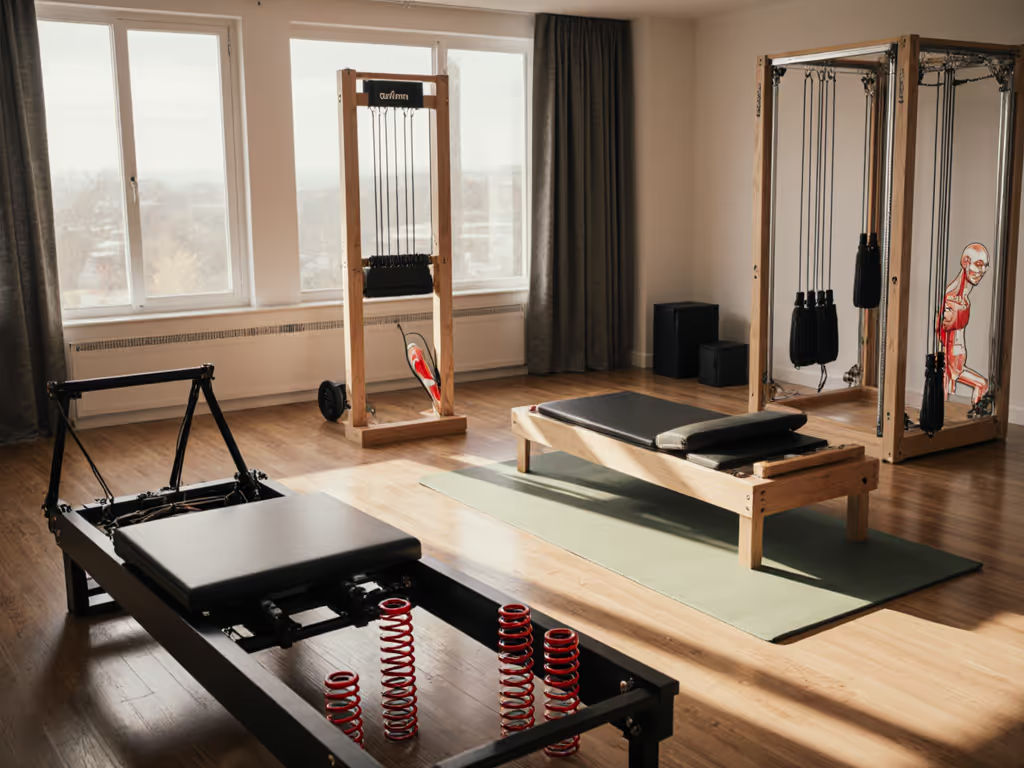
Balanced Body's design choices, and later STOTT Pilates' and Peak Pilates' innovations, moved toward wood and then metal frames with adjustable components.[3] STOTT added an adjustable pulley on the back and a riser system that moved the second pulley closer to the top of the unit, optimizing leverage without adding floor footprint.[3] Peak Pilates consolidated a Reformer and Tower into one system for space-limited settings, a direct response to the apartment-dwelling reality Pilates himself faced: do more with less.
Why Does Patent History Matter for Modern Buyers?
There's a myth that older equipment was simply "better." The patents suggest something different: every revision addressed real failure modes. The first Reformer lacked adjustable features and complex functionality; later systems added modularity.[4] Balanced Body's addition of a lighter fifth spring reduced the risk of control loss on easier exercises, a nuance born from thousands of real-world sessions.
When modern designers face the same constraints you do (limited square footage, shared walls, wood or concrete floors that transmit vibration) they're solving the same spatial and acoustic problems Pilates did in his small New York studio. The fact that springs won over weight stacks; that modularity beat one-size-fits-all rigidity; that colored differentiation reduced setup error, these aren't accidents. They're patterns.
Understanding this timeline also exposes marketing half-truths. Today's "revolutionary" claim to quietness or stability isn't new; it is a continuation of 100 years of iteration. What's new is transparent testing: decibel ratings, verified footprint specs, and durability benchmarks under real apartment conditions (the kind of metric-first assessment Pilates' own patents represented).
What Should You Prioritize When Choosing Equipment Today?
Look for intellectual property investment. Brands that update their designs, file improvements, and document testing are signaling confidence in durability and performance. Test notes from instructors matter more than celebrity endorsements; spring count and frame material matter more than aesthetics. A five-spring Reformer with color-coded tabs is the result of decades of refinement, not novelty.
For apartments: prioritize isolation at the frame level. See our flooring-specific setup guide for hardwood, tile, and carpet noise control. The V-bed patents show that frame geometry affects vibration transmission directly into flooring. Modern equipment with rubberized base isolation, properly sized and weighted for your floor type, echoes this insight. A foldable tower or mini-reformer that collapses to 30 inches of footprint when not in use is solving the space problem; a unit with damped carriage and isolated springs is solving the noise problem.
Ask vendors for objective specs: decibel readings during carriage movement, floor load distribution, and required clearance for setup. If they can't provide them, they don't have test data, a red flag whether you're in a studio or an apartment.
Where Does Patent Innovation Go From Here?
Since Joseph Pilates' death in 1967, the first new Pilates patents were issued in the late 1980s, including the Infinity Footbar, and later systems like the Shuttle 2000 (a horizontal jumping apparatus tested at universities and tested at The Pilates Studio).[2][7] The shift from mechanical refinement to integrated innovations (footbars, towers, attachments) mirrors the industry's maturation.
The 2000s trademark lawsuit victory (the term "Pilates" could not be trademarked) opened the field to independent innovation, but it also fragmented quality benchmarks.[2] That's why intellectual property in pilates matters now: without trademark protection forcing consistency, buyers must rely on patent documentation, testing transparency, and brand reputation.
For you in that apartment: this means the best equipment today won't look radically different from equipment from 2015. It will be quieter, more precisely engineered, and backed by measurable data, because the foundational problems Pilates solved haven't changed, only the rigor with which modern makers solve them.
Further Exploration: Dig into your chosen brand's patent filings and test certifications. Request decibel and vibration data specific to your floor type. Connect with instructors in similar spaces and ask what equipment they have tested long-term. That's the lineage of equipment design evolution... not flashy claims, but measure, adjust, verify.
Related Articles