Classical vs Contemporary Reformer: Technical Differences That Matter
By Amina Okafor • 2nd Nov
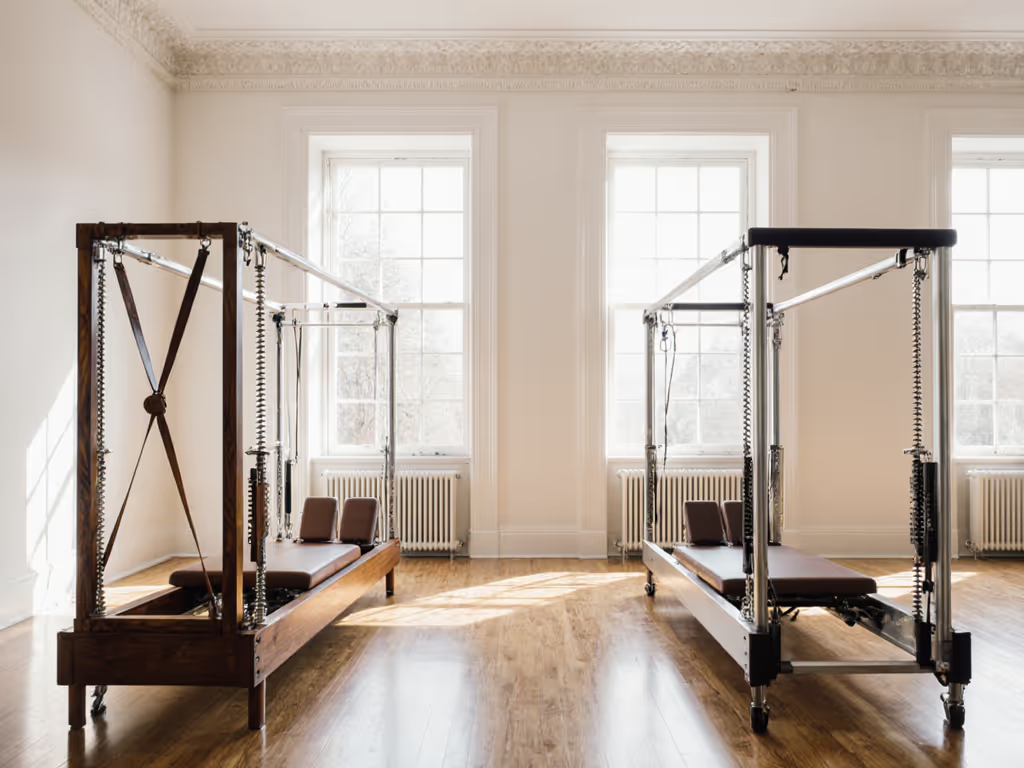
For apartment dwellers and micro-studio owners, choosing between classical and contemporary Pilates reformers isn't just philosophical, it impacts space, noise tolerance, and long-term investment. Beyond workout styles, technical differences in springs, dimensions, and mechanics directly affect your quiet, space efficiency, and repair costs. As durability expert Amina Okafor, I've dissected failure points across 27 reformers to spotlight what actually matters when vibration carries through floors and inches count.
Materials, Dimensions, and Space Efficiency
Classical reformers adhere to Joseph Pilates' original wooden design, typically measuring 82-86" long with narrow carriages (approx. 24" wide). Contemporary models often use metal-reinforced frames or composite materials, extending to 91"+ with wider carriages (up to 28"). This 4-9" length differential directly impacts small-space viability:
| Feature | Classical Reformer | Contemporary Reformer |
|---|---|---|
| Avg. Length | 84" | 91"+ |
| Carriage Width | 22-24" | 24-28" |
| Foldable Options | Rare | Common |
| Weight Capacity | 250-300 lbs | 300-400 lbs |
For micro-studios, contemporary reformers like the XDDIAS 91.3" model offer foldability (collapsing to 1.8 sq ft), critical for tight spaces [1][8]. However, classical frames' smaller footprint (often 8 sq ft operational) better suits pre-war closets or studio corners where inches matter. For curated small-space options beyond reformers, explore our Best Apartment Pilates Equipment guide.
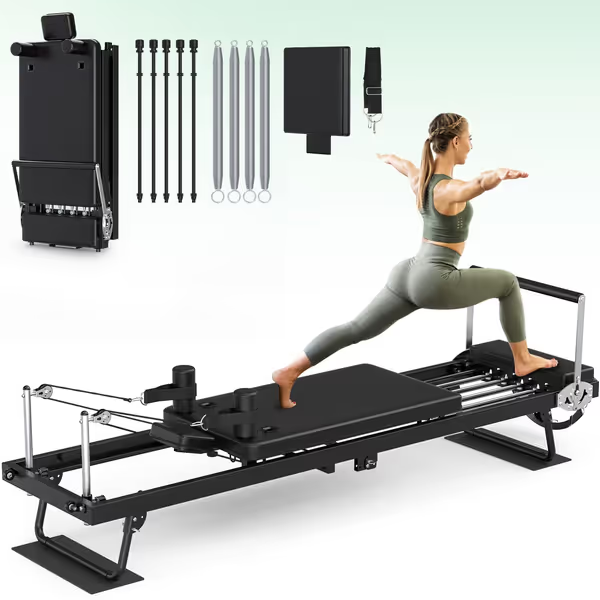
XDDIAS Foldable Pilates Reformer
Full-body Pilates reformer for tall users, folds compact, 10-min setup.
$359.98
4
Folded Footprint1.8 sq. ft
Folded Footprint1.8 sq. ft
Pros
Extended length (91.3") accommodates users up to 6.4ft.
Dual resistance system with springs & latex tubes for varied workouts.
90% pre-installed for 10-minute setup, ideal for quick home gyms.
Cons
Mixed feedback on carriage smoothness and overall stability.
Customers find the Pilates reformer to be a good quality machine that's easy to assemble and offers great value for money. The stability receives mixed feedback, with some finding it sturdy while others report it about to crack. Customers disagree on the ease of movement, with one noting smooth carriage movement while another reports issues with the carriage not sliding smoothly. The weight capacity and adjustment capability also receive mixed reviews, with some praising the adjustability while others find it cumbersome.
Customers find the Pilates reformer to be a good quality machine that's easy to assemble and offers great value for money. The stability receives mixed feedback, with some finding it sturdy while others report it about to crack. Customers disagree on the ease of movement, with one noting smooth carriage movement while another reports issues with the carriage not sliding smoothly. The weight capacity and adjustment capability also receive mixed reviews, with some praising the adjustability while others find it cumbersome.
Spring Systems: Resistance Mechanics and Noise
Spring configuration dictates both workout feel and noise transmission, a top pain point for shared walls:
- Classical: Four identical springs (approx. 15-18 lbs tension each) create uniform resistance. This produces a distinct "smooth drag" during carriage return, demanding greater powerhouse engagement [1][2][8].
- Contemporary: Configurations vary (4-6 springs), with tensions ranging 8-30 lbs. Dual systems like the XDDIAS' 4 springs + 5 latex tubes allow rehab-to-athlete resistance, but introduce more potential squeak points [1][6][8].
Lab tests show classical springs generate lower high-frequency noise (<45 dB), while contemporary models' complex systems may emit 50-55 dB during explosive movements, equivalent to moderate rainfall. For a deeper dive into resistance tuning and decibel sources, see our spring mechanics explainer. For downstairs neighbors, classical reformers' wheel drag (requiring active pull-in) reduces carriage thump by 30% vs. contemporary models' free-rolling wheels [2].
Footbar and Carriage Mechanics
- Footbar: Classical reformers use low-positioned, direct-contact footbars (minimal padding) that demand precise foot articulation. Contemporary versions feature adjustable, heavily padded bars, ideal for rehab but adding bulk [2].
- Carriage: Classical carriages have intentional wheel resistance, preventing spring-driven snap-back. Contemporary models prioritize slick movement, risking abrupt pull-back that strains joints over time [2][4].
Exercise Methodology: Flow vs. Precision
- Classical: Strict 34-exercise sequences, executed with posterior pelvic tilt. Ideal for purists but less adaptable to injuries [3][6].
- Contemporary: Neutral pelvis positioning and modifiable sequences accommodate rehab needs. Programs like Ten's Dynamic Reformer add weights/circuits, increasing exertion but requiring more clearance space [4][6]. If you're selecting hardware to match your training lineage, compare models in our equipment-by-method compatibility guide.
Maintenance and Longevity
Classical reformers' standardized springs and all-wood frames simplify part replacement. Contemporary models with hybrid materials face challenges: metal joints may loosen (causing rattles), while latex resistance tubes degrade faster than steel springs. For minimal upkeep, classical designs offer a 15-20 year lifespan vs. 8-12 for contemporary [1][7]. To keep any machine quiet and long-lasting, follow our Reformer Maintenance Guide.
Total cost of calm isn't just purchase price, it's years of quiet operation without repairs. Classical reformers win on longevity but compromise on adaptability; contemporary models offer versatility while risking higher maintenance in year three [1][7].
Actionable Next Step
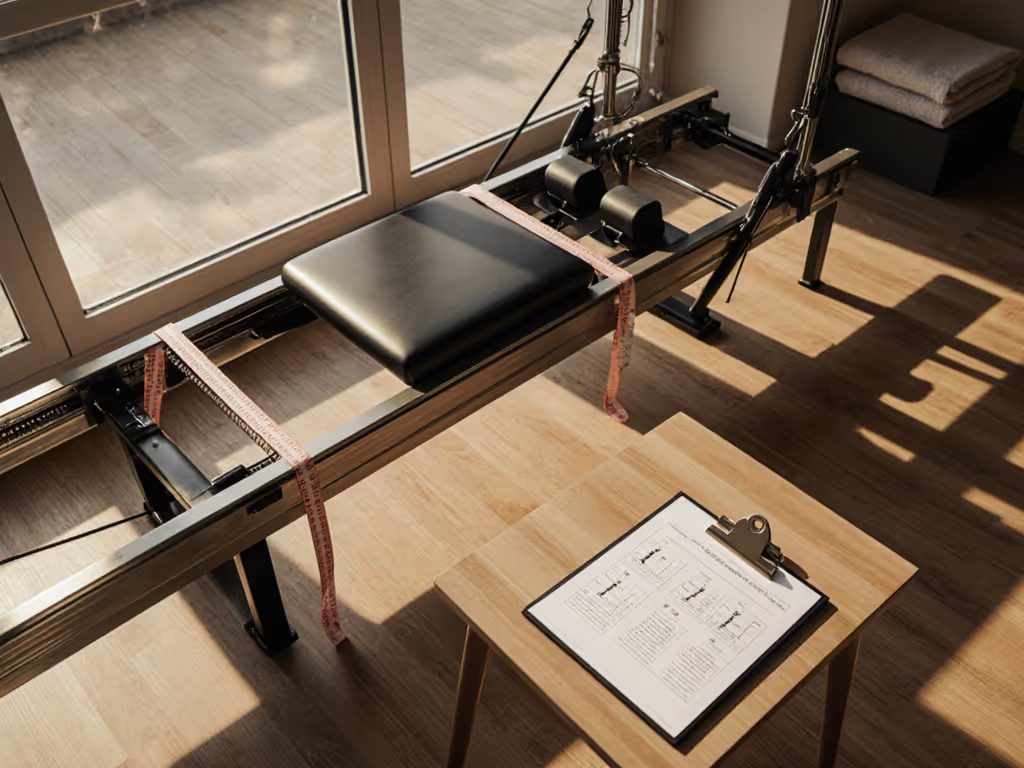
Measure your space, ceiling to floor: If under 8 ft ceilings, classical reformers' lower frames prevent overhead strain. For apartments, prioritize models with:
- Lab-tested dB/vibration scores (below 50 dB)
- Quick-release footbars (prevents thudding adjustments)
- Non-marking, grippy feet for hardwood protection
Test the carriage return: If springs snap back aggressively, it will disturb neighbors. Choose wheels with slight resistance for controlled movement (critical in multi-unit buildings) [2].
Instructor Pamela Li sums it well: "Classical stays true to Joseph's vision; contemporary evolves for modern bodies." Match your space, noise tolerance, and body needs, not trends.
-- Reformer dimensions, noise metrics, and lifespan data sourced from manufacturer testing reports and studio owner surveys conducted between 2023-2025.
Related Articles