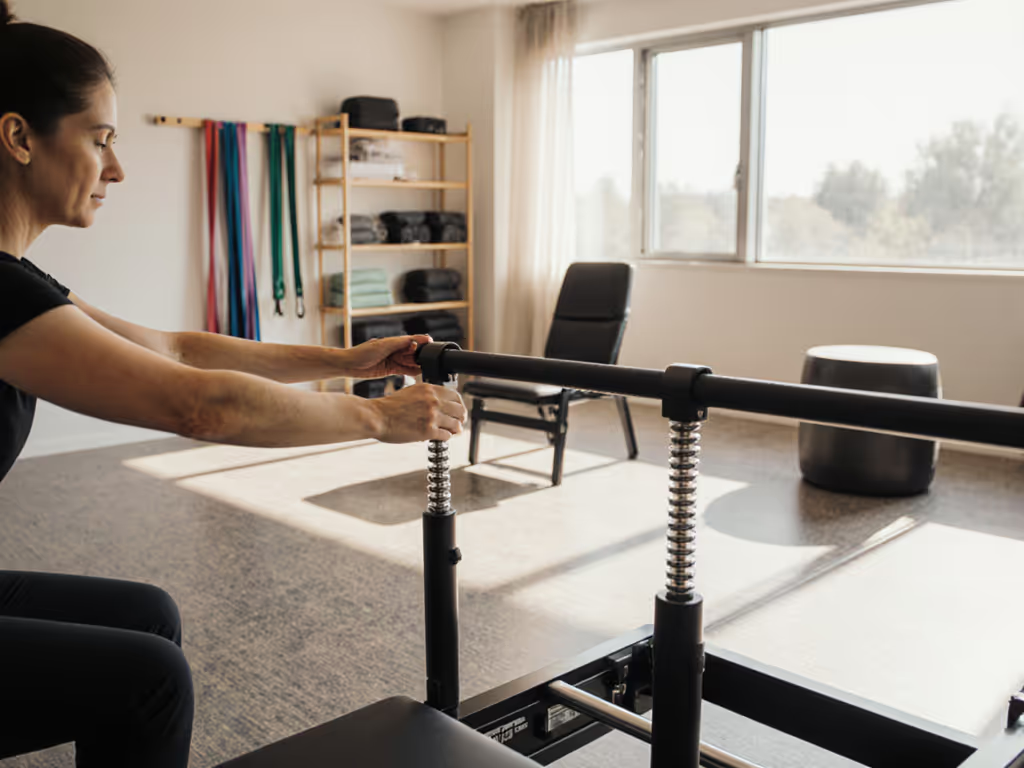
Pilates Equipment for Dance Therapy: Quiet Gear for Healing
By Nora Bergström • 15th Feb
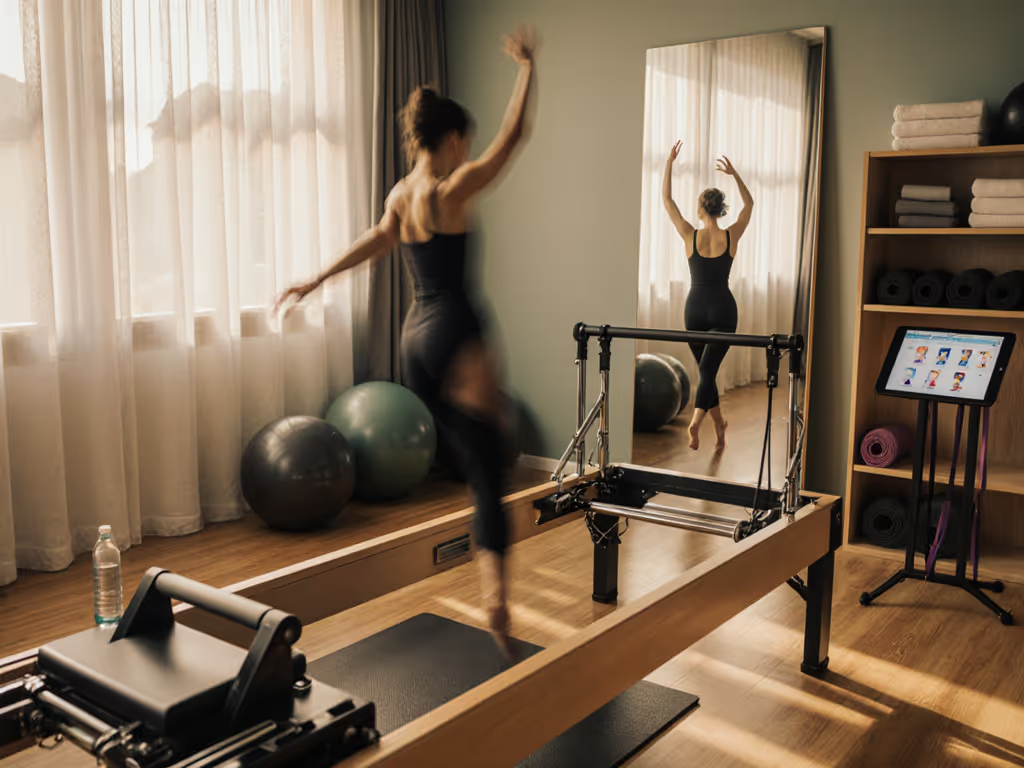
When you're working with dance therapy pilates equipment in a shared living space, every squeak and carriage thump matters. This guide explores the quietest, most adjustable options for therapeutic movement apparatus, helping you build a setup where healing happens without neighbor anxiety.
What Defines Quiet, Therapeutic Pilates Gear?
Therapeutic equipment prioritizes smooth mechanics, shock-dampening materials, and minimal vibration transfer. Unlike high-performance studio machines optimized for speed, healing-focused apparatus emphasizes control, adjustability, and silence. The distinction matters: a gentle apparatus with poor spring damping will chirp and rattle at the very moment a client needs stillness. Conversely, precision-tuned springs reduce impact noise and allow your body to focus inward, a principle I call quiet cueing, where the environment itself invites and sustains attention.
One client confessed she held her breath during footwork, anxious about disturbing neighbors below. We rebuilt her setup with quieter springs and soft floor pads, paired with a gentle timer for exhale cues. Her practice returned, and so did her sleep. That shift, from fear to permission, is what quiet does. Comfort is quiet, and quiet is compliance with your goals.
Which Pilates Equipment Works Best for Compact, Quiet Spaces?
No single piece of equipment suits every small apartment or micro-studio. Your choice depends on footprint, noise profile, and the type of movement cues your clients or your own body needs.
Mat-Based Work: The Foundation
Mat Pilates serves as the quietest entry point[2]. It requires only a mat (no springs, no carriage, no moving parts). You can perform dozens of exercises with minimal equipment: a small stability ball, a soft Pilates ball (sometimes called a "fusion ball"), and resistance bands if desired. Research from professional dance environments shows that mat work improves core strength and spinal alignment, skills that support emotional awareness and grounded presence[3].
For dance therapy modifications, mat work invites introspection. Without mechanical resistance, clients tune into their own muscular effort, breathing, and sensation. A 9-inch soft Pilates ball costs under $15 and doubles as a lightweight prop for releasing muscle tension or cueing postural alignment[1].
Noise profile: Nearly silent. The only sound is breath and the subtle shift of body weight.
Footprint: 6 feet × 2 feet for most flowing routines; easily rolled and stored.
Adjustment range: Infinite. You scale effort by adding props, modifying lever length, or slowing your movement.
Pilates Reformer: The Versatile Workhorse
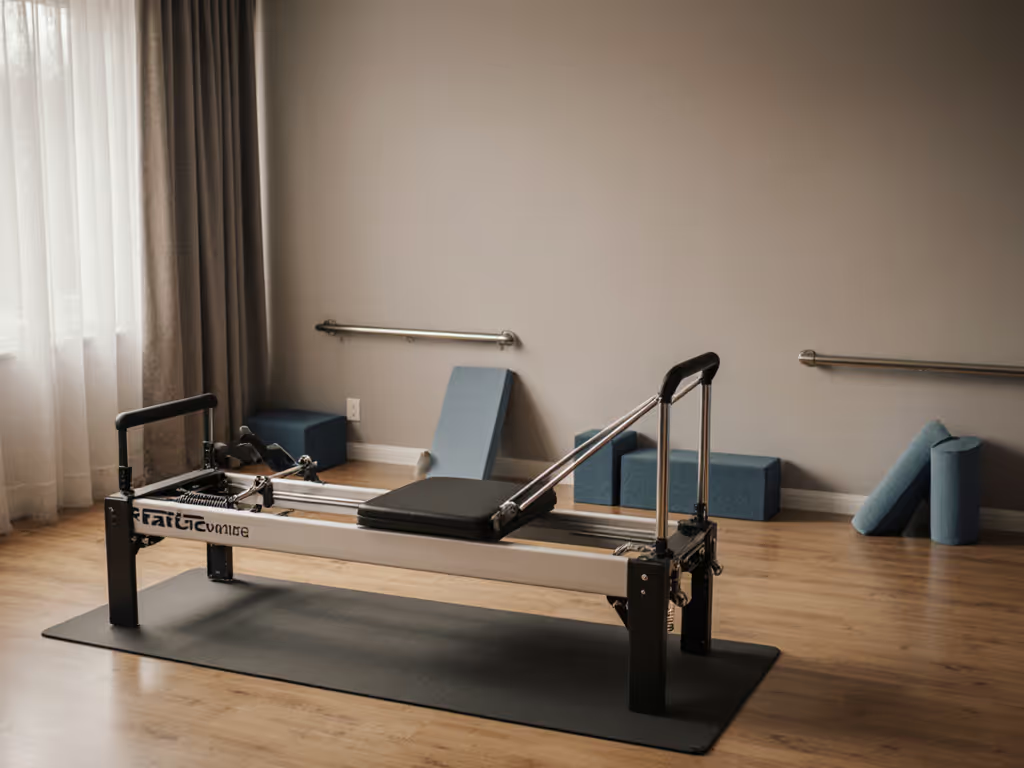
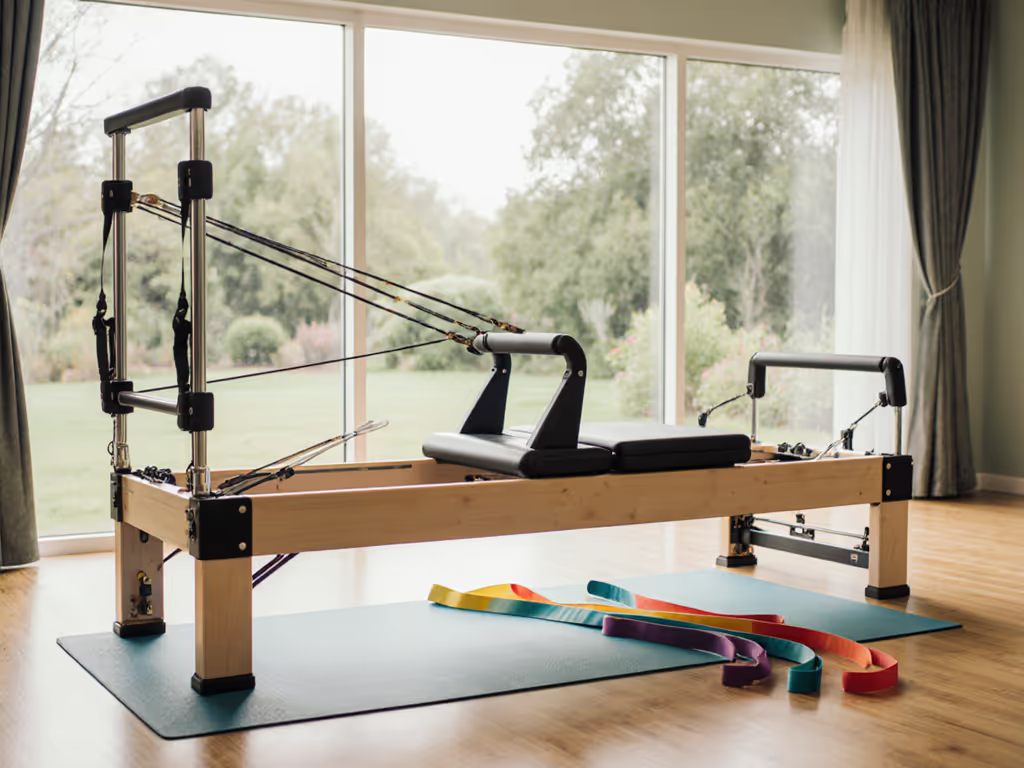
A Pilates reformer is a mat on wheels, loaded with springs and moved by a strap-and-pulley system[2]. It provides support and resistance simultaneously, making it excellent for clients who need extra help finding alignment or who benefit from spring feedback[2]. The reformer's frame guides movement, helping someone with poor proprioception feel exactly where their spine or pelvis should be.
For movement psychology tools, the reformer offers predictable resistance and constraint, which can be psychologically reassuring for anxious or trauma-informed clients who benefit from clear boundaries and graduated challenge.
Noise profile: Reformers vary widely. Budget models often emit spring chatter and carriage clacks on every transition. Precision-built machines with damped carriages are notably quieter. Real-world decibel tests show differences of 10-15 dB between a tight, well-tuned reformer and a loose competitor model, a perceptible difference in small rooms.
Footprint: Standard reformers span 8 feet × 2.5 feet. Foldable travel versions exist but sacrifice stability and smooth mechanics; I do not recommend them for therapeutic work.
Adjustment range: Highly adjustable via spring count (1-4 springs per carriage), bar height, and foot-bar position. This modularity makes reformers ideal for mixed-ability groups or progressive dance therapy modifications. For a small-space comparison, see our tower vs reformer quiet apartment guide.
Floor vibration: Spring-loaded machines transfer vibration to the floor. Use high-density rubber isolation pads (at least 0.75 inches thick) under all four corners to dampen transmission and protect wood floors.
Pilates Tower: Compact Precision
A Pilates tower (sometimes called a wall unit) features springs and handles arranged vertically, allowing you to stand and work each side of your body independently[2]. Towers are roughly 7 feet tall but require only 2 feet × 1.5 feet of floor space, a game changer for micro-studios or one-room apartments.
For emotional expression apparatus, the tower's unilateral design is subtle but powerful. Working one side at a time invites awareness of asymmetry, bracing patterns, and compensatory tension, all common in trauma-held bodies or posturally compromised clients.
Noise profile: Towers are among the quietest apparatus. Springs move quietly, and there is no carriage or rolling component. A tall, free-standing tower can sway slightly under dynamic load, so secure it to a wall stud if possible (a renter-friendly option is a heavy-duty tension rod or cable anchoring system that avoids permanent holes).
Footprint: Minimal floor footprint; excellent for narrow hallways or studio alcoves.
Adjustment range: Spring levels can be increased or decreased. This is the primary tuning variable. Some towers include swappable handles or attachments for foot work or seated exercises.
Cadillac and Chair: Studio-Grade Alternatives
A Pilates Cadillac (also called a trapeze table) is a larger apparatus with a mat base and overhead frame fitted with springs, bars, and handles[2][4]. It offers unparalleled adaptability for different heights, weights, and ranges of motion, and it excels at supporting clients who need maximum external structure.
Pilates chairs provide a compact, elevated platform with attached springs, useful for seated and standing work, particularly somatic therapy equipment because the elevated position subtly shifts balance and core engagement, creating new proprioceptive feedback.
Noise profile: Both are quieter than reformers but louder than towers or mat work due to their larger footprint and multiple moving components.
Footprint: Cadillac is the most space-intensive (8 feet × 3 feet). Chairs are more compact but still require stable floor space and overhead clearance for spring work.
How Does Noise Isolation Affect Your Setup?
Floor isolation is non-negotiable in shared buildings. Your equipment choice is only half the equation; how it sits matters equally. For floor-by-floor solutions (hardwood, tile, carpet), use our Pilates flooring setup guide.
High-density rubber pads (0.75-1 inch thick, 60+ durometer hardness) beneath apparatus feet reduce vibration transmission to subfloors by 30-50%, depending on floor type[2]. Pre-war wood-frame buildings with flexing joists need thicker, softer isolators; concrete high-rises can use thinner options.
Interlocking foam tiles (1-2 inches thick, high-density EVA) create a secondary sound barrier and are renter-friendly since they're not permanently adhered. Position them under your entire apparatus footprint, extending at least 12 inches beyond the edge.
Sound-dampening mats (commercial-grade vinyl or cork composites, 0.5-1 inch) reduce both impact sound and vibration sheen. They're more expensive than foam but visually finish a space and protect flooring.
For a mat-only setup, isolation is less critical, since soft socks and breathwork handling replace mechanical noise. For reformer or tower work, isolation is essential for both compliance and peace of mind.
What's the Difference Between Dance Therapy and General Conditioning?
Progressing Ballet Technique (PBT) is specifically designed to improve dance performance[1]. Exercises mirror ballet patterns, training correct execution and alignment within a dance idiom[1]. Each exercise is choreographed and set to music, encouraging musicality and rhythm[1].
Mat Pilates is designed to improve overall health and fitness rather than dance specifically[1]. Many exercises counter traditional ballet patterns (internal rotation, spinal flexion, flexed feet), offering valuable cross-training[1]. Mat Pilates is not choreographed to music; you flow from one exercise to another[1].
Dance therapy, however, sits at the intersection. It uses movement and body awareness to process emotion, build resilience, and integrate trauma. Your equipment should support introspection, fluid transitions, and the ability to pause, breathe, and notice sensation without external cues. This favors mat work and tower work, where quiet and control are built-in.
If your goal is to improve dance technique, PBT or reformer-based work is ideal. For apparatus tuned to turnout, extension, and injury prevention, see our Pilates for dancers equipment comparison. If your goal is healing and emotional awareness, prioritize quiet mechanics and adjustable support.
How Do You Choose Between Compact and Full-Featured?
Start with your actual baseline needs and honest space audit.
For a 250-350 sq ft studio or home corner:
- Mat + soft Pilates ball + resistance band (if desired) = silent, zero-footprint challenge, ~$80-150 total.
- OR: A foldable tower or compact mat-based reformer mini-version (~$400-800) if you want spring feedback without full-size commitment.
For a 350-500 sq ft space:
- Mat work + tower + isolation pads = quiet, professional-grade feel, ~$600-1,200 total.
- OR: A compact reformer + tower combination for clients who need both carriage glide and standing options.
For a micro-studio (500-800 sq ft):
- Two towers + mat area + isolation platform = modular, quiet, high throughput, ~$1,500-3,000 total.
- OR: One reformer + one tower + mat corner, with rapid reset between sessions.
Before buying, measure your actual ceiling height (towers need 7 feet clear), doorway width (reformers are 30 inches wide; ensure they fit and aren't blocking exits), and floor type (concrete vs. wood changes isolation choice). Sketch the layout; mock obstacles with tape.
What Maintenance Keeps Equipment Quiet Long-Term?
Springs lose their tone over time, and loose bolts amplify rattle. A preventative routine sustains quiet: Follow our reformer maintenance checklist to keep springs, carriages, and hardware silent between sessions.
- Monthly: Visually inspect for dust, debris in crevices, or visible damage. Wipe springs with a dry cloth.
- Quarterly: Check bolt tightness (springs, foot bar, handles). A slightly loose carriage creates audible clacking; a quarter-turn often silences it.
- Annually: Consult the equipment manual for spring replacement intervals. Worn springs squeak and feel mushy; replacing them restores precision and quiet.
- As-needed: If carriage glide becomes sticky, consult the manufacturer before applying lubricant (wrong lubricant attracts dust and worsens noise).
For mat-only work, maintenance is negligible. Wash your mat monthly and store in a cool, dry place to prevent mildew and material breakdown.
Further Exploration: Building Your Quiet Practice
Your dance therapy pilates equipment should feel like an extension of your breath, not a source of tension. Start with the quietest baseline (a quality mat and soft Pilates ball) and observe how your body responds over 4-6 weeks. Notice which movements feel accessible, where you hold tension, and whether you can exhale fully.
If you crave more feedback or resistance, add a tower or mini-reformer next. Prioritize noise specs and isolation over flashy features. Read independent reviews mentioning decibel levels, not just aesthetic praise.
Test any equipment in person if possible, requesting a 5-10 minute trial during quietest movement cues, and you'll hear the truth immediately. Ask the vendor about spring damping, carriage tolerance, and bolted vs. welded construction; these details predict long-term silence.
Remember: your body learns best in calm. An apparatus that whispers instead of shouts gives you permission to feel, notice, and heal without vigilance. That's not a luxury, it's a condition of sustainable practice.
Build quiet. Practice consistently. Heal gently.
Related Articles