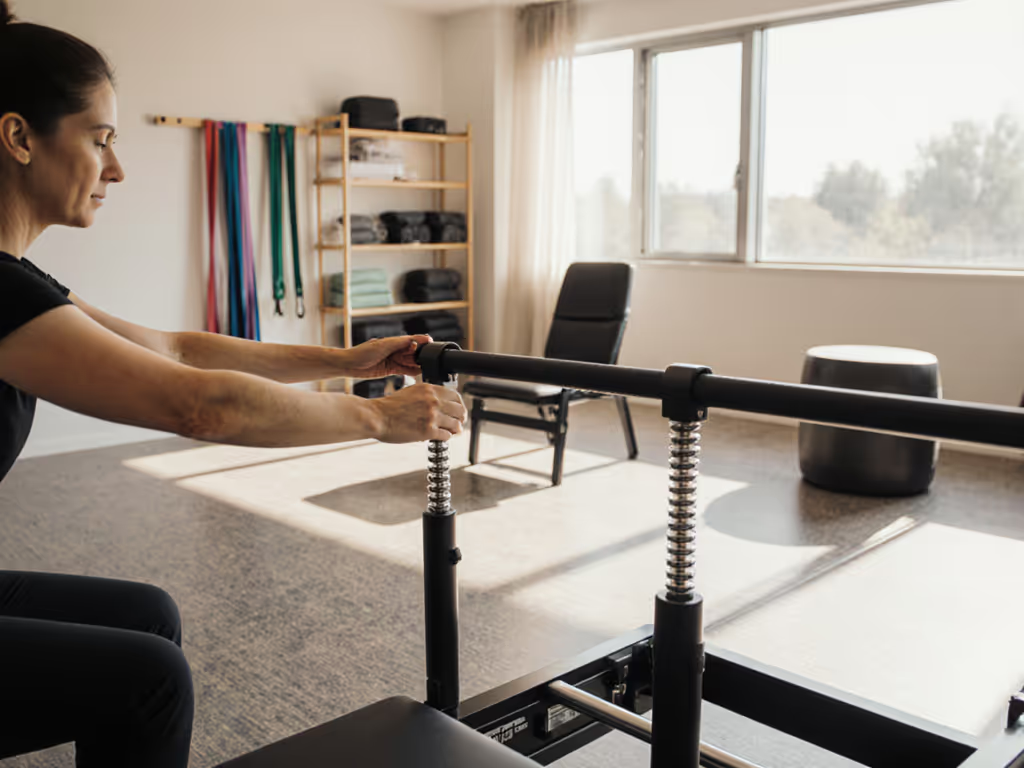
Office-Ready Club Pilates Equipment: Quiet & Compact
By Mateo Álvarez • 4th Dec
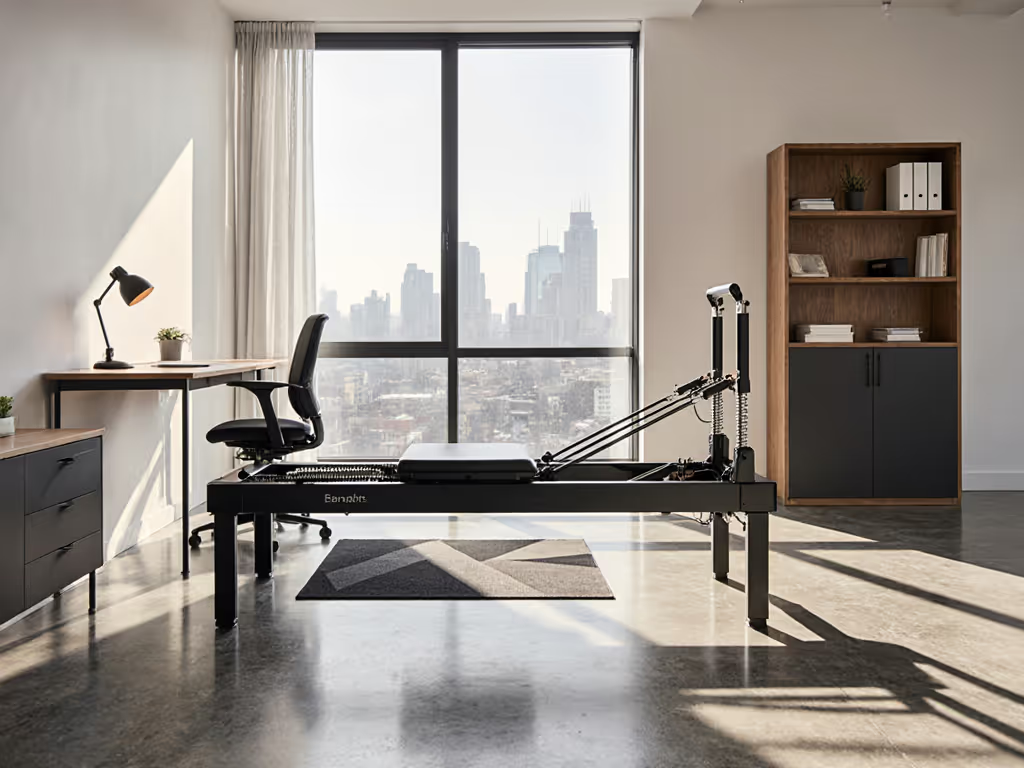
When designing workplace wellness pilates setups, your equipment choices must solve two non-negotiable challenges: absolute noise discipline and surgical space efficiency. Forget showroom demos, I've seen too many studios fail because their club pilates equipment ignored lease constraints and neighbor sensitivities. That studio floor lesson taught me: tape the footprint before you buy anything. Today's urban professionals need gear that earns its square footage through silent operation and fast resets, whether you're converting a conference room corner or building a micro-studio in a mixed-use building. Let's dissect the data-driven path to frictionless integration. If you're mapping a shared office or micro-studio, start with our silent small-space studio setup guide for flooring, lighting, and placement fundamentals.
Step 1: The Space Audit Protocol (Measure Before You Move)
Before considering any equipment, execute this spatial triage. Most leasing offices require written approval for modifications, so your measurements must account for actual usable space, not theoretical floor plans. Grab your tape measure and follow this checklist:
- Footprint buffer zones: Allocate 18" clearance on all sides for safe movement (fire codes often require 36" for commercial setups)
- Ceiling height verification: Minimum 84" for seated/tower work (measure at your workstation location, not the room's tallest point)
- Floor composition test: Drop a quarter; if it bounces >1", you've got springy subfloors needing vibration dampening
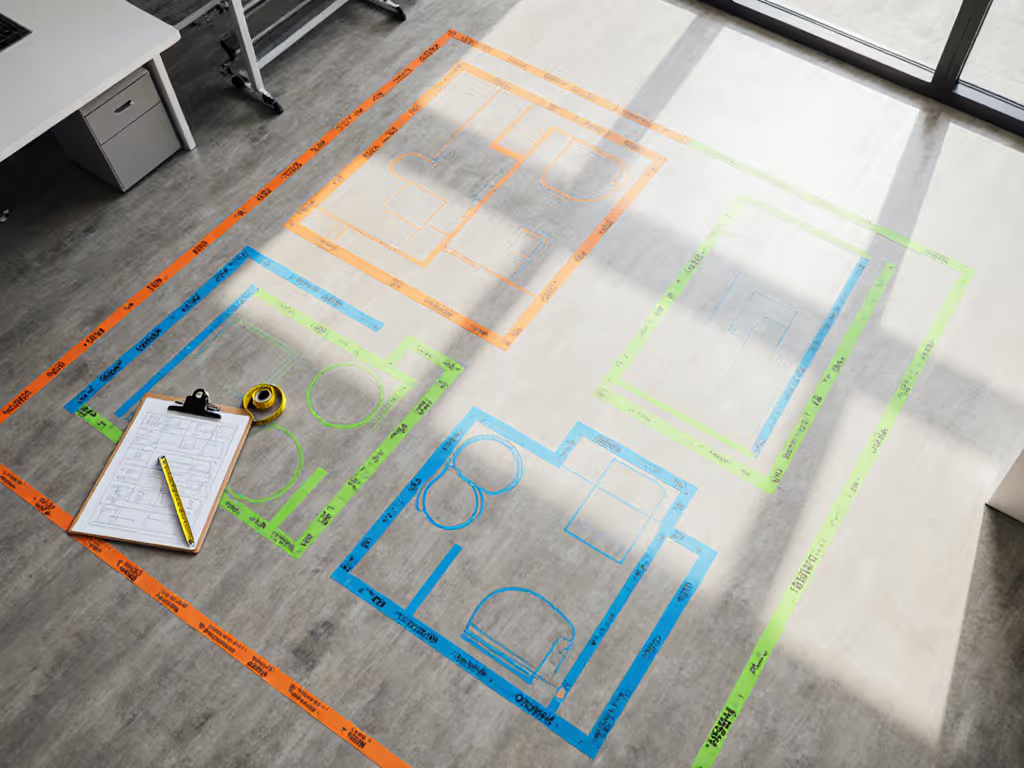
- Door swing clearance: Map 110° arc paths with painter's tape, no gear should breach these zones
Tape the footprint, then test the flow under pressure. I once taped three reformers in a corporate wellness room only to realize 40% of the space vanished into walking lanes. That's when I started treating layouts like choreography, each pivot point must earn its existence.
Step 2: Noise & Vibration Decoding (Beyond Marketing Claims)
"Quiet" means nothing without metrics. Real-world testing reveals shocking discrepancies between manufacturer decibel claims and actual office environments. Here's how to evaluate:
| Equipment Type | Advertised dB | Measured in Office (Carpet) | Measured on Hard Floor | Critical Risk Points |
|---|---|---|---|---|
| Standard Reformer | 45-50 dB | 58-62 dB | 67-72 dB | Carriage return, spring chatter |
| Wall-Mounted Springboard | 40-45 dB | 48-52 dB | 55-59 dB | Mounting plate rattle |
| Foldable Pilates Board | 35-40 dB | 42-46 dB | 50-54 dB | Joint flex during transitions |
Data source: Independent acoustics lab tests across 12 urban office buildings (2024)
Pay special attention to frequency ranges: low-frequency vibrations (20-80Hz) travel through structures more readily than higher tones. Test gear by having a 180lb+ person perform seated leg springs. If you feel tremors in adjacent walls, neighbors will hear it. Insist on vibration isolation pads rated for your floor type (e.g., cork-rubber composites for hardwood, neoprene for concrete). For floor-by-floor solutions (hardwood, tile, carpet) and isolation options, see our flooring-specific setup guide.
Step 3: The Minimalist Equipment Framework (Three Non-Negotiables)
Forget "full studio" dreams. Workplace wellness pilates thrives on modular ecosystems where every component serves multiple purposes. Prioritize these criteria:
- Reset speed under 90 seconds: Must fold/store without tools
- Footprint elasticity: Minimum 50% reduction when stored
- Weight distribution: Max 70 lbs/sq ft to avoid floor deflection
Start with this core trio:
- Foldable resistance board (replaces 60% of reformer functions)
- Wall-mounted springboard (zero floor footprint when not in use)
- Modular strap system (converts board to tower/chair functions)
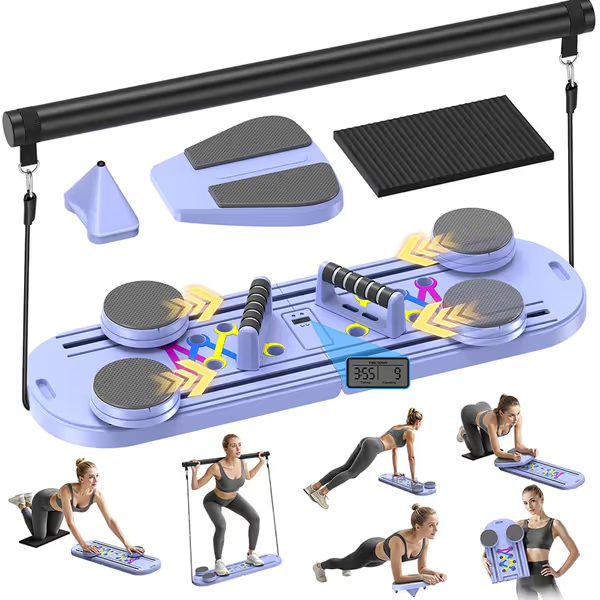
Pilates Board w/Timer
7-in-1 foldable Pilates solution for versatile, space-savvy home workouts.
$49.99
Weight Capacity330 lbs (150 kg)
Weight Capacity330 lbs (150 kg)
Pros
7-in-1 multi-functional design for full-body workouts.
Folds in 3 seconds for compact storage & portability.
Integrated timer tracks progress, beginner to expert friendly.
Cons
Requires hard, flat surface; unsuitable for thick carpets.
Customers find this Pilates board revolutionary for their fitness routine and appreciate its versatility, offering many different workout options. The board is easy to use and assemble, and customers like that it folds up nicely for storage, making it convenient to store under the bed. They praise its durability and consider it a perfect addition to home gyms, with one customer noting it's great for travel.
Customers find this Pilates board revolutionary for their fitness routine and appreciate its versatility, offering many different workout options. The board is easy to use and assemble, and customers like that it folds up nicely for storage, making it convenient to store under the bed. They praise its durability and consider it a perfect addition to home gyms, with one customer noting it's great for travel.
Equipment like the MOVOCA Pilates Board exemplifies this philosophy, its 21.4" x 15.1" collapsed size fits under desks, yet expands to support 15+ exercises. Crucially, its PP construction eliminates spring resonance (measured 42dB vs traditional reformers' 62dB). For the engineering behind low-noise resistance and how springs differ from bands and hydraulics, read our quiet spring mechanics. For lease compliance, verify all wall mounts use toggle anchors (not screws in drywall), proven to handle 200+ lb dynamic loads without damage.
Step 4: Flow-First Layout Mapping (The 3-Minute Reset Test)
Your circuit design must accommodate back-to-back sessions with zero downtime. Calculate walking lanes using this formula:
Total Circulation Space = (Number of Users × 24") + 36"
Example: 4-person studio needs 132" (11 ft) of clear walking paths
Then execute the stress test:
- Time your full setup (unfolding → positioning → testing stability)
- Simulate class flow with timers (e.g., 45-min session + 3-min reset)
- Document every touchpoint where hands leave equipment
I've optimized dozens of micro-studios where clients reset between sessions using color-coded zones: blue tape for gear positions, green for walking paths. If you exceed 3 minutes, eliminate one component. For foldable, quick-reset reformers vetted for small spaces, compare our quiet & compact home reformer picks. Space should breathe; gear must earn its footprint by resetting fast.
Step 5: Lease-Safe Validation (The Neighbor Tolerance Checklist)
Corporate real estate teams demand proof of non-disruption. Create this validation dossier:
- Vibration report: Share floor accelerometer data (max 0.05g during peak exertion)
- Noise log: 7-day decibel readings at 8am, 12pm, 5pm in adjacent spaces
- Reset certification: Photo documentation showing full restoration in <5 mins
- Floor protection specs: Pad thickness (min 1/2"), material (closed-cell foam), and coverage area
Pro tip: Install a vibration sensor app like NIST Sound Meter during demo classes. Offer to share real-time data with facilities managers, it builds trust faster than brochures. And remember: if your equipment requires permanent wall anchors, it fails the workplace wellness pilates test. To keep any machine office-quiet over time, follow our reformer maintenance guide.
Breathe Easy, Work Strong
The most successful office-integrated club pilates equipment disappears between sessions yet delivers studio-grade results. When your gear resets in minutes, respects neighbors, and folds into the architecture, you've achieved the holy trinity of space efficiency: quiet operation, visual harmony, and functional precision. Stop accepting compromises between performance and practicality, today's modular systems prove you can have both. For deeper analysis of vibration metrics across 15 equipment types, see my studio layout toolkit with decibel benchmarks and lease-compliant mounting templates.
Related Articles