Best Pilates Equipment for Textile Workers – Ergonomic Comparison
By Mateo Álvarez • 23rd Mar
Textile workers (weavers, knitters, fiber artists, and craft professionals) face a unique and relentless ergonomic burden that generic fitness equipment simply doesn't address. Whether you're hand-knotting rugs, threading a floor loom, or managing repetitive needlework, your shoulders, wrists, hands, and spine absorb strain patterns that compound across years. The good news: targeted pilates equipment offers evidence-based solutions that reverse these patterns, but only if you choose the right pieces for your body and space. This comparison cuts through marketing noise and gives you clear measurements, isolation strategies, and a movement audit checklist so you can reclaim mobility without sacrificing your lease, your neighbors' peace, or your limited studio square footage.
The Textile Worker's Posture Crisis
Fiber crafts impose a distinct postural toll. Weaving locks your shoulders in subtle internal rotation, and that forward-rolled position repeats across thousands of loom passes. Knitting creates chronic finger flexor tension and wrist deviation stress, particularly in the dominant hand. Embroidery and detailed beadwork compress your cervical spine and upper thoracic region into kyphosis (forward slouch). Over months and years, these patterns calcify: your chest tightens, your mid-back flattens, your scapulae wing outward, and your wrists lose neutral positioning.
The result isn't just discomfort, it means textile craft injury prevention becomes non-negotiable for anyone hoping to practice beyond their 50s. Carpal tunnel syndrome, thoracic outlet compression, shoulder impingement, and chronic neck tension are not outliers in textile communities; they're occupational hazards.
Conventional stretching and generic resistance training miss the core issue. Pilates, by contrast, retrains the deep stabilizer muscles (serratus anterior, lower trapezius, deep abdominal wall) that textile work systematically silences. Research on occupational injury interventions confirms that programs combining movement education with precision resistance (particularly those addressing scapular and spinal alignment) significantly outperform stretching alone, especially for early-stage carpal tunnel and shoulder dysfunction[1].
But here's where space becomes your second constraint: most studio-grade reformers demand 8' × 3' footprints minimum, and they whisper through neighbors' ceilings on creaky floors. Urban textile studios (micro-workshops in converted apartments, co-working spaces, and shared maker hubs) can't accommodate that footprint or tolerate the noise. You need equipment that earns its square footage by delivering real ergonomic gains and resetting fast between sessions or clients. For model-by-model picks, see our quiet compact reformers for home use.
Why Compact Pilates Equipment Works for Fiber Artists
Pilates addresses the exact movement patterns textile work destroys:
- Scapular stabilization and mid-back extension: Reformer springs and resistance systems rebuild the lower trapezius and rhomboid strength that counteracts forward slouch. Unlike free weights, which amplify compression, spring-based systems decompress the spine while strengthening.
- Wrist and hand mobility restoration: Pilates equipment with adjustable resistance and knitting hand mobility tools (padded straps, hand-focused pulley systems) allows precise, low-load wrist positioning work. You can train neutral wrist extension and flexion without the jarring impact of gripping.
- Breath and spinal mobility: Barrel work (ladder and arc designs) opens the chest and decompresses the cervical and thoracic spine in ways mats alone cannot. For weavers who've spent 10 years in forward flexion, this is transformative.
- Core endurance for postural holding: Pilates builds the sustained, low-intensity core activation that holds good posture while you work, not just in the studio.
The key difference from generic reformers: weaving posture support requires equipment that isolates specific joints and muscle groups. A standard cardio-focused reformer floods you with too much resistance and too many options. Textile workers need guided, low-load, high-precision work.
Compact Pilates Equipment: Side-by-Side Comparison
For textile workers in tight urban spaces, two equipment classes solve the footprint and noise puzzle:
Studio-Grade Compact Reformers
These deliver professional-quality spring tension and adjustability in footprints under 8' × 2'[1].
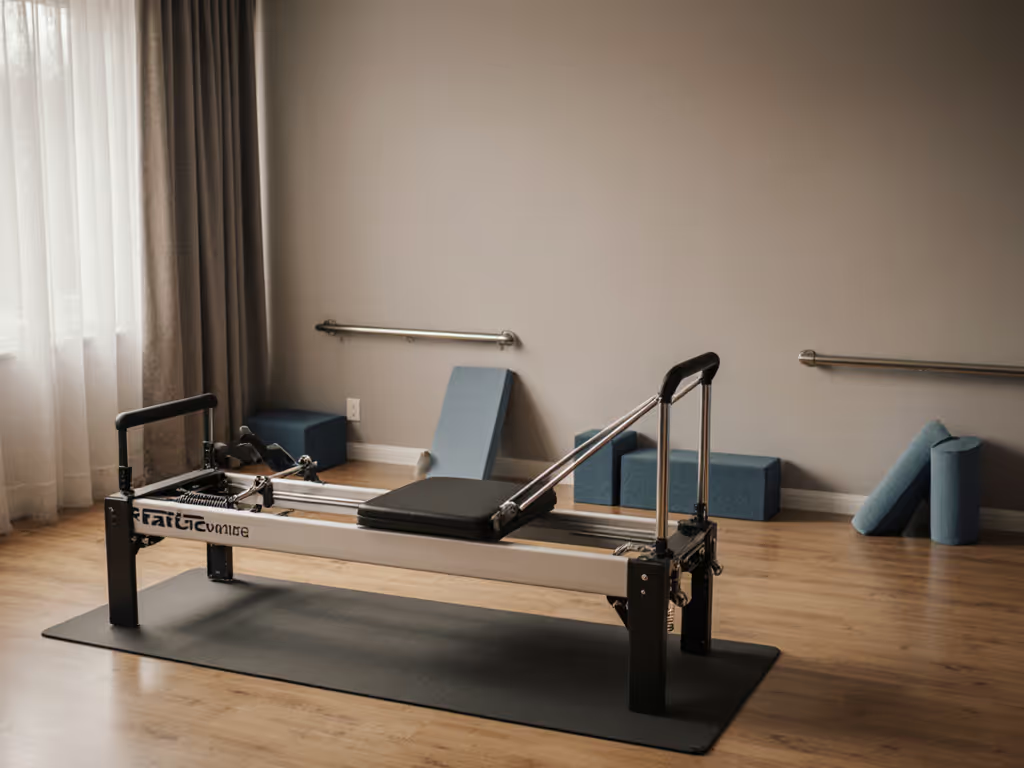
AeroPilates Pro 565 (Elevated Base Model)
- Footprint when in use: 86.25" × 23" (7.2' × 1.9')[1]
- Noise profile: 38 dB (quieter than library conversation)[1]
- Vibration: Low; elevated oak base isolates floor vibration, critical on hard apartment floors[1]
- RSI-specific features: Adjustable spring tension + pulley-width system for shoulder and wrist isolation[1]
- Folding: Does not fold; requires permanent placement[1]
- Best for: Textile workers with moderate space and chronic shoulder or wrist symptoms; the adjustable pulley width precisely positions hand straps for fiber art repetitive strain gear work[1]
- Weight capacity: 300 lbs[1]
Premier 701 (Foldable Model)
- Footprint when in use: 7.2' × 1.9'[1]
- Footprint when stored: 46" × 25" × 14.5' (tucked beside a bed or in a closet)[1]
- Noise profile: 40 dB (bungee cords create less vibration on hard surfaces)[1]
- Vibration: Moderate; benefits from isolation mat on hard floors[1]
- RSI-specific features: Elastic bungee resistance provides smoother movement transitions for acute wrist or elbow sensitivity[1]
- Platform width: 24" (vs. standard 14"), offering exceptional stability for balance concerns from prolonged sitting[1]
- Best for: Micro-studios, tight apartments (under 6' × 3'), or anyone prioritizing storage and zero-vibration transfer on upper floors[1]
- Weight capacity: 300 lbs[1]
Comparison Matrix
| Feature | AeroPilates Pro 565 | Premier 701 |
|---|---|---|
| Decibel level (normal use) | 38 dB | 40 dB |
| Vibration isolation quality | Low (elevated base) | Moderate (isolation mat recommended) |
| In-use footprint | 7.8' × 2' | 7.2' × 1.9' |
| Stored footprint | Same (non-folding) | 3.9' × 2.1' × 1.2' |
| Spring tension adjustability | Spring + pulley width | Elastic resistance only |
| Best for textile workers with chronic symptoms | ✓✓✓ | ✓✓ |
| Best for acute flare-ups | ✓ | ✓✓✓ |
| Best for micro-studios | ✗ | ✓✓✓ |
Complementary Equipment for Hand and Wrist Focus
For textile workers specifically targeting ergonomics and knitting hand mobility, round out your compact setup with these lower-footprint additions: For add-ons that reduce noise and improve wrist comfort, check our quiet reformer accessories guide.
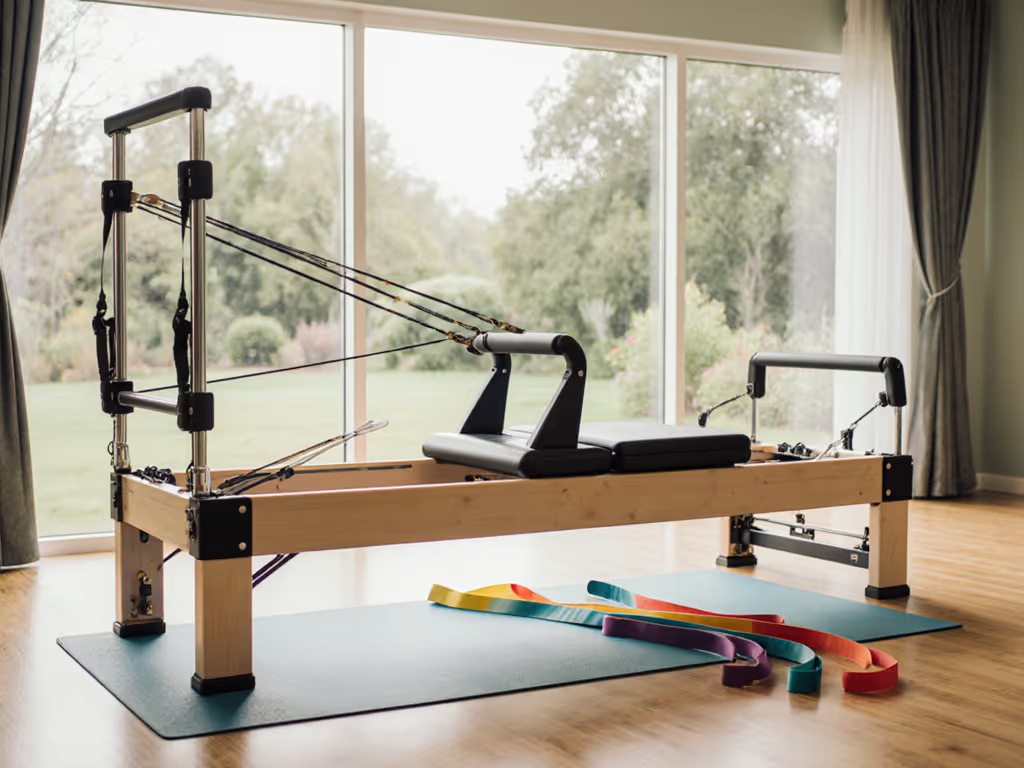
Resistance Bands (Studio-Quality) Cost: $15-$40 per band; professional sets $60-$150[2]. Studio-quality bands deliver precise tension for isolated hand and wrist mobility drills without reformer footprint. Perfect for daily maintenance work between longer sessions.
Wunda Chair (if space permits: ~48" × 24") Despite modest size, this padded seat with spring pedals targets core, legs, and upper body with remarkable intensity[2]. For textile workers, the pedal work rebuilds glute and hip stability (often shut down by prolonged sitting at looms), while the armrests support hand and wrist positioning drills[2]. Cost: $1,200-$2,800 new[2].
Pilates Mat (Professional-Grade, 1/2-inch) Thicker than yoga mats, professional mats provide firm support for spinal floor work without slipping on apartment floors[2]. Use with resistance bands for daily mobility and stretching routines[2].
Barrel (Arc or Spine Corrector) Arc barrels ($200-$500) and spine correctors ($500-$800) decompress the thoracic spine and open the chest, reversing weaver's kyphosis[2]. Occupy minimal floor space and can lean against a wall[2].
Space Planning: Tape the Footprint, Then Test the Flow Under Pressure
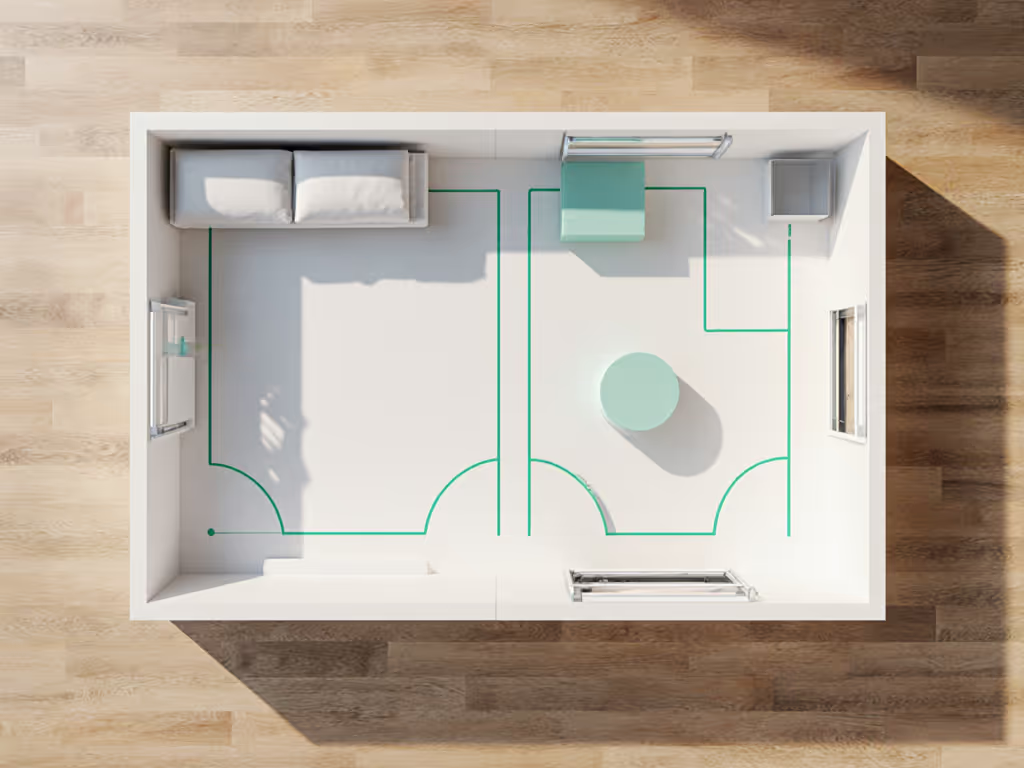
I learned this lesson the hard way. Years ago, I taped out three reformers on a micro-studio floor and thought I'd found the perfect layout, until the instructor tried to move between stations during a live class. Only one reformer left safe walking lanes for clients rotating or exiting quickly. That's when I started treating floor plans like choreography: every hinge, caster, and wall stud matters when people move.
For your textile workshop or compact studio, follow this checklist: Also review our silent small-space studio setup guide for flooring, lighting, and placement tips that keep workflows smooth.
-
Measure your true footprint (not the vendor's showroom spec).
- Use painter's tape to outline the reformer in-use dimensions.
- Add 18-24 inches on all sides for circulation lanes (client entry/exit, movement around machine).
- Mark door swings, closets, and obstacles in tape.
-
Test your flow under load.
- Walk the layout carrying equipment (or have a helper simulate client movement).
- Verify ceiling clearance if adding barrels or towers (typically 8-9 feet minimum).
- Confirm that folding or storage positions don't block exits.
-
Map your reset sequence.
- Time how long it takes to fold, store, or reconfigure between sessions.
- For foldable models, verify that stored footprint truly clears your active space.
- Practice resetting under time pressure; if it takes >5 minutes, your workflow will suffer.
-
Verify floor protection and vibration isolation. If your surface varies (hardwood, tile, carpet), see our flooring-specific setup guide for stability and noise fixes.
- Hard floors (concrete, laminate, tile): use isolation pads under reformer legs and under carriage endpoints[1].
- Wood or creaky floors: test decibel levels before inviting clients; measure vibration transmission to neighbors below.
- On thin floors, foldable reformers with bungee resistance (lower vibration profile) often outperform spring models[1].
-
Confirm wall anchoring (if needed).
- Some towers and barrels benefit from light wall bracing (non-structural, rental-safe).
- Never drill into load-bearing walls; consult your lease and avoid penalties.
Noise, Vibration, and Neighbor Considerations
The reality: quiet matters as much as performance in shared buildings. Your practice should strengthen you, not strain your relationship with neighbors downstairs or next door.
-
Measured decibel comparisons are non-negotiable. The AeroPilates Pro 565 registers 38 dB in independent testing (library-quiet)[1]. The Premier 701 registers 40 dB[1]. Both are dramatically quieter than cardio machines; treadmills often hit 75+ dB. Compare independent decibel measurements, not vendor claims.
-
Spring vs. elastic resistance: Traditional metal springs transmit more vibration on hard floors; elastic bungee systems (like the Premier 701) dampen vibration more effectively, especially on upper floors[1]. If you're in a walk-up or above a neighbor, elastic systems are worth the trade-off in adjustability.
-
Isolation pads are mandatory. Rubber isolation mats (1/2-inch thickness, minimum 300 lbs capacity) significantly reduce vibration transfer. Test with and without pads using a smartphone decibel app, you'll hear the difference.
-
Timing protocols: Morning and evening hours (before 8 AM, after 9 PM) may violate quiet hours in multi-unit buildings. Check your lease and consider scheduling longer sessions during midday or early evening.
Your Ergonomic Action Plan
Choosing the right pilates equipment for textile work isn't just about filling a space, it's about reversing years of postural damage and sustaining your craft practice long-term. Here's how to decide:
-
If you have 8' × 3' minimum and want maximum wrist/shoulder adjustability: Invest in the AeroPilates Pro 565. The spring tension and pulley-width system address chronic textile-worker shoulder and wrist strain directly. Accept the permanent footprint; it's worth it for precision[1].
-
If you're in a micro-studio or upper-floor apartment: Start with the Premier 701. Its foldability and lower vibration profile protect your lease and your downstairs neighbor. Pair it with resistance bands and a mat for daily maintenance work[1].
-
If you have limited budget: Begin with professional-grade mats, resistance bands ($60-$150 sets), and an arc barrel ($200-$500). This foundation addresses spinal decompression and hand mobility for ~$400-$650 total, then scale up to a reformer as funds allow[2].
-
For micro-studios serving textile-artist clients: Layer one full reformer (foldable, if space is under 6' × 3') with one Wunda Chair and barrels. This trio covers posture, hand mobility, and spinal work without exceeding a 12' × 10' footprint. Map your reset sequence carefully[1][2].
What's Next: Exploring Your Practice Path
The equipment you choose is only half the equation. The other half is movement programming tailored to textile work, targeted sequences that systematically strengthen your lower trapezius, decompress your cervical spine, and restore wrist mobility in ways generic Pilates classes do not.
Your next step: audit your daily textile practice. Which postures dominate (forward flexion? wrist deviation? sustained finger flexion)? Which areas ache first after a full work day? Use those pain signals to guide your reformer exercise selection. Then, before committing to a $2,000+ investment, tape the footprint, test circulation lanes with a friend, and (crucially) schedule a trial session with an instructor who understands textile-worker ergonomics. Your spine (and your creative output) will thank you.
The goal isn't to become a Pilates enthusiast; it's to reclaim your hands, your shoulders, and your ability to weave, knit, and create without compromise. Compact, quiet, lease-safe equipment makes that possible, if you choose deliberately and measure twice.
Related Articles