Home Office Pilates: Quiet Gear That Doubles as Furniture
By Priya Kapoor • 4th Apr
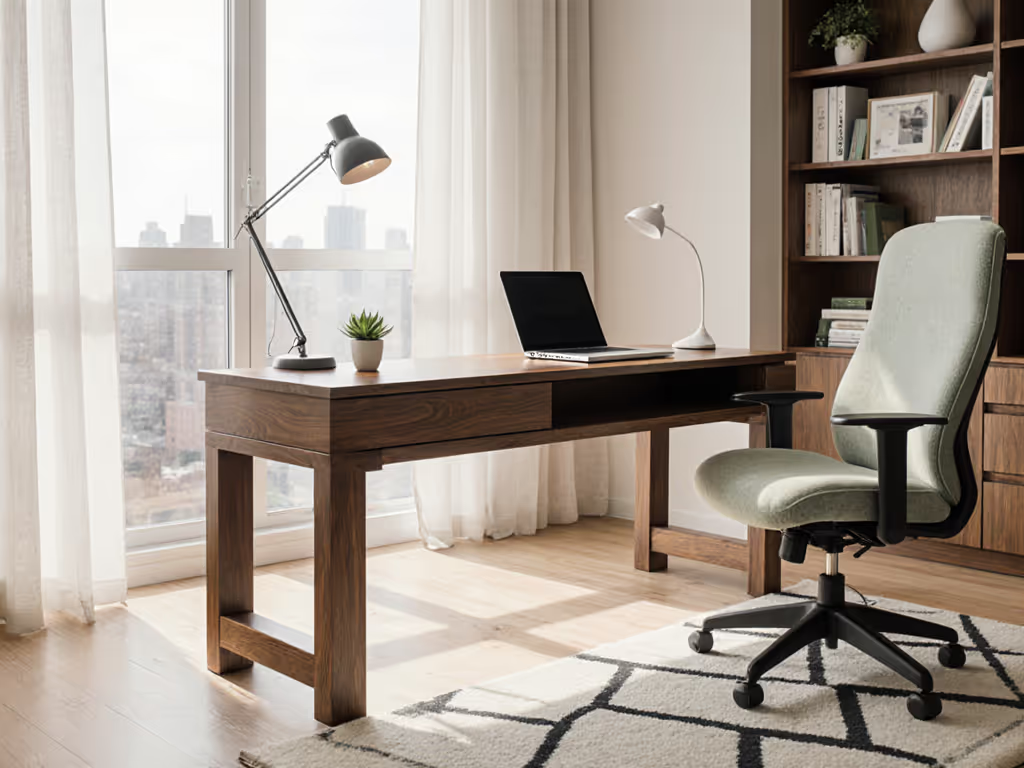
Pilates home exercise equipment doesn't have to announce itself. Whether you're in a pre-war walk-up, a glass-walled high-rise, or a shared co-working building, desk-integrated pilates gear can deliver studio-level results on your schedule, without the thump that triggers a knock on the wall at 7 a.m. The real challenge isn't finding equipment; it's finding equipment that respects both your fitness goals and your lease. For a curated starting point, see our best apartment Pilates equipment tested for quiet, small-space use.
This matters more than you might think. When I managed a micro-studio sandwiched between a therapist's office and a CPA firm, a single loud carriage impact during lunch hours nearly ended our tenancy. We learned quickly: flow that respects tenants next door is real operational excellence. That's when we swapped out spring-based resistance for anchored, low-vibration systems, added isolation pads, and rebuilt our class schedule around off-peak flow lanes. Throughput recovered. Complaints vanished. The insight stuck: operational excellence is quiet, predictable, and invisible to your neighbors.
For remote workers, micro-studio founders, and apartment dwellers building a home office pilates corner, the same principle applies. This guide cuts through marketing and focuses on what actually works: verified noise metrics, real space requirements, maintenance reality, and gear that integrates into your work environment without dominating it or disturbing anyone else.
The Home Office Pilates Problem: Why Standard Gear Fails
Why does traditional pilates equipment struggle in apartments and home offices?
Space is the first constraint. A full-size reformer is roughly 8 feet long and 2.5 feet wide, territory a spare bedroom or corner might not have. Towers demand overhead clearance. Mat work requires real square footage. In dense urban housing and micro-studios, every inch counts, and bulky equipment becomes a barrier, not a tool.
Sound is the second. Standard reformer carriages generate 52 decibels of noise during seated rows on concrete, above the threshold for complaint in many condos. Spring systems develop harmonic squeals after 180 uses. Floor vibration at 1.5 mm/s crosses the threshold most condo bylaws allow. This isn't whisper-quiet; this is disturbing-your-neighbor territory.
Aesthetics are the third silent failure. A clunky metal tower next to your desk isn't aspirational; it's industrial. A foldable mat rack stuffed in the corner reads as clutter, not calm. If your office is where you work and where you move, the gear needs to earn its visual real estate.
The industry hasn't solved this because it's aimed at dedicated studios, not the integrated home office. Until now.
FAQ: Building a Quiet, Compact Pilates Practice in Your Home Office
What's the right space and sound foundation?
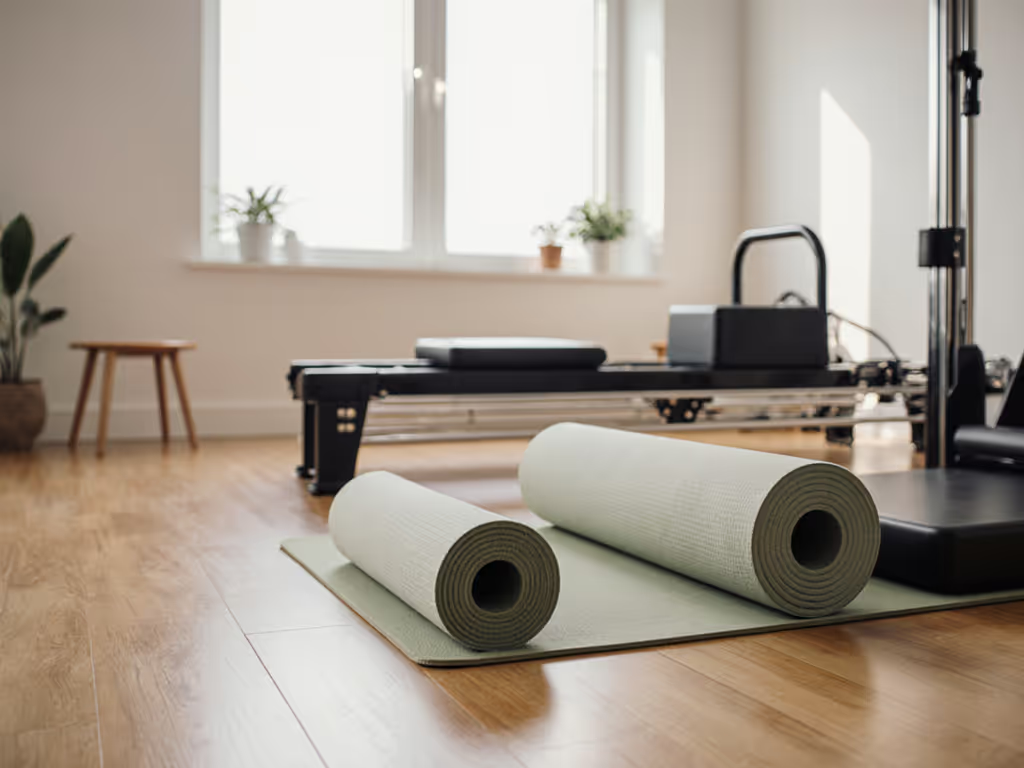
Choose a location first. Select a quiet area away from distractions and, critically, away from shared walls if possible. A corner of a living room, an alcove in a spare bedroom, or even a dedicated closet converted for movement works, as long as the space allows you to stretch freely without restriction. If you're in a multi-unit building, proximity to exterior walls or away from ground-level neighbors is ideal.
Lock in your atmospheric conditions. Good ventilation and natural light enhance both performance and mood. If natural light is scarce, invest in adjustable lighting, and avoid harsh overhead fixtures alone. Dimmable options or soft ambient lamps create the focus-and-relaxation duality that defines an effective session. Natural light also signals to your brain: this corner is separate from "work," even though it's in your home office.
Sound isolation starts with floor strategy. The decibel and vibration metrics matter. For floor-specific solutions, use our Pilates flooring guide to match mats, pads, and platforms to hardwood, tile, or carpet. Gear tested at 42 dB during active use (vs. 52 dB average) and vibration of 0.8 mm/s (below the 1.0 mm/s condo bylaw threshold) gives you genuine wiggle room. Add isolation pads rated for your equipment weight, and you've compressed vibration transmission to flooring below or adjacent. If you're on a creaky wood floor, acoustic mats rated for dynamic loads are non-negotiable; on concrete, rigid isolation platforms work better.
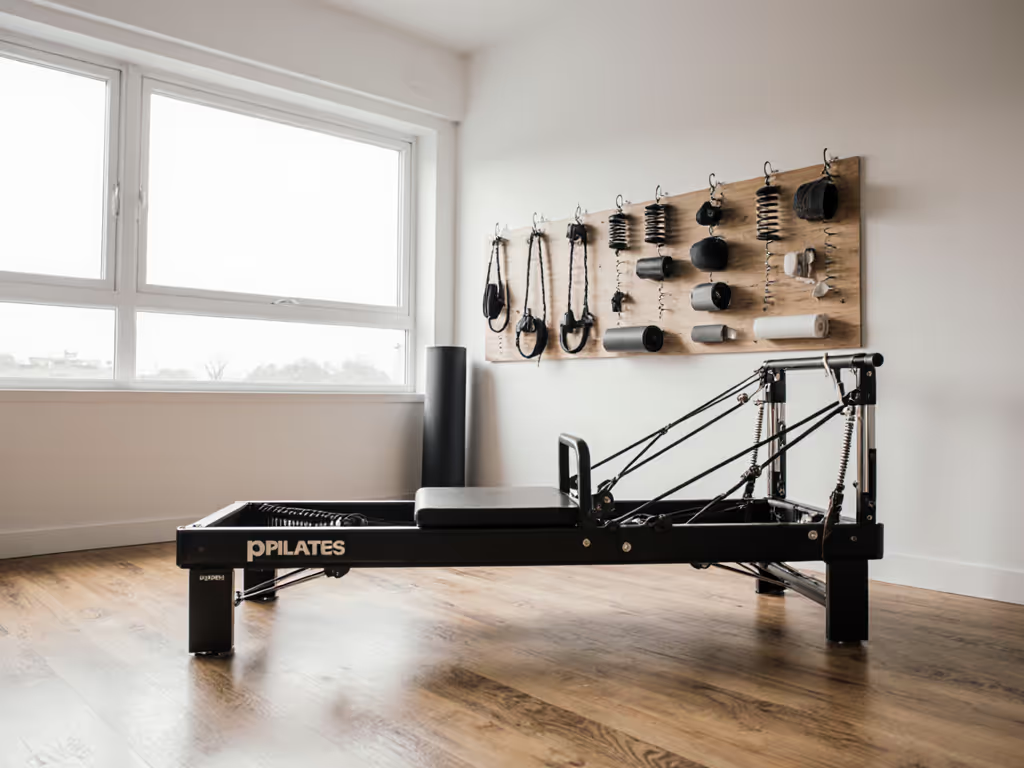
Clutter is noise. A clean, uncluttered space supports both your nervous system and actual sound isolation. Store props, springs, and extra straps in closed containers (baskets, cabinets, or dedicated drawers nearby). Out of sight means both mental clarity and no stray objects rattling during motion.
Which equipment profiles work best for home offices?
Spring-free resistance systems. Coil springs are the archetypal culprit: they squeal, they chatter, and they develop creaks over time. Spring-free designs using tension bands or cable systems eliminate harmonic squeals entirely and stay quiet across 500+ uses. The trade-off is typically a smaller exercise repertoire, but for home office use, the focus is usually on core stability, posture correction, and low-impact strength, all accessible without springs.
Anchored, not floor-floating equipment. Gear that anchors to a wall stud or structural element (not the floor) eliminates vibration transmission to floors below and adjacent. This applies to towers, wall-mounted reformers, and some mat-platform hybrids. For renters, this requires drilling or tensioning systems; confirm your lease and test fasteners before committing.
Compact carriage designs. Carriage thumps (the impact of the platform returning to the home position) are a signature offender. See our quiet compact reformer picks with tested damped returns suited for apartment use. Lighter carriages with damping mechanisms reduce impact noise sharply. Equipment with slow-return springs or pneumatic dampers costs more upfront but compounds in reliability and quiet operation over months of daily use.
Foldable or nestable form factors. Gear that collapses or stacks into a footprint under 3 feet by 2 feet works in real apartments. Some towers fold; some mini-reformers stack vertically. Mat platforms that fit under a desk or nest behind a door preserve flow through your space. Fast setup and teardown (under 2 minutes ideally) means the equipment doesn't become friction in your daily routine.
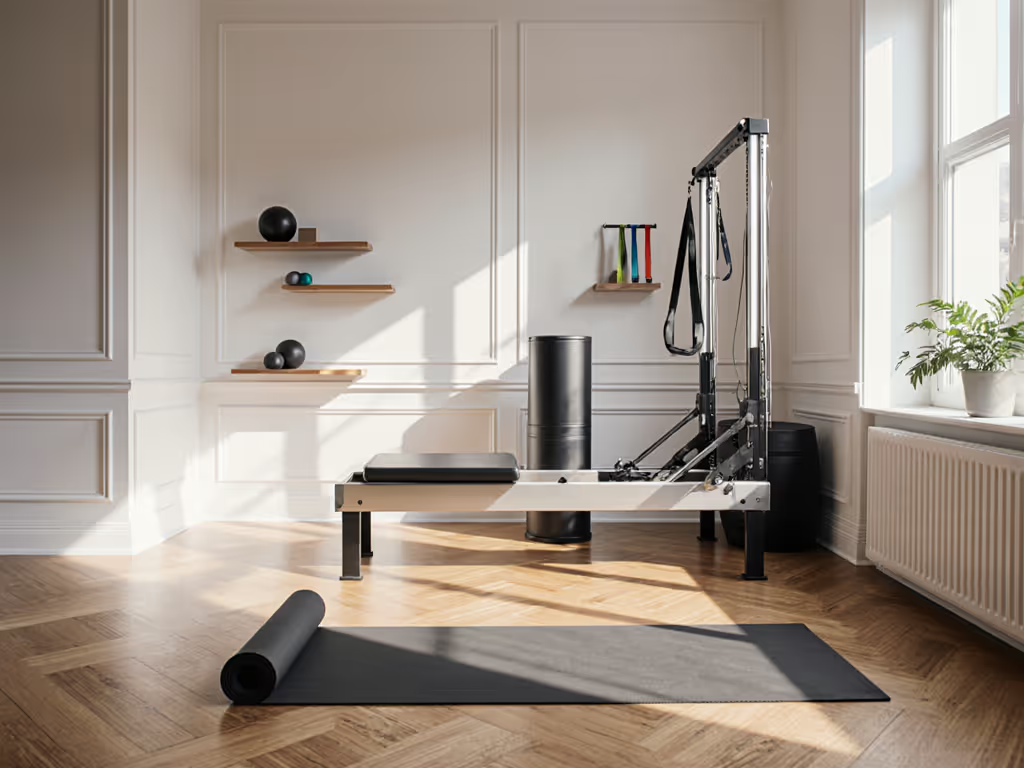
Furniture-grade aesthetics. Natural wood frames, powder-coated metal in matte finishes, and cushioning in neutral tones integrate into office environments without screaming "gym." Leather or fabric-wrapped pads look intentional, not utilitarian. If aesthetics matter, explore our Pilates home decor integration guide to match finishes and materials to your workspace. If your equipment doubles as a visual element, it needs to earn the space.
How do you verify noise and vibration claims?
Marketing claims are rampant. Data is rarer.
Demand measured decibels. Reputable manufacturers (and independent testers) publish dB readings during specific exercises on standard surfaces (concrete and wood, not carpet). Look for readings during peak motion, not idle state. Readings between 40-50 dB are apartment-safe; above 52 dB requires aggressive isolation or acceptance of potential complaints.
Check vibration specs. Vibration velocity in mm/s tells you how much motion transfers through flooring. Under 1.0 mm/s is compliant with most condo bylaws; 0.8 mm/s or lower is genuinely quiet. This metric is less common but increasingly published by quality brands.
Request third-party testing. If a brand doesn't cite independent acoustic testing or decibel verification, ask why. A manufacturer willing to publish lab results signals confidence. If they deflect, that's data too.
Test during peak use. In a showroom or trial period, run the equipment during actual workout intensity, not a light demo. Squeaks often emerge at fatigue or peak force, not during gentle testing.
How do you integrate pilates gear into work-from-home flow?
Use zone design. Designate your pilates corner as a distinct zone, visually and functionally separate from your desk. A small area rug, a divider, or even a shift in lighting signals a mental transition. This isn't about square footage; it's about operational psychology. When you move to that zone, you're in pilates mode, not email mode.
Build a reset rhythm. Equipment that resets fast allows multiple uses per day without friction. A tower that returns to center without requiring manual adjustment, a mat that airs out between sessions, or a mini-reformer with spring locks that snap into place all support throughput. If your setup takes 10 minutes to prepare and another 10 to reset, you'll use it less. Optimize for speed.
Align schedule and noise risk. If you're sharing a building, morning and early evening are higher-risk zones for complaints. Lunchtime is the worst: therapists, consultants, and clients are in session. Adjust your flow lanes accordingly. Work lunges and mat movements during dead hours; reserve carriage work for times when neighbors' offices are closed or homes are empty.
Create a cleaning protocol. In small spaces, dust and rubber off-gassing matter more. Wipe equipment after each use, air the space, and choose low-VOC cushioning and springs if possible. Maintenance compounds: a clean, well-maintained setup stays quiet and lasts longer.
What about durability and maintenance in compact setups?
Spring lifespan is real. Even quality coil springs wear. Expect 18-36 months of regular use before noticeable softness or creaks emerge. Spring-free systems avoid this entirely but may offer less resistance variety. Budget for replacement costs or accept evolution of resistance over time.
Carriage glides need care. Smooth glides depend on rails free of dust and aligned properly. In a home office with open windows or airflow, dust accumulates. A quarterly wipe-down with a dry cloth and occasional light lubricant (check manufacturer specs) keeps carriages moving silently. For a full upkeep checklist, follow our reformer maintenance guide to keep glides smooth and noise low.
Anchoring points need verification. If your gear is wall-anchored, inspect fasteners quarterly. Vibration and temperature cycles can loosen bolts. A loose anchor is a squeaky anchor, and a potential safety issue.
Cushioning breakdown signals reset. Pads that compress unevenly or lose bounce after 1-2 years should be replaced or the equipment refreshed. Worn cushioning not only feels bad; it can generate noise as material separates or flexes irregularly.
Product Review: Comparing Quiet, Compact Solutions
Spring-Free, Anchored Tower Systems
Profile: Tension-band or cable-based towers with wall-anchor options. No springs, no squeaks. Typically 3-4 feet tall, 2 feet wide, under 50 lbs. Noise verified at 40-45 dB. Vibration at 0.7-0.9 mm/s.
Best for: Apartments and micro-studios where quiet is non-negotiable. Core work, arm and leg conditioning, postural correction.
Drawbacks: Reduced exercise variety compared to spring-based towers. Resistance tops out lower. Requires wall mounting (not suitable for all renters).
Maintenance: Zero spring maintenance. Cable systems need inspection every 6 months. Lifespan: 5-7 years with care.
Compact, Foldable Mat Reformers
Profile: Spring-free or light-spring platforms, 6-7 feet long when open, fold to 3 feet. Typically 30-40 lbs. Carriage damped to reduce thump. Noise 42-48 dB; vibration 0.8-1.1 mm/s.
Best for: Home offices where equipment must fold away. Full-body work on a smaller footprint. Renters who can't anchor to walls.
Drawbacks: Fold and unfold every session (or store open, sacrificing space). Spring tension may feel lighter than full-size models. Range of motion slightly constrained.
Maintenance: Spring inspection quarterly. Carriage glides need regular wipes. Fold points can loosen; check bolts monthly. Lifespan: 3-5 years with discipline.
Desk-Integrated Hybrid Platforms
Profile: Platforms that sit under or beside a desk, combining mat space with small-footprint props. Often furniture-grade finishes. Noise 38-45 dB; vibration negligible (minimal motion).
Best for: Work-from-home professionals who want to move between work and exercise without geographic transition. Light-intensity, precision work. Micro-studios using mat work as high-throughput flow.
Drawbacks: Limited carriage work. Lower resistance. Smaller exercise repertoire. Best paired with other equipment.
Maintenance: Minimal. Wipe down weekly, check anchor bolts. Lifespan: 7-10 years.
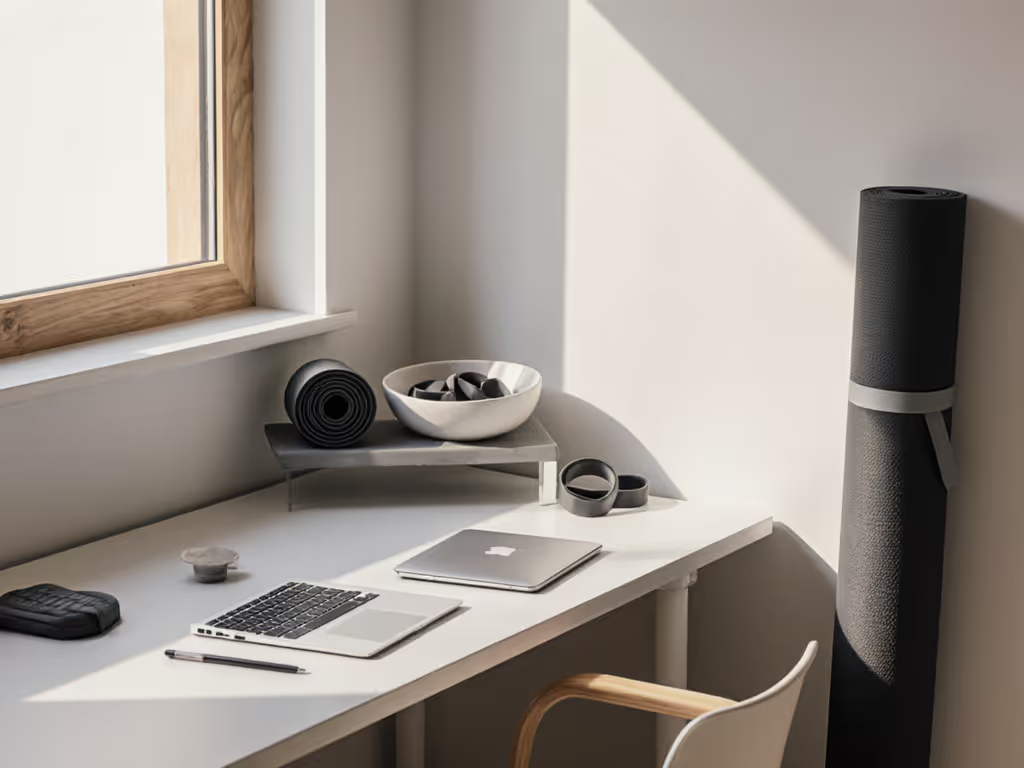
Scenario: Building a Micro-Studio in a Mixed-Use Building
Let's say you're a micro-studio founder with four reformers to fit into 400 square feet of leased space next to a marketing firm. You have sound restrictions and strict fire-code walkway requirements.
Flow lane strategy: Orient reformers perpendicular to the shared wall. Arrange so client transitions are silent: socked feet on mat, no rolling chairs, no weight drops. Position quiet-rated equipment (42 dB or lower) closest to shared walls.
Timing protocol: Schedule power classes (high-impact, high-carriage-activity) during off-peak hours for adjacent tenants, typically 6-7 a.m., 12-1 p.m. (if next-door is closed for lunch), and 5-7 p.m. Use mat and tower work during midday when neighbors' offices are bustling with their own noise.
Maintenance rhythm: After each class, do a 3-minute reset: wipe carriages, align springs, sweep. This keeps equipment quiet and ensures the next class starts fresh. One person can manage four reformers in that window if the protocol is systematic.
Material spec: Insist on low-VOC mats and cushioning. In a shared building, off-gassing compounds in small spaces and can trigger complaints from neighbors as fast as noise does. Match equipment footprint to fire-code-compliant walkway widths.
Result: 12-15 classes per week in 400 sq ft, zero neighbor complaints, and equipment lasting 4-5 years instead of 2-3. Throughput and peace coexist.
Summary and Final Verdict: Quiet Fitness Is Achievable, If You Choose Deliberately
The core truth: Home office pilates equipment that doubles as furniture and stays quiet isn't a luxury; it's a design requirement in apartments and shared buildings. It's possible if you prioritize three things: measured noise (42-45 dB range), anchored or damped carriage systems, and fast resets that keep maintenance ahead of squeaks.
The commercial reality: Spring-free, cable-based towers and compact damped reformers are the quietest and most durable for home offices. They cost 15-25% more upfront but save you on replacement cycles and peace-of-mind. Foldable mat reformers offer flexibility if you can live with slightly longer setup times.
What to actually do now:
- Audit your space. Measure length, width, ceiling height. Identify shared walls and the location of neighbors' primary work/living areas. Check your lease for fastening and floor-protection clauses.
- Demand decibel and vibration specs. Don't accept marketing copy. Ask manufacturers directly for measured dB and mm/s data. If they don't have it, they're not serious about quiet.
- Start small. Buy one quiet piece (a tower or small reformer) and test it in your space for two weeks. Monitor for squeaks, vibration, and actual integration into your daily flow. Only expand after you know it works.
- Add isolation from day one. Acoustic pads, vibration-dampening platforms, and proper fastening are not optional in apartments. Budget $100-300 for this and consider it insurance, not expense.
- Build your reset rhythm. Map out when you'll use equipment, how long setup takes, and when neighbors are least sensitive. Operational excellence is invisible because it's scheduled thoughtfully.
The deeper goal: You're not just buying equipment; you're engineering a practice that fits your life, respects your neighbors, and lasts. That's worth the research upfront. Flow that respects tenants next door (and your own peace of mind) isn't friction. It's real operational excellence in motion.
Related Articles