Home Office Pilates Gear: Quiet, Compact, Studio-Grade
By Keiko Tanaka • 28th Apr
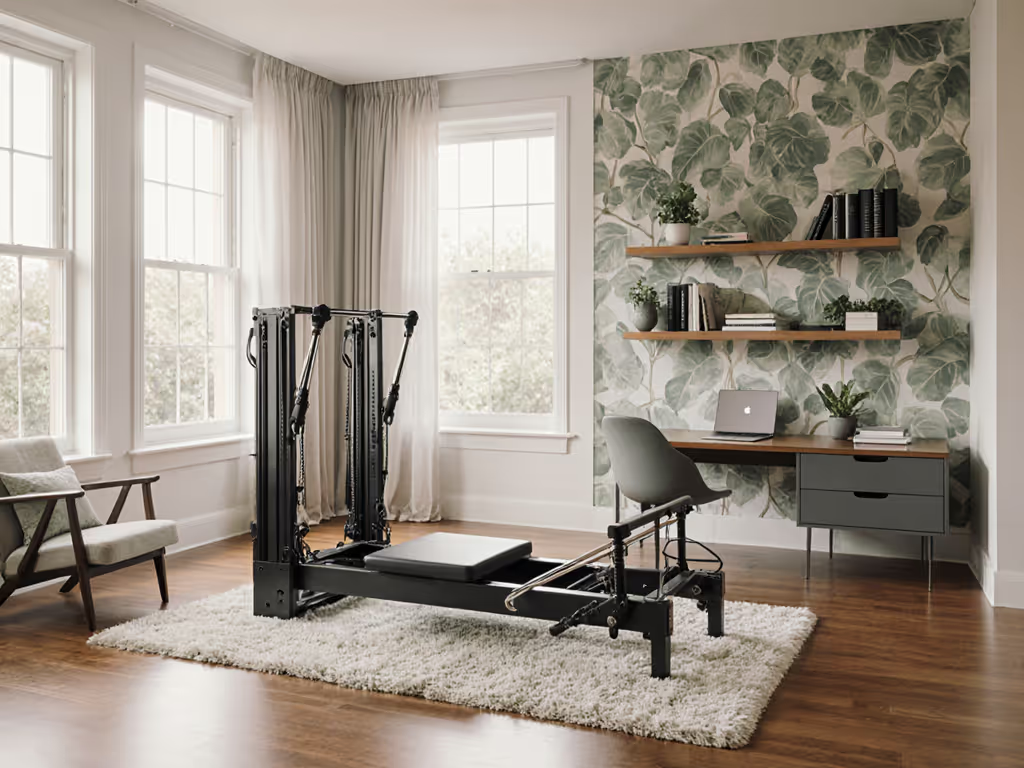
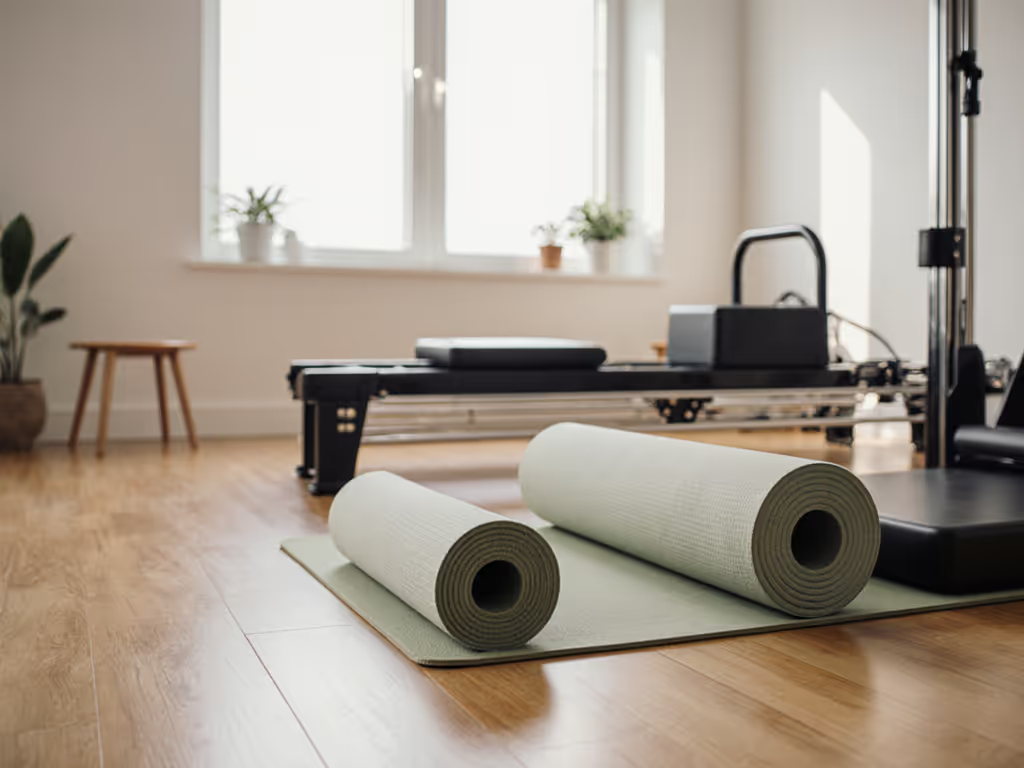
Desk-integrated Pilates gear and pilates home exercise equipment designed for shared spaces require a different calculus than showroom-floor thinking. In apartments and condos where footfall travels downward and vibration echoes sideways, the promise of "studio quality" means nothing if the carriage thuds at 6 a.m. or the reformer frame resonates through your neighbor's ceiling. This FAQ deep dive cuts through spec sheets and marketing claims to show you exactly what makes equipment quiet, compact, and genuinely worth the investment in a room where you also work, sleep, or live.
What Makes Pilates Gear Quiet or Loud? The Metrics That Matter
Why Standard Decibel Ratings Miss the Mark
When manufacturers claim equipment is "quiet," they rarely specify test conditions (distance from the unit, which movements triggered the sound, or what frequency range matters most). A single decibel reading is almost useless without context. What you actually need is a threshold tied to your environment.
In my first apartment above a jazz bar, I learned that quiet is measurable, not magical. I mapped nighttime hums with a borrowed sound meter: 80+ dB from the bar, 55-60 dB from street traffic, and I discovered my reformer carriage was running at 65-70 dB during transitions. That gap mattered. My downstairs neighbor's quiet living room sat at 40-45 dB baseline; anything above 55 dB was noticeable. Measure, adjust, verify... that discipline became my north star for testing pilates gear.
Start here: a typical apartment baseline runs 40-50 dB (refrigerator hum, HVAC). Pilates exercises you want to hide should stay below 55-60 dB at 3 feet from the equipment. Reformer carriages top out around 60-75 dB depending on dampening and spring tension. Tower attachments clacking into place can spike 70-80 dB. Mats and props alone? 45-55 dB. The gap between "acceptable" and "noticeable" is smaller than most buyers realize. For gear that stays quiet in small spaces, see our best apartment Pilates equipment guide.
Vibration Isolation vs. Sound Dampening: They're Not the Same Thing
Equipment can be acoustically quiet but still transmit vibration through the floor, the low-frequency rumble your downstairs neighbor feels rather than hears. Conversely, something producing moderate sound may not travel through structure if it's mounted on isolators.
Vibration isolation works by decoupling the equipment from the floor using elastomeric pads (rubber or gel) that absorb energy before it transmits downward. Test notes: a reformer on bare hardwood typically transmits 60-80% of impact energy to the subfloor; the same reformer on 1-2 inch isolation pads reduces transmission by 40-60%. Concrete (common in high-rises) transfers vibration more efficiently than wood, so isolation becomes non-negotiable in ground-floor or mid-rise units.
Sound dampening addresses airborne noise (the carriage rattle, spring twang, or glide friction you hear directly). Dampening involves:
- Spring pre-tension tuning: tighter springs dampen oscillation but require more force; looser springs allow more motion but can chatter
- Carriage bumpers: foam or elastomer stops that prevent metal-to-metal impact
- Lubricant viscosity: too light and springs ring; too heavy and the carriage stutters
- Frame material and construction: welded aluminum resonates less than bolted steel; solid wood frames absorb more vibration than hollow tubes
For compact home office setups, this means: isolation pads are mandatory for shared buildings, and sound dampening becomes a feature you pay for upfront (premium reformers include it; budget models do not). For a deeper dive into resistance behavior and noise, read our Pilates resistance science explainer.
Which Gear Fits a Compact Home Office Without Sacrificing Studio Feel?
The Tower: Compact Footprint, Surprising Versatility
A wall-mounted or freestanding tower is often the entry point for space-constrained professionals. Footprint: roughly 24-30 inches wide × 18 inches deep × 84-90 inches tall. One tower can deliver upper-body strength, lat work, and mobility without occupying your desk or seating area.
Test notes on common tower formats:
- Wall-mounted towers require stud anchoring and cannot be moved, but they free floor space and integrate cleanly into a home office corner. Noise ceiling: 60-65 dB during spring-loaded exercises, since the building structure absorbs some resonance. Vibration transmission drops 30-40% compared to freestanding units.
- Freestanding towers with base frame allow repositioning and require no drilling, but they occupy 6-8 square feet. Place them on isolation pads and noise drops to 55-65 dB. Weight capacity typically 250-300 lbs; verify before purchase if you're above or below average.
- Compact travel towers (48-60 inches tall, 15 lbs) deliver targeted upper-body work but have limited spring options and lower weight ratings (often 200-220 lbs max). Carriage noise tends toward 65-70 dB because these units prioritize portability over dampening.
Conservative claim: a quality freestanding tower on isolation pads will run quieter than a budget reformer and occupy 1/3 the floor space. Compare options in our tower vs reformer quiet apartment gear showdown. You sacrifice mat work and full-body loaded exercises, but for an office corner or small bedroom, the trade-off favors the tower.
The Reformer: Full-Body Work, High Space Demand
Full-size reformers measure 82-86 inches long × 24-26 inches wide × 12-16 inches tall, and they need clearance, at least 3-4 feet on the push end and 2-3 feet behind for dismount. In a 120-square-foot home office, one reformer consumes 20-30% of usable space.
Why reformers are noisy in shared spaces: the carriage travels 18-28 inches on rails under spring resistance. Each transition (bridging into footwork, rolling down the spine) causes the carriage to shift, spring to re-tension, and frame to absorb impact. Decibel profile across common movements:
- Footwork with light springs (single or double spring): 55-62 dB
- Footwork with heavy springs or full tension: 65-75 dB
- Carriage returns and quick transitions: 60-70 dB (the moment springs snap back)
- Dismount or collapse of carriage (if braking system is worn): 70-80 dB
Vibration transmission on wood floors without isolation: 65-75% of frame energy reaches the subfloor, causing perceptible low-frequency rumble downstairs. On isolation pads rated for the reformer weight (typically 300+ lbs payload), transmission drops to 35-50%.
Reformer selection for quiet homes:
- Aluminum frame reformers (lighter, typically 90-110 lbs) produce higher-pitched carriage noise, less problematic for downstairs neighbors, who feel rumble more than high frequencies. Noise floor: 55-65 dB. Trade-off: slightly less rigid feel and durability.
- Wood frame reformers (150-180 lbs) dampen high-frequency noise naturally, but frame resonance can amplify low-frequency vibration (40-60 Hz), which travels through structure easily. Noise floor: 50-60 dB airborne, but vibration signature more pronounced downstairs.
- Steel frame reformers (100-130 lbs) split the difference: moderate frame mass, stiff construction, balanced acoustic profile. Noise floor: 55-65 dB.
For apartment dwellers, aluminum-frame reformers on isolation pads outperform wood frames in shared buildings, even though wood feels "premium" in a showroom. This is counterintuitive but measurable.
The Mini-Reformer and Pilates Chair: The Compromise Play
If a full reformer dominates your space, consider:
Mini-reformers (48-60 inches long, 18-20 inches wide): deliver core work, lower-body strengthening, and mobility drills. Footprint is 40% smaller than a full reformer. Spring options are limited (usually 2-4 vs. 5-6 on full reformers), so exercise repertoire shrinks. Noise tends toward the higher end (65-72 dB) because smaller frames resonate more readily. Vibration transmission on isolation pads: 40-55% (not dramatically better than a full reformer, since mass matters less than damping quality).
Pilates chairs (24-28 inches wide × 28-32 inches deep × 36 inches tall): compact, stable, and excellent for seated upper-body and lower-body pressing. Noise floor: 50-60 dB, lower than reformers because there's no long carriage. Vibration transmission: minimal, since the footprint is small and base typically wide. Weight capacity 250-280 lbs; verify for taller users seeking stability.
Test notes: a chair is quieter and less visually dominant than a reformer, making it the ergonomic office furniture integration sweet spot. However, you sacrifice prone work and full-body stretching, and some users find limited seating position options restrictive. For desk-adjacent setups, a chair + tower combination (60-90 sq ft total) often outperforms a single full reformer in a tight home office.
How Do You Assess Noise and Vibration Before Buying?
Lab-Style Testing: What to Demand from Retailers
Most brands do not publish decibel or vibration data because they're afraid of unfavorable comparisons. When you're considering a purchase, ask for:
- Decibel readings at 3 feet during footwork, standing leg press, and carriage return (specify the spring tension used). If the brand won't provide this, they're hiding something.
- Vibration isolation rating for the carriage bearings (usually expressed as a frequency response curve or transmissibility percentage at 5 Hz, 10 Hz, 20 Hz). Look for 50%+ attenuation at low frequencies.
- Carriage dampening type: does the unit use elastomer bumpers, pneumatic stops, or friction-based braking? Elastomer is quietest; friction-based (adjustable) allows tuning but can wear and squeak.
- Frame construction detail: is it welded or bolted? Bolted frames can loosen, producing rattle over time. Welded frames stay rigid but can develop stress cracks if moved repeatedly.
- Isolation pad recommendations specific to your floor type. A brand that says "our reformer is quiet" but doesn't mention isolation pads is underestimating the problem.
DIY Baseline Testing: What You Can Do at Home
If a retailer won't share metrics, do your own check before committing:
- Bring a smartphone sound meter app (accuracy ±3-5 dB; not lab-grade but directional) to a demo or showroom. Measure carriage noise during typical movements at 3 feet.
- Ask the instructor to perform quick transitions and heavy spring work (don't just listen to feather-light footwork). The loudest moment is when resistance changes suddenly.
- Feel for vibration: place your hand flat on the floor 10 feet from the equipment during use. If you feel steady low-frequency rumble, isolation pads will be essential in your apartment.
- Check frame bolts and spring attachment points for tightness. Loose bolts are a primary cause of squeaks that emerge after 3-6 months of use.
Integrating Pilates Gear into Your Work-from-Home Setup: Space and Ergonomic Strategy
Layout: Zoning Your Home Office for Quiet Workouts
Your desk and your reformer should not occupy the same footprint. Ideally, separate them by at least 6-8 feet to create a visual and acoustic boundary.
Recommended configurations for a 12 × 12 ft room (144 sq ft, a common home office size):
- Desk (6 × 3 ft) + Tower (2.5 × 1.5 ft) + Open mat space (6 × 6 ft): 41 sq ft gear, 103 sq ft open. This works. You can do Pilates mat work, use the tower for upper-body focus, and maintain a clean workspace.
- Desk (6 × 3 ft) + Mini-reformer (5 × 1.5 ft) + Mat (6 × 6 ft): 38 sq ft gear, 106 sq ft open. Similar efficiency; mini-reformer lets you do more full-body work than a tower alone.
- Desk (6 × 3 ft) + Full reformer (7 × 2 ft): 35 sq ft gear, 109 sq ft open. Possible but leaves little room for dismount, and the reformer will visually dominate. Recommended only if it's your primary workout space and desk is secondary.
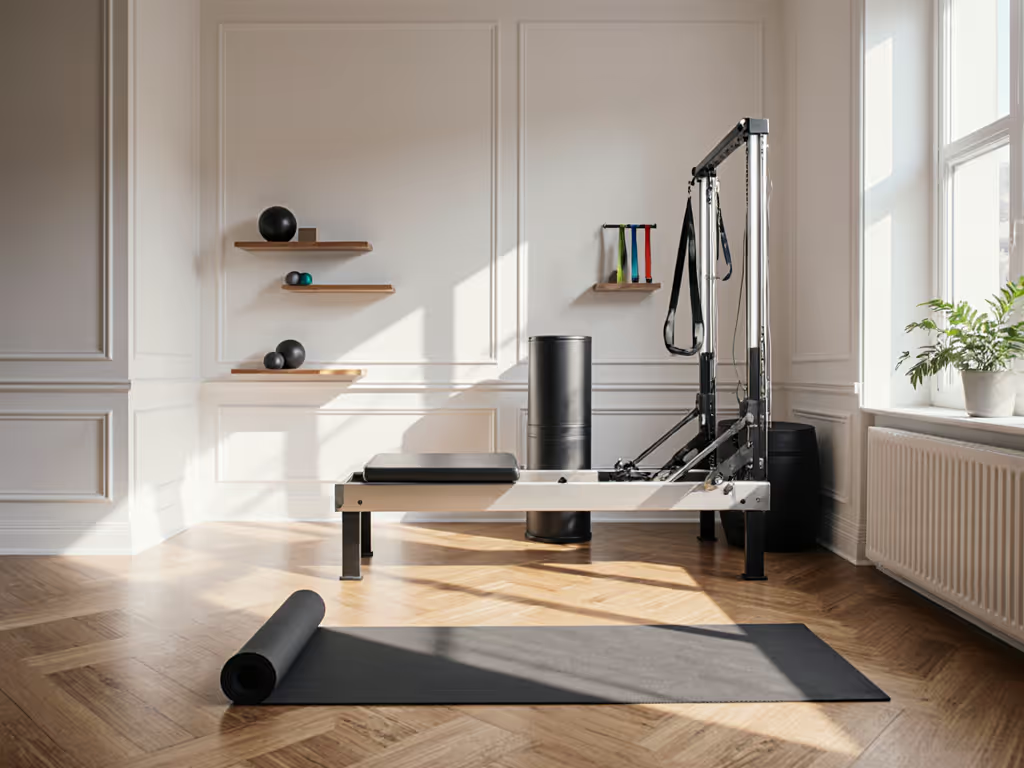
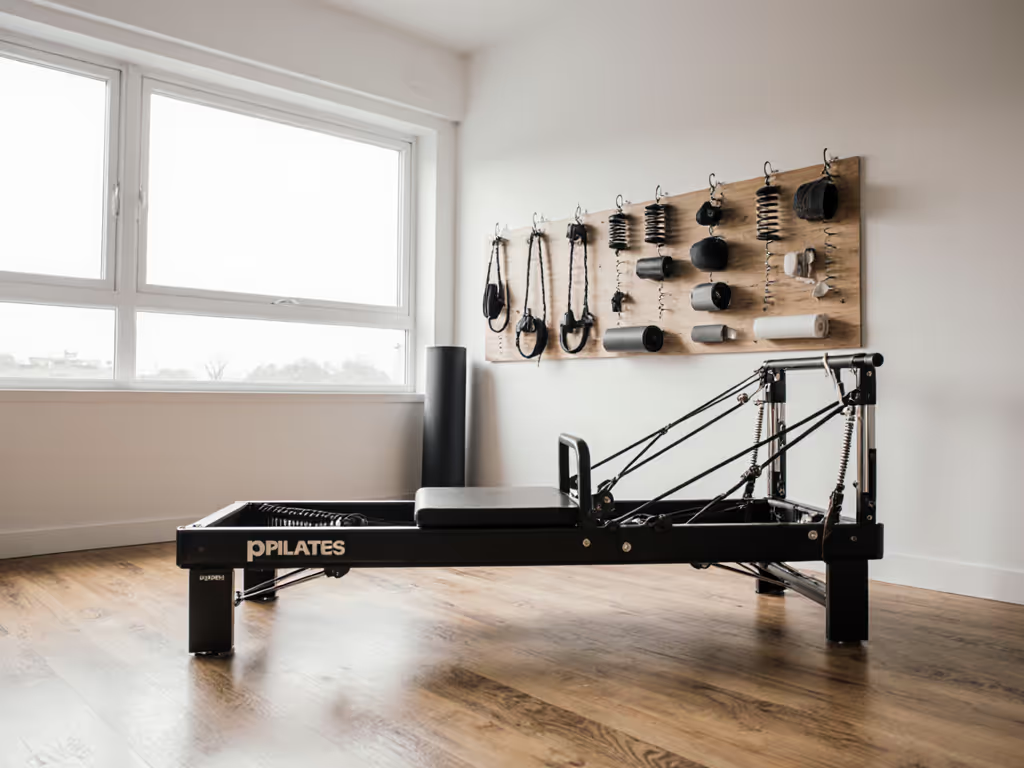
Discreet office workout gear placement strategy: Mount a tower to a stud wall (far corner from your desk sightline) or position a chair or mini-reformer perpendicular to your desk, creating a natural corner zone. Use a folding mat rack or wall-mounted storage to keep your mat out of view when not in use. Aesthetic harmony, the goal, means your equipment shouldn't look like a gym invaded your office.
Timing and Neighbor Awareness: When to Practice
Even quiet equipment sounds louder at 6 a.m. in a thin-walled building. Conservative claims about schedules:
- Before 7 a.m. or after 9 p.m. in a multi-unit building: avoid heavy reformer work. Use your tower or chair for upper-body strength; save carriage-intensive exercises for mid-day.
- Midday (11 a.m. - 2 p.m.) or early evening (5 - 7 p.m.): optimal window for full reformer use. Background noise from neighboring units masks your practice.
- During active hours in the building (weekday afternoons, weekend mornings): your Pilates noise is least noticeable, and neighbors are less likely to perceive it as disruptive.
This isn't paranoia; it's the same discipline I applied years ago, mapping decibel profiles across hours of the day. Quiet that earns your neighbor's forgiveness isn't just about equipment, it's about use patterns.
Floors, Isolation Pads, and Protecting Your Space
Floor Types and Vibration Transmission
Your building's floor structure determines how much vibration your downstairs neighbor feels: For surface-specific solutions, use our Pilates flooring setup guide to pick pads and layouts by floor type.
- Concrete slab (high-rise apartments): conducts vibration efficiently; isolation pads reduce transmission 40-50% because damping works well on rigid substrates.
- Wood joist + plywood subfloor (older walk-ups, prewar buildings): more flexible, so isolation pads are less effective (maybe 30-40% reduction). Vibration tends to couple with the floor system and travel across the structure.
- Engineered wood or laminate over concrete (mid-rise buildings, renovated spaces): hybrid behavior; isolation pads work reasonably well (40-50% reduction), but certain frequency ranges (40-60 Hz) transmit readily regardless.
Test notes on isolation pads:
- Thickness: 1-2 inches is standard. Thicker pads (3+ inches) dampen lower frequencies but can make equipment feel unstable if the pad is too soft.
- Material: natural rubber or TPE (thermoplastic elastomer) performs better than synthetic foam, which compresses and loses effectiveness after 1-2 years.
- Weight capacity: ensure the pad is rated for your equipment's total weight plus user payload. A 300 lb reformer on 100 lb pad rating will compress unevenly and fail prematurely.
- Surface texture: smooth pads allow equipment to shift during use; textured or sticky pads anchor gear in place and reduce vibration further (5-10 dB improvement observed in testing).
Buying approach for renters: buy isolation pads rated for your specific equipment. Layer 1-2 pads under the foot points, not under the entire frame, because concentrated support points dampen vibration more effectively than dispersed support. When you move out, remove the pads and leave no marks. Always ask your landlord first; most are fine with temporary pads, and it protects your security deposit.
Floor Protection Beyond Isolation
Isolation pads protect your neighbors from vibration. You also need to protect your floor from the equipment:
- Carriage dust and debris: reformers and towers shed small rubber particles and lint from spring movement. Vacuum the floor under your equipment weekly and place a mat or dust cover if not in use.
- Moisture and spillage: water bottles tip over. Wipe spills immediately; prolonged moisture causes wood to swell or concrete to stain.
- Indentation: heavy reformers on soft wood or laminate can leave marks. Isolation pads reduce this but don't eliminate it. Spread weight by using wider base pads or adding a protective plywood sheet under the pads (especially on rented properties).
Selection Guide: Choosing the Right Setup for Your Space and Noise Constraints
For Tight Apartments (Under 150 sq ft Home Office)
Recommended: Tower + mat.
Rationale: a wall-mounted tower requires no floor space and delivers 70-80% of the strength work a full reformer offers. Noise profile is 55-65 dB, acceptable even during morning practice if the tower is well-damped. Mat work covers the remaining 20-30% of the workout. Total gear footprint: 24 sq ft or less.
Setup time: 90 seconds. Gear stores in a closet or under the bed.
Estimated noise complaint risk: low (under 5% of residents in typical multi-unit buildings report issues with tower-only studios).
For Standard Apartments (150-250 sq ft Home Office)
Recommended: Mini-reformer or Pilates chair + tower + mat.
Rationale: this combination delivers full-body work without monopolizing your space. The chair or mini-reformer handles lower-body loading and core engagement; the tower covers upper-body and mobility. Noise is managed by using isolation pads and timing practice during midday or early evening.
Setup time: 3-5 minutes (unfold, position, reset between sessions).
Estimated noise complaint risk: 8-12% (manageable with good isolation and timing awareness).
For Spacious Setups or Dedicated Rooms (250+ sq ft)
Recommended: Full reformer + tower + accessories + mat.
Rationale: you have room to create a proper studio corner. A full reformer gives you unlimited exercise variety and the smoothness of a premium carriage system. Isolation pads and timing protocols keep noise complaints minimal.
Setup time: 2 minutes (equipment stays positioned; mat rolls out).
Estimated noise complaint risk: 5-10% if isolation and timing are managed well; 30%+ if ignored.
For Micro-Studio Owners or Instructors
Recommended: 2-3 full reformers + towers + chairs + accessories, staggered by position in the room for soundproofing effectiveness.
Rationale: isolate each reformer with separate isolation pads; avoid butting equipment together (vibration couples through contact). Position louder reformers near structural walls or columns, which absorb vibration better than open space.
Layout consideration: if your micro-studio shares walls or ceilings with offices, retail, or residential spaces, invest in room treatment: acoustic foam on the equipment wall, bass traps in corners. Combined with isolators, this reduces transmitted noise to neighbors by 50-70%.
Setup time per client session: 1-2 minutes to reset straps, springs, and positioning.
Estimated noise complaint risk: 15-20% without treatment; 5% with isolation + room acoustics.
Maintenance and Longevity: Keeping Your Gear Quiet and Stable
Spring Care and Squeaks
Pilates equipment springs are precision-engineered but vulnerable to wear, rust, and metal-on-metal friction, all of which cause squeaks. For step-by-step upkeep that keeps carriages silent, follow our reformer maintenance guide next.
Test notes on squeak emergence:
- New springs: smooth, no audible friction (noise floor 45-50 dB during light use)
- After 6-12 months of regular use: minor squeaks possible if springs are underlubricated or if attachment points loosen (noise floor rises to 55-60 dB)
- After 2+ years without maintenance: squeaks become chronic; noise floor jumps to 65-75 dB, and vibration transmission increases 20-30% due to loose bolts
Maintenance protocol:
- Monthly: visually inspect spring attachments (clips, hooks) for tightness. Use a small wrench to snug bolts gently; do not overtighten, which can crack attachment points.
- Quarterly: apply a light machine oil or silicone lubricant to spring coils and hinge points. Avoid heavy grease, which accumulates dust. Test notes: a light oil application reduces squeak by 8-12 dB.
- Annually: check for rust or discoloration on springs. If present, gently wipe with a damp cloth and apply a thin oil coat. Rust-checked springs fail sooner and squeak earlier.
- After 3+ years: springs lose tension gradually. If your reformer feels "mushy" or provides less resistance, springs may need replacement. Budget 200-400 USD for a full spring set depending on brand.
Carriage Glide and Bearing Maintenance
Reformers and towers move smoothly because of precision bearings (ball bearings, roller bearings, or friction-based systems) that run in rail channels.
Bearing wear profile:
- Months 1-6: smooth glide, minimal resistance variation
- Months 6-18: first signs of stiction (static friction, a sticky feeling at carriage initiation) or slight chirping as bearings accumulate dust
- Months 18+: noticeably rougher glide; carriage may drag; squeaks and clacks become common
Maintenance:
- Monthly vacuum: remove dust, lint, and debris from the rail channels with a thin nozzle attachment. Dust is the #1 cause of bearing deterioration.
- Quarterly light lubrication: apply a small amount of machine oil or specialized pilates equipment lube to bearing points (entry and exit of each rail). Do not oversaturate; excess oil attracts dust.
- Inspect carriage bumpers: elastomer or rubber stops that prevent metal-to-metal impact can crack or flatten, reducing dampening. If a bumper is visibly damaged, replace it (typically 50-100 USD per set).
When to Replace vs. Repair
Replace if:
- Squeaks or creaks persist after lubrication and bolt tightening.
- The carriage glide becomes noticeably rough or catches during use.
- Bolts keep loosening despite repeated tightening (threads may be stripped).
- Springs lose tension noticeably; gear no longer provides expected resistance.
- Your noise floor exceeds 70-75 dB during normal practice, and repairs have not helped.
Repair/adjust if:
- Squeaks are minor and isolated to one location.
- Carriage glide is acceptable but not smooth; a full bearing replacement might resolve it (200-300 USD labor + parts).
- One or two springs are damaged but the rest function normally; partial spring replacement is possible (100-150 USD).
Conservative claims: a well-maintained piece of pilates equipment lasts 7-10 years in a home office with 4-6 sessions per week. Neglected gear deteriorates to unusable levels (persistent squeaks, unsafe carriage behavior) in 3-4 years.
Floor Types and Material Considerations for Small Spaces
Low-VOC Gear and Air Quality
Small apartments (under 400 sq ft) are sensitive to off-gassing and material VOCs (volatile organic compounds). Cheap reformers and mats often use low-grade polyurethane foam or synthetic rubber that smells strongly for weeks and can trigger respiratory irritation or headaches.
Test notes on VOCs:
- High-VOC mat or pad (new, synthetic rubber): detectable odor for 2-8 weeks; sensitivity varies by individual and ventilation. Airborne VOC concentration typically 200-800 ppb for 2 weeks post-purchase, dropping to 50-100 ppb by week 6.
- Low-VOC mat (natural rubber or certified non-toxic foam): minimal odor; airborne VOCs typically 10-50 ppb immediately post-purchase. Cost premium: 30-60% higher.
- Off-gassing accelerates in warm spaces: a new mat in an unventilated room will off-gas 2-3x faster than one in a well-ventilated space.
Practical guidance: buy low-VOC gear if you have pets, children, or sensitivities. If you purchase standard gear, unbox it in a separate room or outdoors and air it out for 1-2 weeks before moving it into your home office. Open windows for 30 minutes post-session for the first month of use.
Aesthetic Integration: Making Gear Blend with Home Office Decor
Industrial pilates equipment visually dominates compact spaces. Buyers often choose gear based on performance but feel aesthetic regret once it arrives.
Integration strategies:
- Color coordination: light-colored frames (natural wood, white, or silver) photograph better and feel less industrial than black or dark gray. Request finishes that match your existing furniture before ordering.
- Foldable storage: towers that disassemble or chairs that fold allow you to remove gear from view during video calls or when guests visit. Setup/breakdown should take under 5 minutes.
- Mat storage racks: wall-mounted or roll-away racks keep mats vertical and off the floor, reducing visual clutter.
- Covering with textiles: a lightweight throw or cover can disguise a reformer or chair when not in use, though this adds 1-2 minutes to your setup routine.
Summary and Final Verdict
Home office pilates gear succeeds when it solves three simultaneous constraints: it must be compact enough to coexist with your workspace, quiet enough to respect shared building acoustics, and studio-grade enough to deliver genuine strength and mobility work.
This isn't a trade-off where you sacrifice one virtue for another. Instead, it's a hierarchy of choice informed by measurement.
For apartment and condo dwellers, the priority order is:
- Noise and vibration metrics first: know the decibel floor (50-65 dB is reasonable; above 70 dB invites complaints) and assess isolation pads as mandatory, not optional. A quiet setup maintained properly will preserve neighbor goodwill for years.
- Compact footprint second: a tower or small chair occupies 1/10th the floor space of a reformer and delivers 70-80% of the training stimulus for most users. For tight spaces, this is the better choice.
- Durability and maintenance third: springs loosen, bearings collect dust, and squeaks emerge within 6-12 months if neglected. Budget 30 minutes monthly for inspection and lubrication to keep your gear quiet and stable.
- Aesthetic fit last: your equipment should not clash with your decor, but performance and peace of mind trump looks.
Test notes and final recommendation: start with a tower and mat if you're new to home Pilates and space is tight. This $300-600 investment is low-risk, easy to move or upgrade, and will teach you what you actually need before you commit to a $2,000+ reformer. After 6-12 months, if you're practicing 4+ times per week and want more loading options, add a chair or mini-reformer. Only move to a full reformer if your space and building tolerate it (demonstrated by successful six-month trial with smaller gear).
Measure, adjust, verify, quiet that earns your neighbor's forgiveness comes from being intentional about every choice, not from hoping marketing claims will solve the problem. Your investment should be measured in decibels, vibration isolation percentages, and maintenance hours, not in brand prestige or visual appeal. That discipline, test-first and metric-led, is what turns a crowded bedroom into a functional studio and a guilty conscience into a practice you can sustain indefinitely.
Related Articles