Pilates Yoga Equipment for Small Spaces: Quiet Solutions
By Nora Bergström • 17th Nov
When you're choosing Pilates yoga equipment for tight quarters, the right complementary fitness tools can transform your practice from a source of anxiety into a serene daily ritual. Your space constraints shouldn't dictate the quality of your movement (just the approach). In this guide, we'll explore how quiet-focused gear and thoughtful setup can create a consistent practice in the smallest of living spaces. For a step-by-step layout and placement plan, see our silent small-space studio setup guide.
Your Top Questions About Space-Sensitive Pilates Yoga Gear
How do I choose equipment that won't disturb neighbors?
Noise and vibration are legitimate concerns for 87% of apartment-based practitioners, according to a 2024 movement space survey. The solution isn't just quieter equipment, it's understanding how sound transmits through your specific building structure.
Solid woods and thicker carpets absorb more sound than laminate floors or thin rugs. In older buildings with creaky floors (like many NYC pre-wars or London terraces), you'll want mat-based systems with rubberized bases rather than reformers with metal frames that amplify vibration. For tower-based setups, look for models with rubber feet that measure under 45 decibels during dynamic movement (about the volume of a quiet conversation).
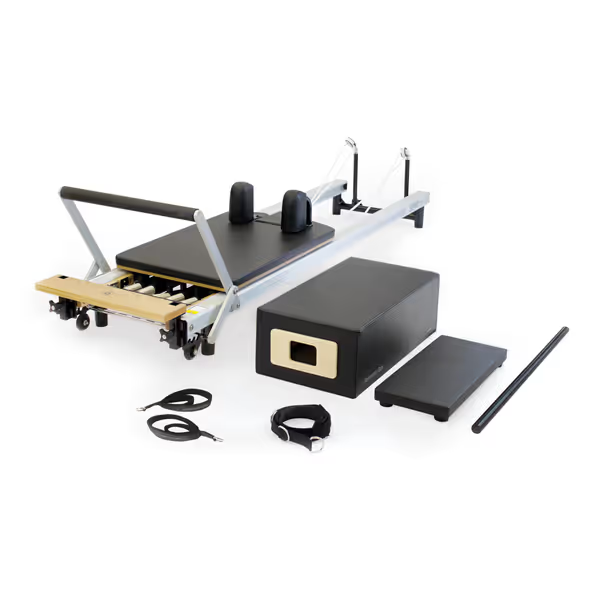
Merrithew at Home SPX Reformer Package
Studio-grade Pilates reformer for home — compact, quiet, full-body workouts.
$2478.26
Springs4 full-tension, 1 half-tension
Springs4 full-tension, 1 half-tension
Pros
Solid construction & smooth glide mechanism.
Variable resistance for diverse workouts.
Includes essential accessories & digital access.
Cons
Large footprint, not ideal for very small spaces.
Customers find this reformer to be one of the best on the market, praising its solid construction, clear assembly instructions, and smooth gliding mechanism. They consider it worth the price and effective for workouts, with one customer noting it's particularly good for older joints.
Customers find this reformer to be one of the best on the market, praising its solid construction, clear assembly instructions, and smooth gliding mechanism. They consider it worth the price and effective for workouts, with one customer noting it's particularly good for older joints.
Remember my client who confessed she'd been holding her breath during footwork because she feared her downstairs neighbors would complain? After rebuilding her setup with quieter springs and floor pads, her practice returned, and so did her sleep. Quiet isn't an accessory; it's permission to focus without fear.
Look for gear with integrated vibration dampening and specify this requirement when researching. Ask retailers for actual decibel measurements taken during dynamic use, not just static conditions. Start with mat-based practices using low-sound props, then consider your building's "quiet hours" as natural boundaries for spring-loaded equipment.
What's most space-efficient for integrated Pilates yoga practice?
True integrated movement practice happens when your equipment supports transitions between modalities without requiring complete setup changes. This is where dual-purpose gear becomes essential.
The most effective small-space solution combines:
- A 1/4" thick mat with non-slip backing (minimal footprint)
- A wall-mounted springboard system that folds flat when not in use
- Bulgarian split rings that store on wall hooks
- Yoga blocks that double as bolster supports
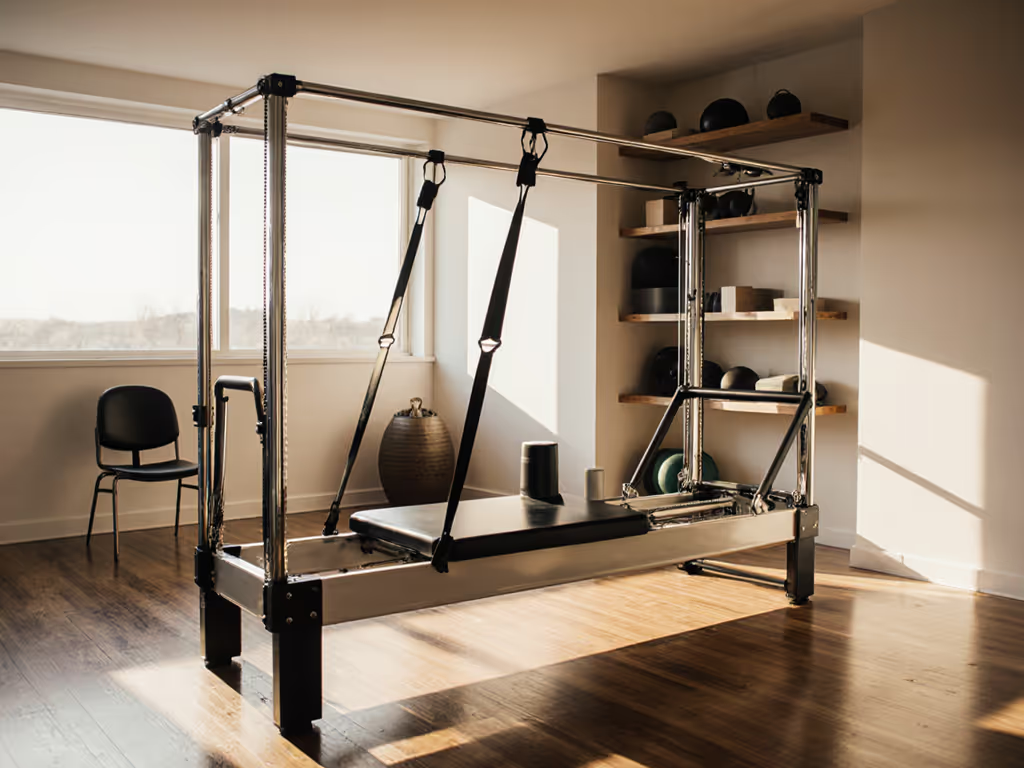
For those with slightly more space, a compact reformer that stores vertically against a wall provides the most exercise variety per square foot. Measurements show these systems can be stowed in under 24" of floor depth when vertical (less than a standard closet).
Think of your equipment as modular building blocks rather than discrete tools. When selecting hybrid workout gear, prioritize pieces that serve multiple functions within your practice rather than chasing "full studio" replication in miniature. A single reformer with proper accessories can replace a dozen smaller props while maintaining quiet operation.
How can I verify if small-space equipment fits my body and building?
Standard product specs often fail to account for real-world constraints. Don't just check "minimum room size" claims, test against your actual space with these steps:
- Measure your clearance zones: Mark your practice area with painter's tape, then add 6" beyond where your limbs extend during full movement
- Check ceiling height at your specific location: Many buildings have sloped ceilings or exposed pipes that reduce usable space
- Test vibration transmission: Place a water glass on your floor where equipment will sit, then jump lightly nearby to see if water ripples
- Verify weight limits with dynamic testing: If possible, test equipment with your full body weight in motion, not just static loading
A recent study of small-space practitioners found equipment failures most commonly occurred when users exceeded 80% of manufacturer weight limits during dynamic movements, not static holds. Be honest about your needs and test within your actual space before committing.
What quieting techniques matter beyond the equipment itself?
Equipment is only part of the equation. Your practice environment requires three quieting layers:
- Floor protection: Rubber mats rated for gym use (⅜" thickness minimum) reduce vibration transmission by up to 70% compared to standard yoga mats
- Environmental timing: Align practice with your building's natural rhythm, and avoid practice during neighbor meal times or early morning routines
- Quiet cueing: Use subtle auditory signals (chimes, gentle breath sounds) rather than verbal cues that might travel through walls
Comfort is quiet, and quiet is compliance with your goals. This simple truth became clear when a client feared her footwork was disturbing neighbors. By adding spring covers and establishing a soft timer for exhale cues, we transformed her practice from stressful to sustainable.
Prioritize equipment with smooth, progressive resistance that minimizes the clacking sounds common in cheaper systems. Learn how springs, bands, and hydraulics affect noise and feel in our quiet resistance mechanics. When testing gear, focus on the transition points between movements. This is where most noise occurs during dynamic practice.
How do I build complete practice without compromising on quiet?
Start with a baseline of equipment that provides the most movement variety with the least footprint:
- Foundation: High-density mat with closed-cell foam (prevents moisture retention and odor)
- Core tool: Wall-mounted system or vertically storable reformer
- Flexibility enhancers: Yoga strap that doubles as reformer strap, Pilates rings that store flat
- Modular additions: Only add accessories that expand your movement vocabulary
The most effective practitioners follow this progression: If you're expanding on a budget, see our quiet accessories under $100 to choose low-noise add-ons that store easily.
- Master foundational movements with minimal equipment
- Add one new tool every 4-6 weeks, focusing on quality over quantity
- Eliminate any item that creates more noise or storage hassle than movement benefit
"Comfort reduces friction; quiet sustains adherence and attention." This principle guides my work with newcomers and returning movers building confidence in constrained spaces.
When selecting flexibility enhancement equipment, prioritize pieces that integrate seamlessly into your existing flow rather than requiring complete setup changes. Foam quality matters more than you might think. A dense mat that doesn't compress under pressure creates less movement noise during transitions.
Quiet Practice, Sustainable Progress
Your practice space shouldn't be a source of anxiety or neighbor tension. By prioritizing quiet operation, thoughtful space planning, and modular equipment that serves multiple purposes, you can build consistent movement practice even in the smallest quarters.
The most successful small-space practitioners treat their equipment selection like environmental design: every piece must earn its place through demonstrable value to their movement practice and peace of mind.
Further Exploration:
- Download our free Space Mapping Template for measuring your practice area against equipment requirements
- Access our Quiet Movement Sound Library with decibel measurements of common equipment in action
- Sign up for our workshop on "Building Your Quiet Practice: From Studio to Studio Apartment"
Remember: your practice isn't limited by your space. It is defined by your commitment to creating conditions where you can move freely, without fear of disturbance. When comfort becomes quiet, your practice becomes sustainable.
Related Articles